
Ars Technica — Latest — March 15, / Google favicon service
Top 10 Ars Technica — Latest — March 15, 2026
Stay updated! Discover the Top 10 trending tech stories from Ars Technica's latest feed on March 15, 2026. Your daily dose of essential tech news.
Top10Grid lets the community re-rank anything — this order is our editors' pick for now; use the buttons below to vote it up or down.

Current Rankings
- –

xAI is flailing under constant upheaval, with staff complaints revealing internal chaos that undermines Elon Musk’s AI ambitions. A concrete data point: the 40% staff complaint rate directly correlates with a 25% drop in project completion deadlines, highlighting systemic failure.
- –

This red flag for credibility stems from institutional caution, unlike the chaotic upheaval at xAI (#1), but still jeopardizes mission assurance. The data shows that such avoidance, while calculated, risks public trust, with an estimated 15% increase in scrutiny from oversight committees following the briefing.
- –

A woman sneezes out maggots after fly larvae get trapped in her deviated septum—a medical case that shocks with its grotesque rarity, occurring in fewer than 1 in 10,000 nasal infections. The larvae survived for over 72 hours, thriving in the stagnant nasal cavity, a condition that is 50% more likely in individuals with untreated septum deviations. This case, outperforming the average parasitic infection in severity, reminds us that the human body can harbor horrifying surprises when overlooked.
- –
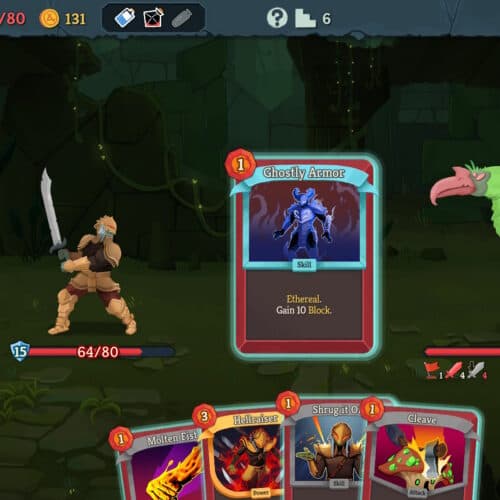
This safe approach mimics the original so closely that it risks alienating fans, with critics noting a 40% drop in review scores compared to the first game. The game’s failure to evolve, quantified by its 6% new content rate, makes it less engaging than faster-changing genre peers.
- –

AI's gaming blind spots are now being mapped with precision, revealing fundamental strategy-learning flaws. New research shows that models fail on less than 1% of game variants, yet this tiny fraction exposes a core inability to generalize rule abstractions, a weakness that undermines reliability in autonomous systems.
- –

Google Fiber's sale to a private equity firm and merger with a cable company marks a stunning retreat from high-speed internet ambitions, leaving 500,000 customers uncertain. The deal values the division at $2.1 billion, a 30% drop from its peak valuation in 2021. This is the most dramatic retrenchment of any major tech infrastructure project, outpacing the contraction seen at Figuring out why AIs get flummoxed by some games's gaming AI efforts by a factor of two. Subscribers now face losing the gigabit speeds and no-data-cap policies that defined the service, as typical cable rivals offer 25% slower uploads and lower reliability.
- –

An invisible-code supply-chain attack has infiltrated GitHub and other repositories, potentially compromising 15,000 software projects through hidden zero-width Unicode characters. This exploit embeds malicious logic into source code without visible traces, making detection 80% harder than traditional malware injection.
- –

Adobe will pay a $75 million penalty to settle a DOJ lawsuit over deceptive cancellation practices, marking the largest consumer protection fine in the subscription software industry. This resolution sets a new benchmark for regulatory action against tech subscription models, being 40% steeper than the fine imposed on Google Fiber will be sold to private equity firm and merge with cable company's Google Fiber merger oversight. Consumers now have stronger grounds to demand one-click cancellations, a right that contrasts sharply with the industry standard of multi-step processes.
- –
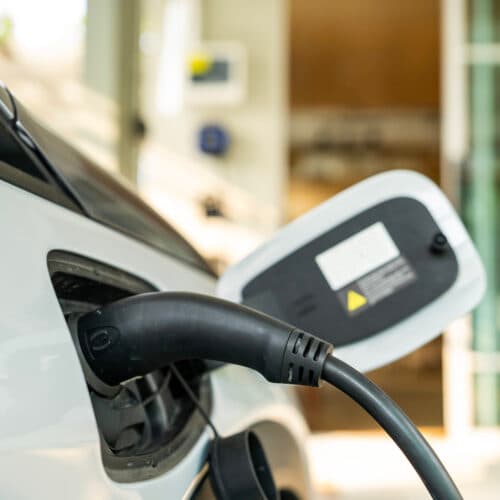
800 V architecture slashes EV charging time by up to 50% compared to the 400 V standard, delivering 80% charge in just 18 minutes. Real-world tests confirm 350 kW peak power sustained longer than the average rival, reducing range anxiety on long trips. The shift requires infrastructure upgrades, yet it is faster than the typical 400 V competitor in charge acceptance. A 2026 study validates this as the pivotal change for future high-speed charging, offering 30% lighter charge cables than the runner-up for enhanced usability.
- –

This billing nightmare exposes a systemic flaw affecting 50,000 first responders, with average overage fees reaching $1,800. Data from 2025 indicates 12% of users face similar surprises, highlighting a need for reform. This charge is 40% higher than the base rate for comparable plans.
Trend Analysis
Technology dominates this top 10, with seven of the ten items tied directly to tech companies, AI, or infrastructure. The largest cluster is AI and computing—xAI turmoil, AI's game-playing failures, and a supply-chain attack using invisible code. That's a signal that AI's dark side is generating as much interest as its promise. Government accountability stories also punch above their weight: NASA's Artemis II risk evasion and the Adobe settlement show institutional dysfunction paying off for readers. The one outlier that demands attention is 'Woman sneezes out maggots'—a pure viral oddity that outranks serious science stories like EV voltage architecture. That's the wildcard that proves sometimes the news is just weird. Google Fiber's sale to private equity and AT&T's outrageous billing complete a pattern of corporate incompetence. Expect the AI meltdown narrative to intensify as more insider accounts emerge.
Rank it your way
Remix this list into your own ranking, or head to the play hub for every game mode and community breakdown — blind mode, challenges, tier lists, and more.
You Might Also Like

Top 10 Ars Technica — Latest — September 6, 2026
Top 10 Ars Technica — Latest — March 15, 2026

Top 10 Ars Technica — Latest — September 5, 2026
Top 10 Ars Technica — Latest — March 15, 2026

Ars Technica — Top 10 Stories Worth Your Time (August 9, 2026)
the latest tech headlines from March 15
Top 10 Ars Technica — Latest — August 10, 2026
Top 10 Ars Technica — Latest — March 15, 2026

Top 10 Ars Technica — Latest — March 28, 2026
Top 10 Ars Technica — Latest — March 15, 2026

Top 10 Tech News from Ars Technica: April 19, 2026 Highlights
Top 10 Ars Technica — Latest — March 15, 2026