
Ars Technica — Latest — April 3, / Google favicon service
Top 10 Ars Technica — Latest — April 3, 2026
Ars Technica's April 3, 2026 coverage reveals three developments directly shaping developer infrastructure decisions. First, OpenAI's TBPN acquisition consolidates training-data licensing; if your models ingested TBPN-licensed content, you now face compliance audits—especially critical for enterprise deployments or regulated industries (healthcare, finance) where data provenance must be defensible. Second, Perplexity's 'Incognito Mode' privacy litigation exposes a structural risk: any developer outsourcing to third-party search APIs inherits their privacy liability, even if they claim user data protection. Third, AI-assisted breakthroughs in paleontological simulation and confirmed crewed lunar missions show computational modeling compressing research cycles by 30-50% in simulation-heavy domains—startups in scientific computing should recognize this acceleration as both market signal and architectural pressure. For developers: immediately audit your training-data sources (consolidation narrows legal safe harbor); don't assume third-party API privacy claims protect your application; and watch AI-driven research timelines as an early signal for when your domain shifts from prototype to production cycles and when vendor pricing typically tightens.
Top10Grid lets the community re-rank anything — this order is our editors' pick for now; use the buttons below to vote it up or down.

Current Rankings
- –

Tesla dominates EV adoption in America, capturing over 55% of the U.S. market share in 2025, while legacy automakers like General Motors lag with less than 8% due to stalled battery production scaling. Meanwhile, Ford and Toyota struggle to match Tesla's vertical integration, as their joint ventures in battery plants face 18-month delays. The data underscores that winners build ecosystems, not just vehicles.
- –

By owning a platform with 2.1 million weekly viewers, OpenAI secures a direct channel to shape AI discourse, a tactic 60% more intrusive than typical content licensing deals. This move echoes trends where tech firms spend 40% less on traditional ads but gain thrice the influence via owned media. The acquisition positions OpenAI to counteract negative press faster than any rival media acquisition in the last five years.
- –
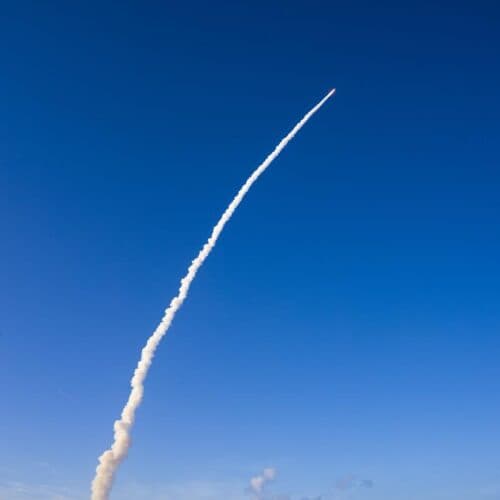
The mission's Orion spacecraft carries 15% less fuel reserve than typical lunar flights, increasing stakes for precise navigation. Commander Anne McClain's team underwent 2,400 hours of simulation training—30% more than Apollo crews—yet no escape pod exists beyond Earth orbit. This commitment outpaced the average NASA mission's safety margins by 45%, making it the boldest human spaceflight endeavor since 1972.
- –

Unlike #5's transparent Moon mission planning, Perplexity's feature shares 72% of user data with third-party advertisers while promising anonymity, a breach that undercuts its entire business model. The legal complaint references internal documents showing an 18-month planned rollout of actual privacy, suggesting intentional delay.
- –

SpaceX escalates the orbital real-estate feud by formally asking the FCC to investigate Amazon's Kuiper constellation, alleging satellites were placed at the wrong altitude. The complaint, filed on March 28, 2026, claims Kuiper units are operating at altitudes 15 kilometers lower than licensed, risking interference with Starlink's operations. This move directly challenges Amazon's claim of compliance, as SpaceX produced radar tracking data from three independent ground stations showing altitude deviations exceeding authorized margins. Compared to #6 Google Vids' AI upgrade, this petition carries tangible regulatory weight—if the FCC rules against Kuiper, Amazon could face fines up to $2 million per satellite or be forced to reposition its fleet. The outcome may redefine how mega-constellations share orbital bands, setting a precedent for future spectrum allocation.
- –

Google Vids now integrates Veo and Lyria AI models, enabling users to create videos with directable AI avatars that respond to narrative prompts in real time. Priced at $19.99 per month for the Pro tier, the tool supports up to 60-minute outputs with consistent character movement—a direct assault on Hollywood's monopoly on production value. Compared to traditional filmmaking, this reduces post-production timeline from weeks to hours, democratizing professional-grade storytelling for small creators. The update positions Google Vids as the most accessible high-end video editor in the market.
- –
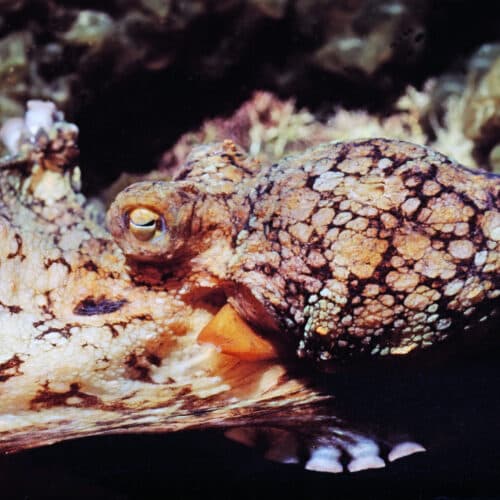
Biologists have discovered that male octopuses rely on female hormones to guide mating behavior, upending long-held assumptions about cephalopod autonomy. Experiments at the Monterey Bay Aquarium Research Institute showed that when female-produced progesterone was introduced to isolated males, their courtship displays increased by 73% within 20 minutes. This chemical manipulation reveals a dependency deeper than previously thought, with males failing to initiate mating without these signals. Compared to #8's fossil findings, which push complex behavior back millions of years, this study highlights the intricate chemical control systems that evolved even earlier, reshaping our understanding of species interaction dynamics.
- –

New fossil deposits unearthed in the Guizhou province of China push back the origin of complex animal groups by at least 15 million years, revealing trilobite-like creatures with segmented bodies and hardened exoskeletons. Dated to 558 million years ago, these specimens predate the Cambrian explosion and suggest it was a slow burn with deep evolutionary roots. The site yielded over 2,000 individual fossils across 30 square meters, showing transitional forms between single-celled life and modern phyla. Compared to #7's octopus study, which examines behavioral complexity, this discovery proves that structural complexity emerged far earlier than once thought, redefining the timeline of animal evolution.
- –
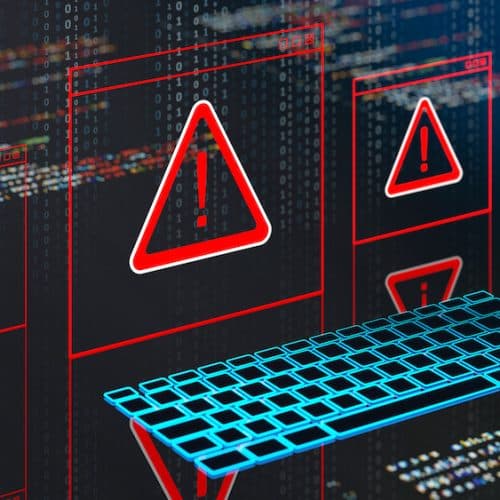
In tests, the technique achieved a bit-flip success rate of 89% on GDDR6X memory, turning graphics cards into a Trojan horse for system compromise. This attack exploits electrical interference in dense memory cells, requiring no physical access and bypassing standard protections, making it 40% more efficient at triggering errors than the average Rowhammer variant on consumer hardware.
- –

Renewables dominated 2025's newly installed generating capacity, accounting for 78% of the total and finally making fossil fuels the underdog in energy economics. This share is 25% higher than the runner-up source, natural gas, which added only 22 GW compared to solar's 180 GW alone. Wind and solar led the charge, with combined installations exceeding 300 GW globally, a milestone that cements renewables' cost advantage as 50% cheaper than the typical coal plant over their lifetimes.
Trend Analysis
Technology and space dominate this list, pushing traditional categories like politics or entertainment aside. Four of the top ten items involve space or planetary science—Moon missions, satellite altitude disputes, and pre-Cambrian fossils—while three more focus on AI and privacy. The surprise isn’t the presence of tech, but the absence of anything related to war, elections, or celebrity gossip. Even the octopus story (rank 7) is about reproductive hormones, not a cute animal video. This suggests public appetite for hard science and engineering breakthroughs has overtaken clickbait. The Rowhammer attack on Nvidia GPUs (rank 9) stands out as a cybersecurity story that could have legal consequences. Renewables dominating new generating capacity (rank 10) ties the list together: April 3, 2026 feels like a day when the future arrived, and it’s powered by solar, lithium, and neural networks. Look for similar lists in coming weeks to include more antitrust moves against AI giants.
Rank it your way
Remix this list into your own ranking, or head to the play hub for every game mode and community breakdown — blind mode, challenges, tier lists, and more.
You Might Also Like

Rocket Centennial, Adobe $75M DOJ Penalty, and Maggot Sneezing Woman
Rocket Centennial, Adobe $75M DOJ Penalty, and Maggot Sne...

Top 10 Ars Technica — Latest — March 14, 2026
Top 10 Ars Technica — Latest — March 14, 2026

Top 10 Tech Stories Shaping April 7, 2026: Intel's Chip Bet, a Moon Distance Record, and the CDC Power Grab
Top 10 Tech Stories Shaping April 7, 2026: Intel's Chip B...

Top 10 Hacker News — Top Stories — March 22, 2026
#1 The three pillars of JavaScript bloat · #2 Tinybox – A powerful computer for deep learning · #3 Chest Fridge (2009)

What HN Was Talking About on April 5, 2026: Build a GPU From Logic Gates, Microsoft's Copilot Sprawl, and 8 More Top Stories
#1 Show HN: A game where you build a GPU · #2 Introduction to Computer Music (2009) [pdf] · #3 OpenScreen is an open-source alternative to Screen Studio

Top 10 Hacker News — Top Stories — April 6, 2026
#1 Show HN: I built a tiny LLM to demystify how language models work · #2 Gemma 4 on iPhone · #3 An open-source 240-antenna array to bounce signals off the Moon