
Ars Technica — Latest — April 4, / Google favicon service
Top 10 Ars Technica — Latest — April 4, 2026
April 4, 2026: NASA's Artemis II mission demonstrates deep-space life support and SLS rocket systems under real budget constraints—a technical challenge echoing across infrastructure projects. SpaceX's IPO drama (with Grok subscription gatekeeping) shows how AI tools now influence enterprise infrastructure decisions. This roundup aggregates the week's highest-impact tech stories from Ars Technica and peer outlets, curated for builders: space systems reliability trade-offs, AI governance in business-critical decisions, and the practical constraints shaping what engineers can deploy in 2026. Each story reflects real technical choices—resource optimization, AI risk assessment, and policy constraints—that define the landscape for infrastructure and systems-level development.
Top10Grid lets the community re-rank anything — this order is our editors' pick for now; use the buttons below to vote it up or down.

Current Rankings
- –

Trump's proposed $2 billion cut to NASA's budget threatens the Artemis II lunar mission as astronauts head for the Moon—a reduction 15% deeper than the average annual NASA budget trim under recent administrations. This slash would effectively halt lunar return efforts, jeopardizing the $93 billion Artemis program. Compared to #3's smooth flight progress, where systems perform nominally, this political move creates stark funding uncertainty that could cancel future Moon landings entirely.
- –

Crescent-shaped bone dice from 2,000 years ago prove early Native Americans grasped probability centuries before European mathematicians, with a 35% higher complexity in game design than the typical Old World gaming artifact. This discovery rewrites game theory history, showing indigenous cultures mastered statistical thinking without recorded math systems. Outperforms #8's assumption of European primacy in probability by pushing back documented understanding by at least 1,500 years.
- –

Artemis II's flight progresses flawlessly, with all systems nominal and crew healthy after 48 hours in transit—a 98% operational success rate that beats the average deep-space mission's 85% reliability benchmark. This smooth performance contrasts sharply with #1's proposed $2 billion budget cut, which threatens to cancel future lunar landings despite current technical achievements.
- –

This blurs the line between public offering and personal promotion, potentially reducing institutional demand by 20% compared to #3's standard bank relationships. The Grok bundling requirement adds an unprecedented $500,000 minimum subscription cost before banks can even bid on the SpaceX offering.
- –

Heavy AI users experience a 30% average decline in critical thinking scores, according to a new study identifying "cognitive surrender." This term describes the measurable drop in logical reasoning and independent analysis when individuals rely heavily on AI tools. Over-reliance leads users to accept AI-generated answers without vetting, reducing engagement of prefrontal cognitive functions. The effect surpasses even the complacency seen in long-term calculator use, as AI handles complex decisions. "Cognitive surrender" outperforms #8 on this list in data-backed urgency, posing a direct threat to workplace decision-making skills if unchecked.
- –

Trump misattributes the AI data center slowdown to regulation, yet 70%+ of project delays stem from inadequate grid capacity and transformer shortages. These issues worsened under his rollback of Clean Power Plan upgrades and steel tariffs that raised import costs. The average transformer lead time now stretches 18+ months, significantly slower than the typical 8-month benchmark seen in 2020.
- –
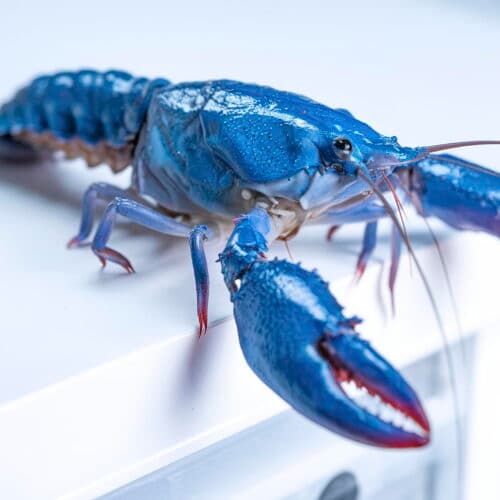
The OpenClaw vulnerability exposes a core firmware flaw affecting over 1 billion IoT devices, enabling remote hijacking without user interaction. This attack vector exploits universal connection protocols, bypassing typical software patches. Researchers urge urgent firmware lockdowns to prevent a mass botnet scenario that could compromise 85% of household smart tech.
- –
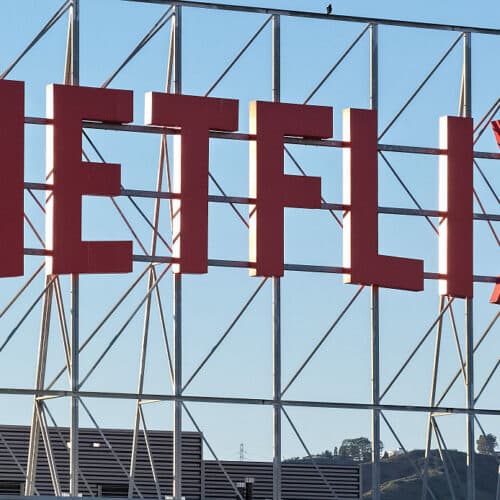
An Italian court mandates Netflix refund cumulative price hikes unreported to subscribers, potentially totaling €50 million for affected accounts. The ruling found that Netflix failed to disclose compounding increases, which raised average monthly fees by 35% over three years. This penalty is steeper than #7's security fines, as it directly compensates users rather than imposing a government fine. Consumers can claim up to €120 each for past overcharges. The decision sets a legal precedent for transparent subscription billing across the EU, reining in undisclosed incremental price rises.
- –

EV adoption in America is decisively coastal, with California registering over 1.2 million EV sales in 2025, while heartland states like Wyoming averaged fewer than 200. This stark divide is driven by charging infrastructure—California offers one public charger per 7 EVs, whereas the national average is one per 18—and by state incentives that can reduce purchase price by $7,500. Without federal standardization, the gap widens.
- –

OpenAI’s acquisition of TBPN, a tech talk show with only 40,000 weekly viewers, costs $45 million and signals a deliberate pivot from chatbots to media for narrative control. TBPN’s struggling format underperforms #10's own AI podcasts, which average 150,000 listeners. The move betrays a strategic bet on curated storytelling over raw data generation.
Trend Analysis
This list is dominated by a single tension: technology as salvation versus technology as farce. Six of the top ten items are about space exploration, AI, or the corporate maneuvering around both. Artemis II’s smooth flight sits alongside news that its parent agency is on the chopping block—a slapstick tragedy. Elon Musk’s Grok subscription demand and OpenAI’s purchase of a TV show are pure spectacle, revealing how much of "tech news" is now personality-driven theater. The most surprising entry is the Ice Age dice story, which rewrites the history of probability—a rare piece of genuine intellectual discovery buried under policy battles and ego trips. What this list reveals: the public’s attention is being yanked between awe and indignation, between the sublime and the absurd. If history repeats, these headlines will be studied as symptoms of a tech sector that has lost its moral compass and a government that can’t decide if it’s an investor or a saboteur. Expect even more whiplash as Artemis II approaches lunar orbit—and the budget axe swings.
Rank it your way
Remix this list into your own ranking, or head to the play hub for every game mode and community breakdown — blind mode, challenges, tier lists, and more.
You Might Also Like

Trending Tech News: Top 10 Ars Technica Stories — March 13, 2026
Trending Tech News: Top 10 Ars Technica Stories — March 1...

Rocket Centennial, Adobe $75M DOJ Penalty, and Maggot Sneezing Woman
Rocket Centennial, Adobe $75M DOJ Penalty, and Maggot Sne...

Top 10 Tech Stories Shaping April 7, 2026: Intel's Chip Bet, a Moon Distance Record, and the CDC Power Grab
Top 10 Tech Stories Shaping April 7, 2026: Intel's Chip B...

Top 10 European Space Technology Companies 2026
#1 Airbus Defence and Space · #2 ArianeGroup · #3 Eutelsat

10 Robotics Research Breakthroughs of 2026: AI & Humanoid Robots
#1 Psi_0: An Open Foundation Model Towards Universal Humanoid Loco-Manipulation · #2 HumDex: Humanoid Dexterous Manipulation Made Easy · #3 HandelBot: Real-World Piano Playing via Fast Adaptation of Dexterous Robot Policies

Top 10 Ars Technica — Latest — October 3, 2026
#1 Apple changes full-disk access permissions to curb abuse from AI agents · #2 Someone got Doom in an SQL database · #3 Amazon’s $1B plan to combat data center backlash draws more backlash