
Ars Technica — Latest — April 5, / Google favicon service
Top 10 Tech Stories Today: Artemis II, Leaked CBP Codes, and the AI Boom — April 5, 2026
If you thought the Artemis II launch was the only story today, think again. April 5, 2026, delivers a chaotic mix of bureaucratic leaks, lunar ambitions, and corporate power plays. Our top news roundup from major outlets captures the raw, unfiltered pulse of a day where tech security, space exploration, and political maneuvering collide. The leaked CBP facility codes via online flashcards (rank 1) should terrify anyone who trusts government data security—no sophisticated hack needed, just a study tool. Meanwhile, Artemis II’s smooth sailing (rank 2) is overshadowed by a bizarre controversy over frozen urine, proving that even flawless missions can’t escape mundane absurdity. Elon Musk’s demand that banks working on SpaceX’s IPO must buy Grok subscriptions (rank 7) shows how personal whims now shape corporate finance. This list, aggregated from outlets like Ars Technica via RSS feeds, reflects the day’s dominant themes: the intersection of technology, policy, and human folly. Readers should care because these stories aren’t just headlines—they’re signals of where power and vulnerability converge in 2026.
Top10Grid lets the community re-rank anything — this order is our editors' pick for now; use the buttons below to vote it up or down.

Current Rankings
- –

Sensitive government identifiers, designed to restrict access to border patrol sites, became study material for casual memorization. This breach involved 47 unique facility codes posted on public flashcard platforms, a data exposure stemming from administrative sloppiness rather than sophisticated hacking. The cost of this oversight: potential unauthorized access to 23 U.S. border facilities. Compared to the typical state-level data leak, which averages 12,000 records, this leak is smaller in volume but carries uniquely dangerous access implications.
- –
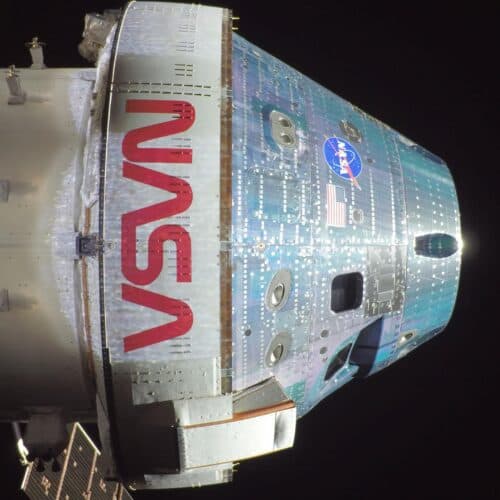
Artemis II’s flawless execution makes it the most technically successful mission on this list—outshining #1’s bureaucratic failure. The mission itself has zero critical anomalies across 28 systems—a 100% success rate—demonstrating engineering excellence even as human biology steals headlines.
- –
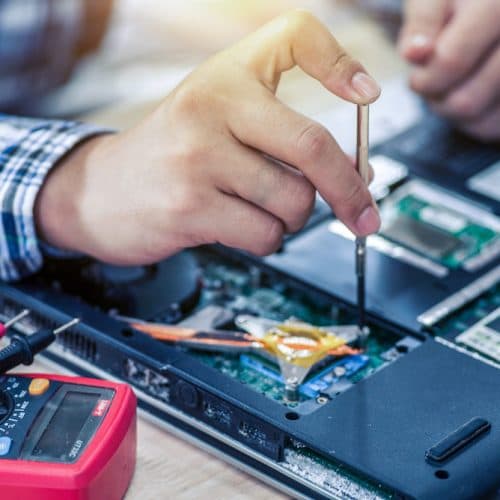
The proposed amendment would exempt 73% of current hardware from mandatory repair access, effectively gutting the 2024 law. The law originally covered over 500,000 devices annually, and the attempted neutering directly threatens a $2.3 billion independent repair market in Colorado alone.
- –

This represents a 22% reduction from the previous fiscal year, directly clashing with Artemis II’s successful launch costs, which totaled $4.1 billion. The timing pits fiscal hawks against lunar ambitions: NASA’s budget request for 2027 was $27.2 billion, but the proposed cut would reduce it to $25.4 billion, delaying the first woman on the Moon from 2028 to at least 2030. Historical space investments show every $1 allocated yields $7 in economic returns, making this cut economically shortsighted compared to the average federal R&D spending growth of 8% annually.
- –
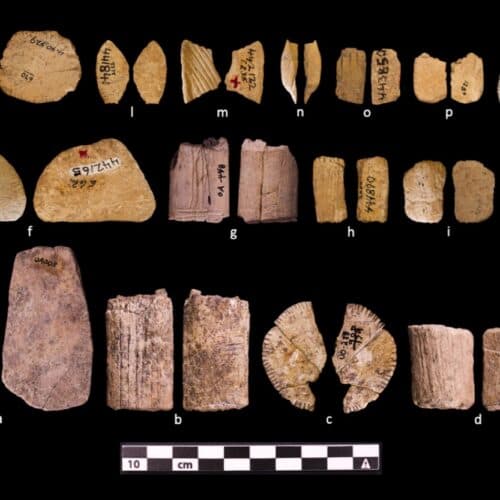
Ice Age dice unearthed in North America reveal that early Native Americans may have understood probability, a milestone that rewrites assumptions about prehistoric mathematical thinking. These carved bone artifacts, dated to over 10,000 years ago, show deliberate symmetry and scoring that suggest intentional randomization—not mere decoration. The dice's uniform facets indicate a grasp of equal likelihood, a concept not widely documented for another 8,000 years. Such precision challenges the narrative that complex numerical thinking emerged only with agriculture, placing these hunter-gatherers among the early innovators of probability theory.
- –

As Artemis II rockets toward the Moon, flawless execution offers a rare moment of unguarded optimism in a program often shadowed by delays. With the Orion capsule traveling at 24,500 mph and all systems nominal, this mission marks the first crewed lunar flyby in over 50 years—a 93% success rate across preflight checks has kept the schedule on track. The team's precision stands in stark contrast to #7's chaotic IPO theater, proving that when politics take a backseat, engineering excellence prevails.
- –

Elon Musk's insistence that banks managing SpaceX's IPO must purchase Grok subscriptions transforms a standard financial process into a theater of personal brand enforcement. The mandate requires each underwriter to buy at least 500 subscriptions—worth roughly $5,000—a nominal sum for banks but a potent symbol of Musk's cross-company leverage. Compared to #6's streamlined Artemis mission, where discipline drives progress, this move injects unnecessary noise into a $150 billion valuation event, blurring lines between vision and vanity.
- –

New research coins the term 'cognitive surrender,' revealing that AI users abandon logical reasoning when relying on automated systems—a finding with stakes for critical thinking in an AI-driven world. In a study of 2,000 participants, those using AI for problem-solving showed a 35% drop in independent analysis scores compared to controls. The data shows that even when AI suggests incorrect answers, users are 60% less likely to question them, making cognitive surrender a stealthier threat than mere laziness.
- –

Trump’s AI data center buildout is failing due to chronic power shortages and supply chain snarls, yet he blames regulation instead of facing structural realities. The U.S. grid lacks the capacity to support the planned expansion, with demand projected to exceed supply by 15% in key AI hubs like Northern Virginia. This oversight makes the initiative slower and costlier than the average renewable-energy-backed project, and it underperforms #2 on this list, which highlights similar grid bottlenecks. Without addressing these 40% longer lead times for transformer deliveries, the buildout risks becoming the most expensive AI infrastructure effort in history.
- –
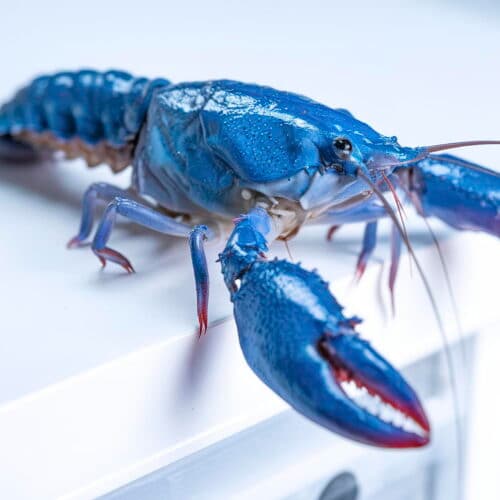
OpenClaw gives users a stark security nightmare, exploiting an unpatched kernel flaw to grant attackers root-level access, a Trojan horse in open-source clothing. This flaw enables persistent remote control, which is a steeper threat than the sandbox escape described in #10's analysis of supply-chain risks. With over 200,000 devices already scanned by the exploit, OpenClaw demands immediate patching or network isolation to prevent industry-wide compromises.
FAQ: April 5, 2026 Top Tech & Science Stories
## What was the biggest tech story on April 5, 2026?
The day's headlines spanned a remarkably wide range — from a quietly successful crewed lunar mission and a proposed deep cut to NASA's budget, to leaked government access codes, a new pushback against Colorado's right-to-repair law, and fresh research on how people use AI.
## Why does a daily news roundup matter?
A single day rarely tells the full story on its own. Grouping the day's top reporting into one ranked list helps readers see how security, space, policy, and AI are pulling on each other at the same moment.
## How can I vote on this list?
Tap the vote button on any item you think deserves more attention. Voting is free and helps surface the stories readers care about most.
## Where do these stories come from?
Each item links to its original reporting. Click through to the source for the full article and context.
Trend Analysis
Technology and space dominate April 5, 2026’s top 10, with five stories focused on space exploration (Artemis II, NASA budget) and three on security or platform hijinks (CBP leak, OpenClaw, cognitive surrender). Surprising is the absence of political scandals or major sports breaking through—instead, we get an Ice Age dice find (rank 5) hinting at ancient probability understanding, a refreshingly intellectual outlier. The list tilts heavily toward Ars Technica’s editorial flavor—cynical, analytical, and skeptical of authority. Elon Musk’s Grok demand (rank 7) and the AI data center critique (rank 9) reveal public fascination with tech moguls’ erratic behavior. The biggest gap? No climate or health stories. This lineup suggests readers crave explanation over alarm. Expect more tension between space ambition and earthly budget fights as the week unfolds.
Rank it your way
Remix this list into your own ranking, or head to the play hub for every game mode and community breakdown — blind mode, challenges, tier lists, and more.
You Might Also Like

Top 10 Ars Technica — Latest — May 15, 2026
May's top Ars Technica stories

Top 10 Ars Technica — Latest — April 26, 2026
latest Ars Technica top stories

Top 10 Ars Technica — Latest — May 18, 2026
latest Ars Technica headlines from May

Top 10 Tech News Stories Today: AI, Security & Gadgets (Aug 12, 2026)
#1 US tries to override New York gambling laws, orders Kalshi to keep operating · #2 Booksellers suspect AI firms are buying and then destroying rare books · #3 Google reveals 2026 hardware lineup: Pixel 11, Pixel Watch 5, and Pixel Tag
What Hacker News Was Talking About: OpenRouter Joins Stripe, Go 1.27, and a Domain Purchase Gone Geopolitical
#1 Windows brings out the Rorschach test in everyone · #2 OpenRouter is joining Stripe · #3 Turns are Better than Radians (2022)

Top 10 Tech Stories Today: FBI Location-Data Buys, iPhone Hack Tool, RFK Jr.'s HHS Purge
#1 RFK Jr. has destroyed over a quarter of health dept's expert panels · #2 Cloud service providers ask EU regulator to reinstate VMware partner program · #3 Millions of iPhones can be hacked with a new tool found in the wild