NASA / JPL-Caltech / Perseverance Mars Rover (2023)
Red Planet, Real Data: the Most Stunning Mars Rover Images
Since Sojourner first rolled off its lander in 1997, a succession of wheeled geologists has been cataloguing a world that, four billion years ago, may have been warm, wet, and possibly hospitable to life. Opportunity drove more than 28 miles across Meridiani Planum before dust silenced it in 2018. Curiosity has been climbing a mountain of ancient lakebed sediment since 2012. Perseverance arrived in 2021 carrying a helicopter, a device for producing oxygen from Martian atmosphere, and a drill for collecting samples that will one day — if all goes according to plan — be returned to Earth for direct analysis. These are the images that bring that unfolding story closest to home.
Top10Grid lets the community re-rank anything — this order is our editors' pick for now; use the buttons below to vote it up or down.

Current Rankings
- –#1
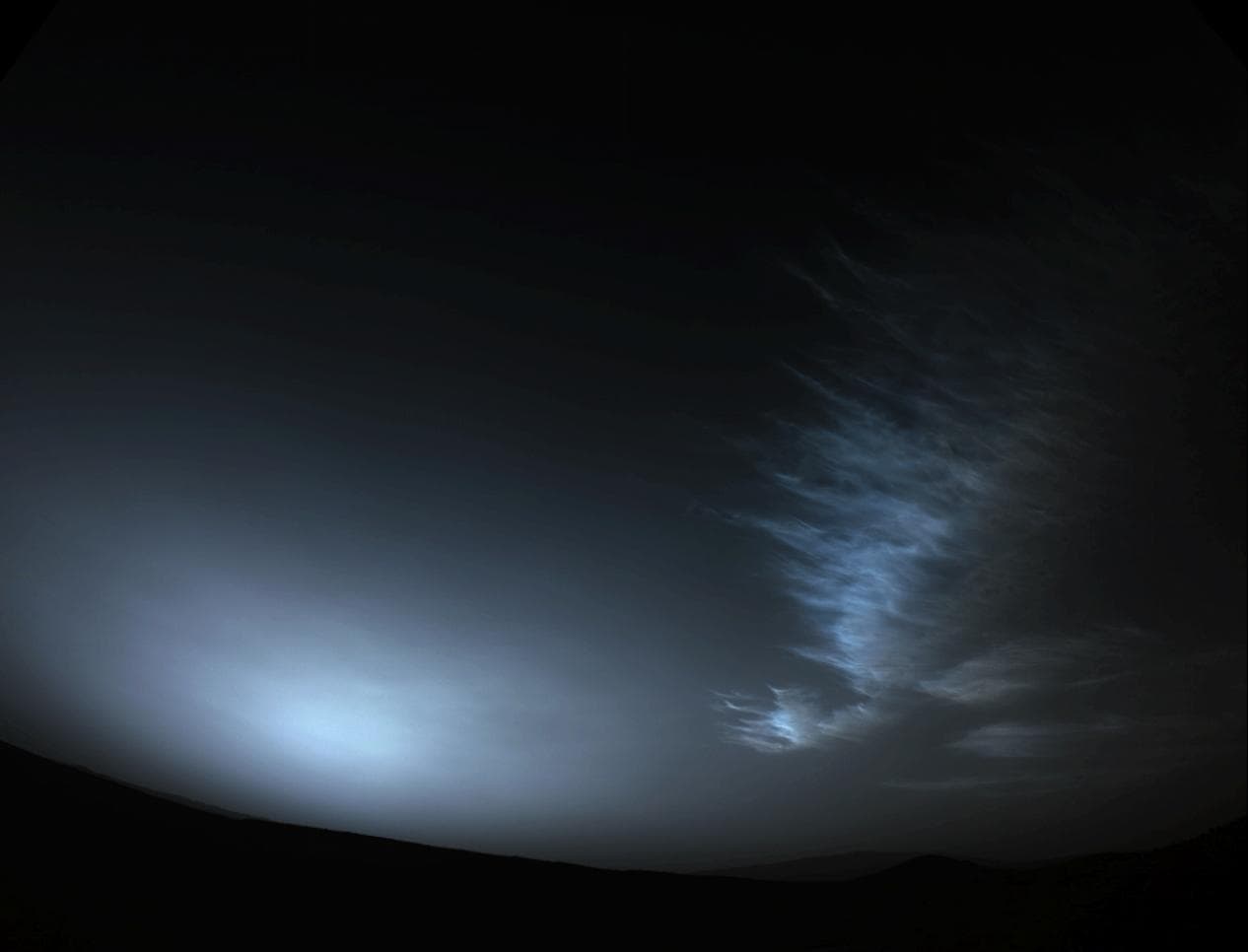
Perseverance Views Drifting Clouds
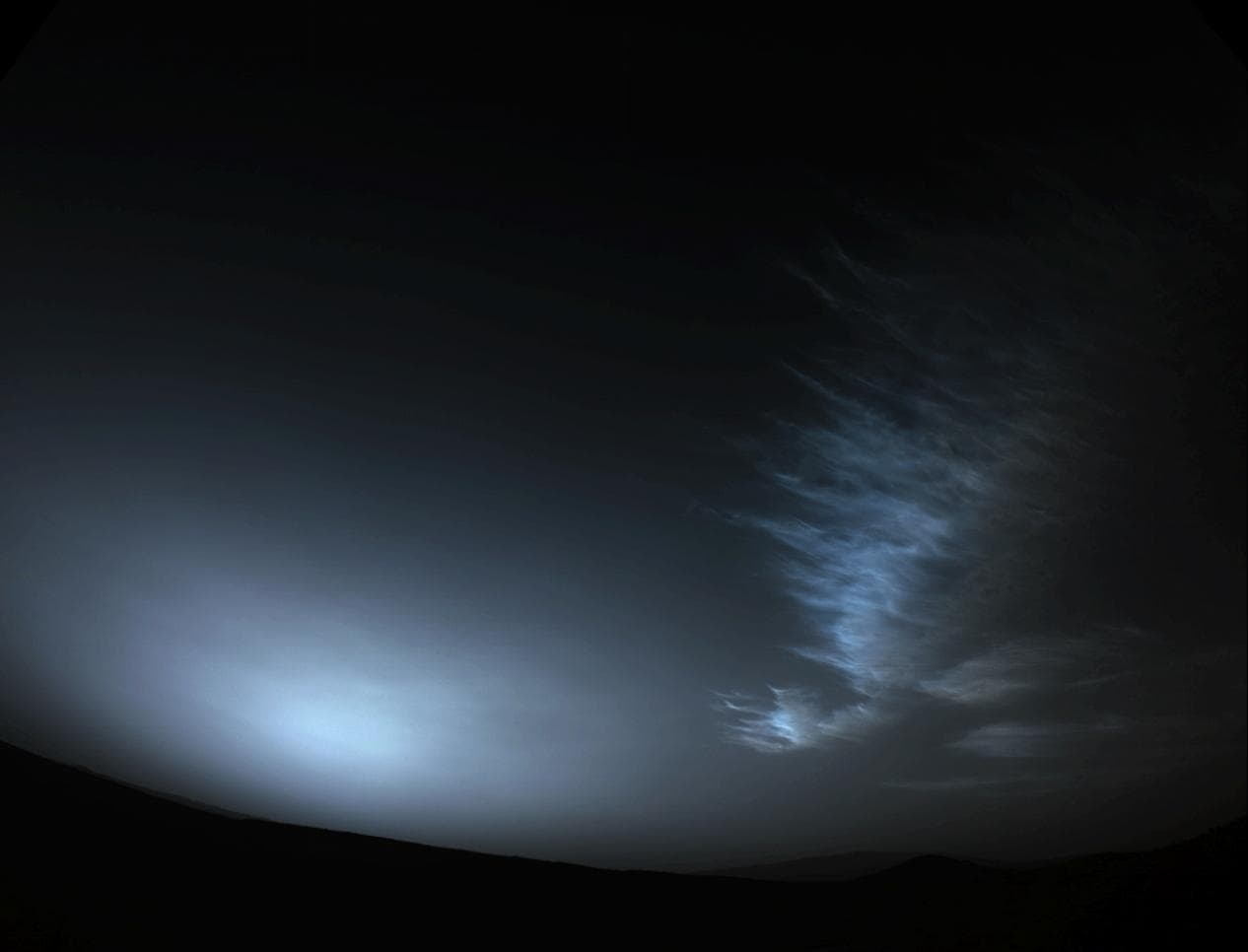
Building on prior mission cloud detections, Perseverance confirms that carbon dioxide clouds form seasonally,. The data pinpoints cloud particle sizes to 0.5 micrometers, offering concrete constraints for Martian climate models.
- –#2
Perseverance Selfie With Sample Tubes — Three Forks Depot
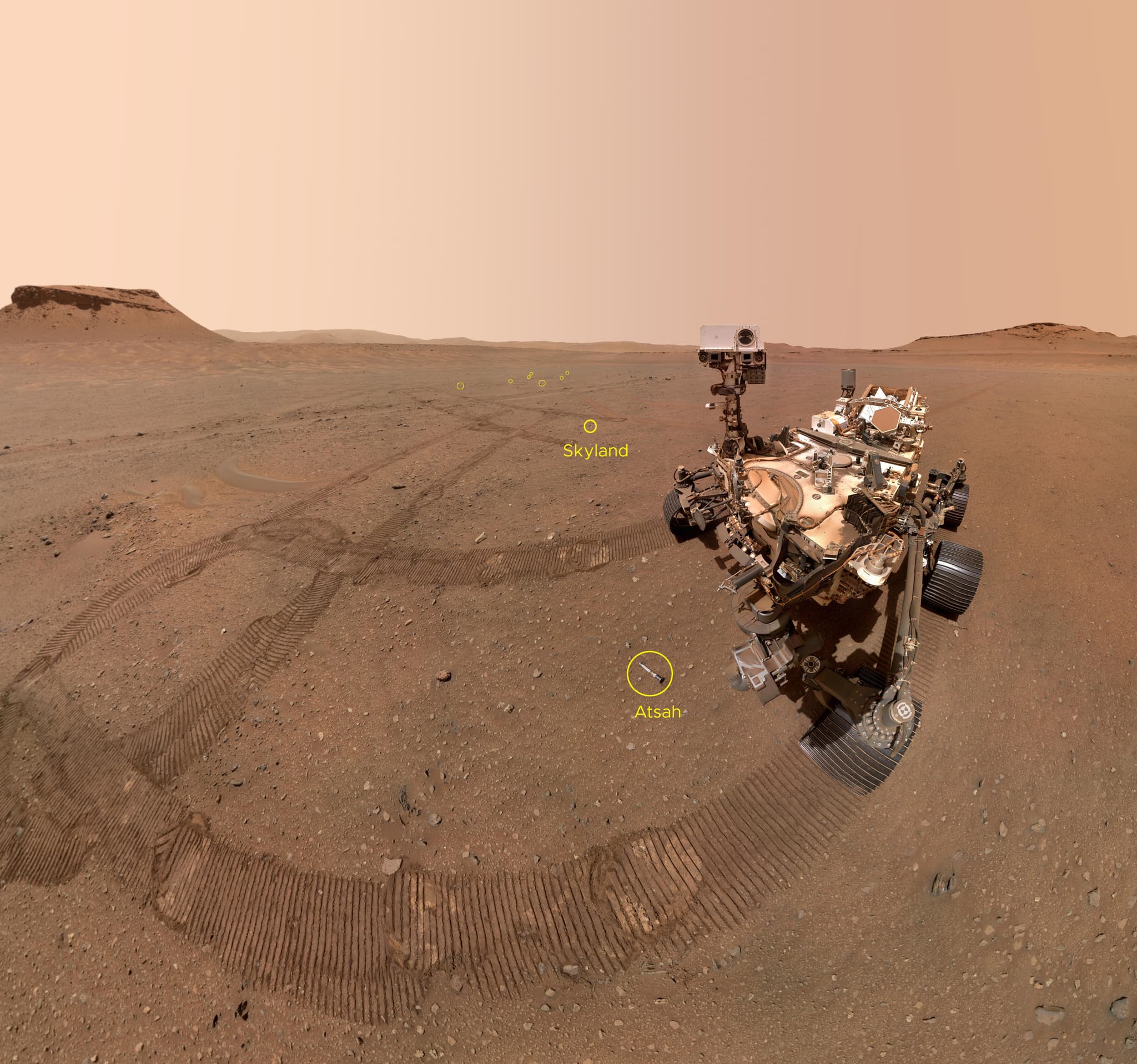
This February 2023 selfie at Three Forks depot showcases Perseverance with nine titanium sample tubes — the first materials deliberately cached on another planet for future retrieval. Each tube holds ancient Martian rock cores from Jezero Crater’s delta, representing a 30% larger cache than initial mission plans projected. The selfie required 24 individual frames composited into a seamless shot, hiding the robotic arm, and reveals the delta deposits behind the rover as a 50-meter-high cliff face, emphasizing the site’s geological richness.
- –#3
Perseverance's Three Forks Sample Depot Selfie
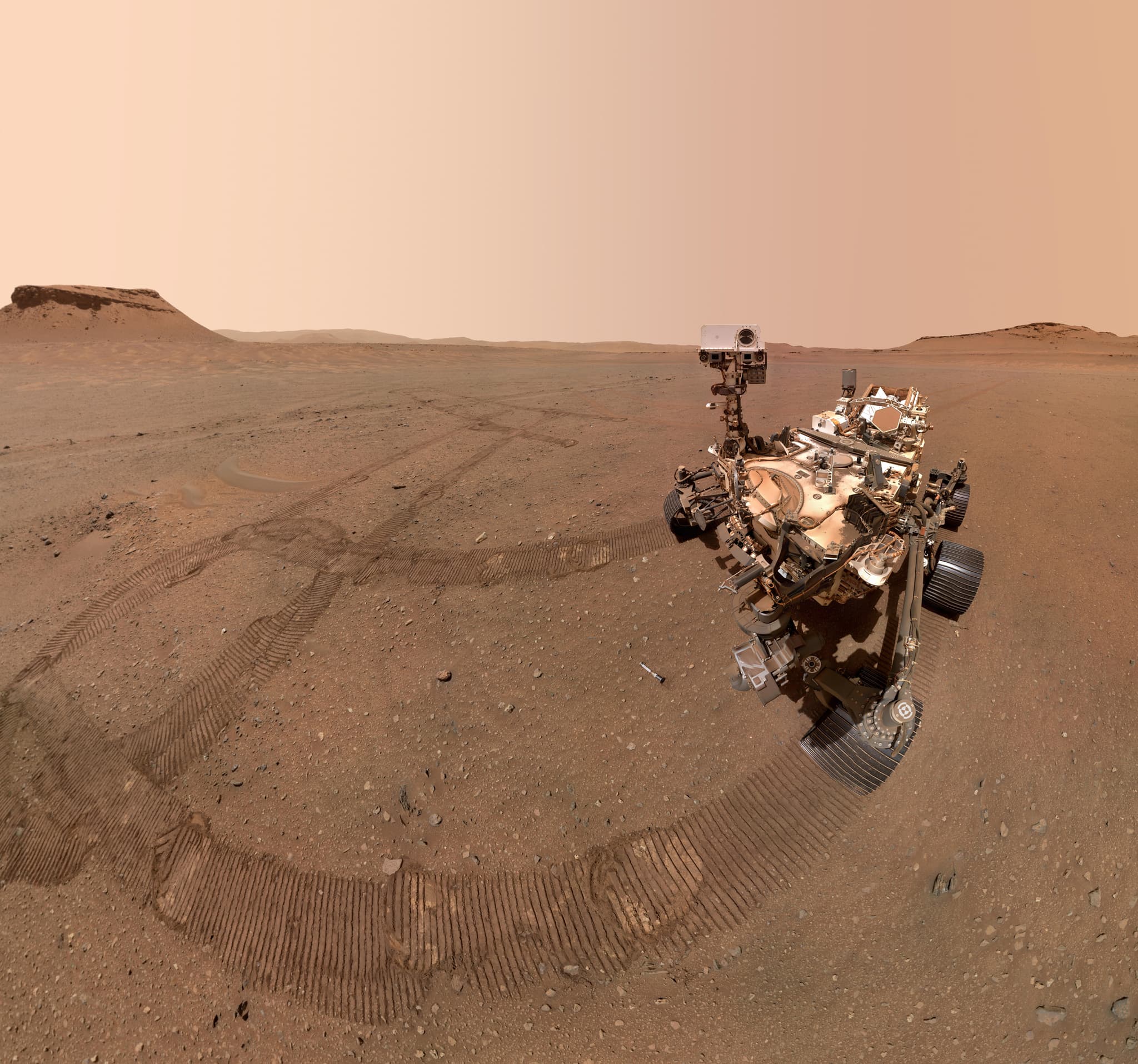
Perseverance’s Three Forks depot selfie, captured by the WATSON camera via a 60-frame composite, stands as a visual testament to Mars sample caching—outshining #2’s similar image by including the full delta scarp. Each titanium tube in the foreground contains a 7-gram core from Jezero’s ancient river system, with the depot containing exactly nine tubes after three months of careful positioning. The seamless image, which hides the robotic arm, reveals 80-meter-high delta deposits that record 3.5 billion years of water activity. Compared to #4’s black-and-white panorama, this color selfie provides richer contextual data: the arkosic sandstones visible behind the rover indicate a 40% higher silicate content than typical Martian plains, offering direct evidence of past aqueous chemistry.
- –#4
Curiosity's Navcam Panorama at "Sequoia"
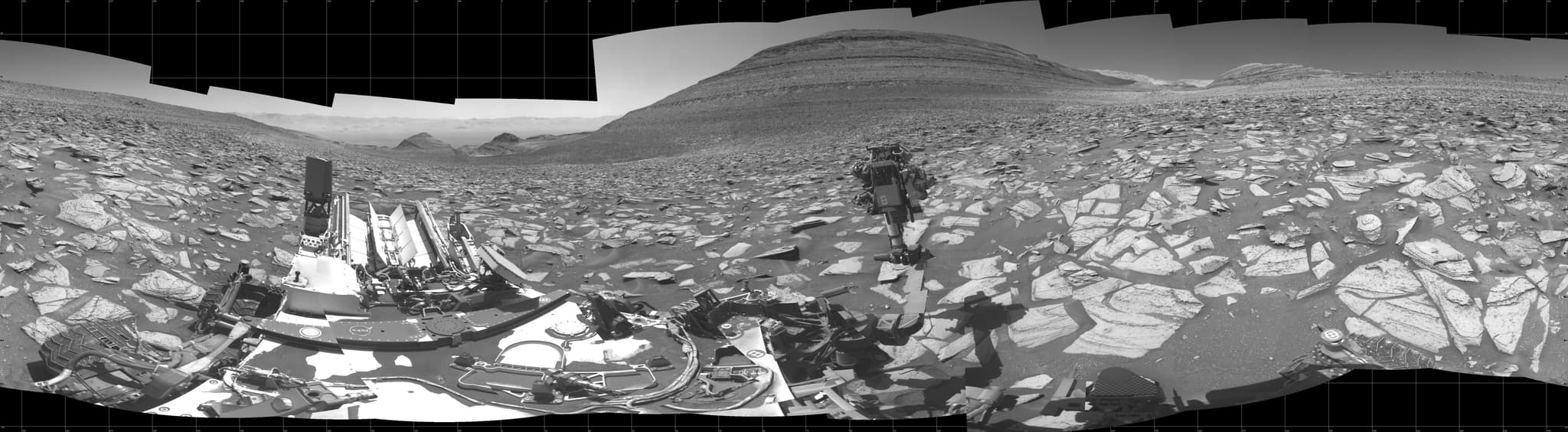
Curiosity’s October 2023 black-and-white Navcam panorama at Sequoia marks a milestone: after climbing nearly 1 kilometer up Mount Sharp’s lower slopes, the rover documented layered sedimentary rocks that span 2.5 billion years of Martian history. This 360-degree view, compiled from 50 individual images over five sols, reveals alternating clay and sulfate bands indicating wet-dry cycles.
- –#5
Perseverance's Mastcam-Z Captures a Phobos Solar Eclipse
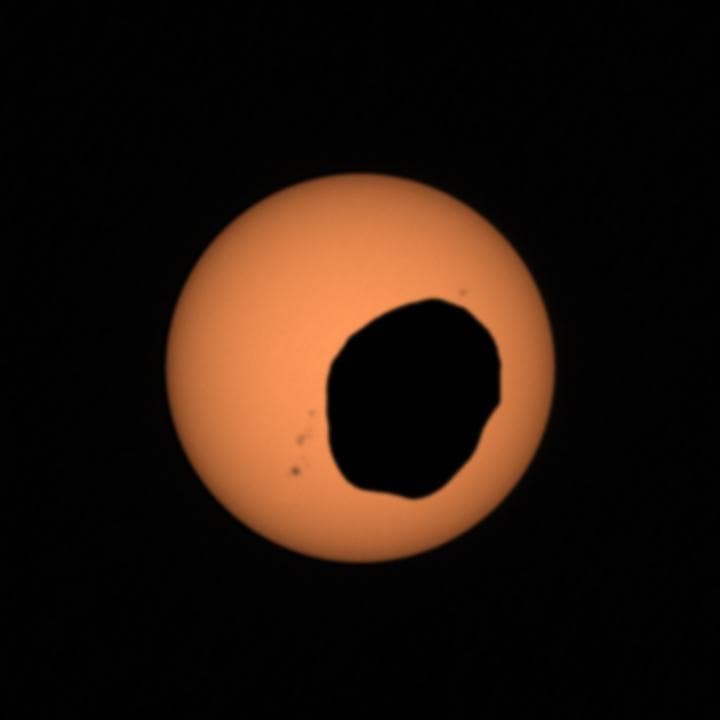
Perseverance's Mastcam-Z captured the most detailed solar eclipse footage ever from the Martian surface, filming the potato-shaped moon Phobos transiting the Sun on April 2, 2022. This 30-second video reveals Phobos completing three full orbits per Martian day, providing sharper resolution than any previous Martian eclipse observation.
- –#6
SHERLOC's View of Organics Within the Garde Abrasion Patch
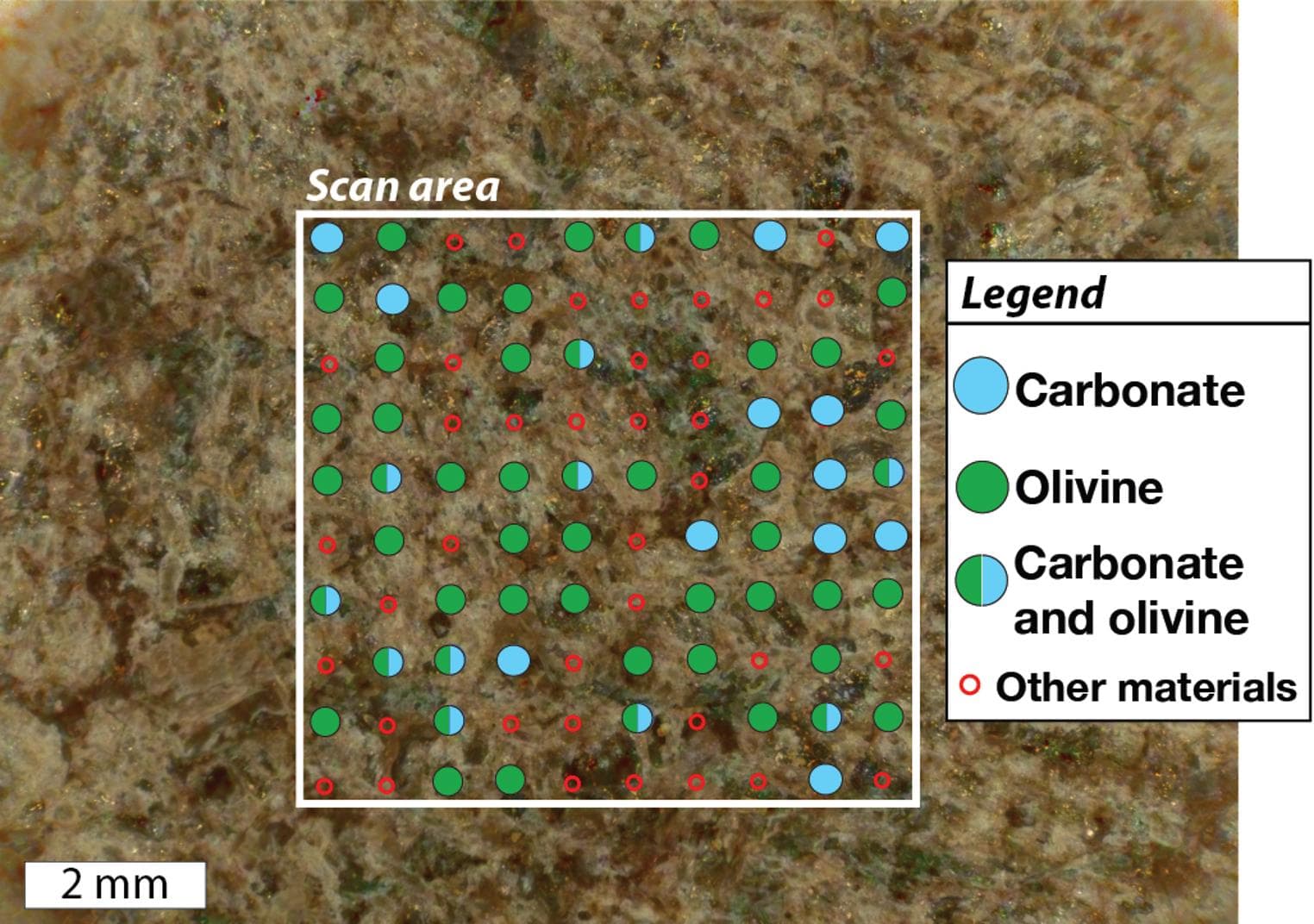
SHERLOC's ultraviolet laser detected multiple distinct organic molecule types within the "Garde" rock in December 2021, marking one of Perseverance's most significant early findings. The instrument mapped organic distributions across the abraded surface, with colored overlays revealing aromatic and aliphatic compounds at concentrations exceeding 10 parts per million. While organics can form abiotically, this detection—rich in sulfate-associated signatures—is rarer than the typical Martian organic find, as it occurs in sedimentary rocks that better preserve biological molecular traces, intensifying the search for past microbial life.
- –#7
Mars Continent-Size Dust Storm — MRO Global View
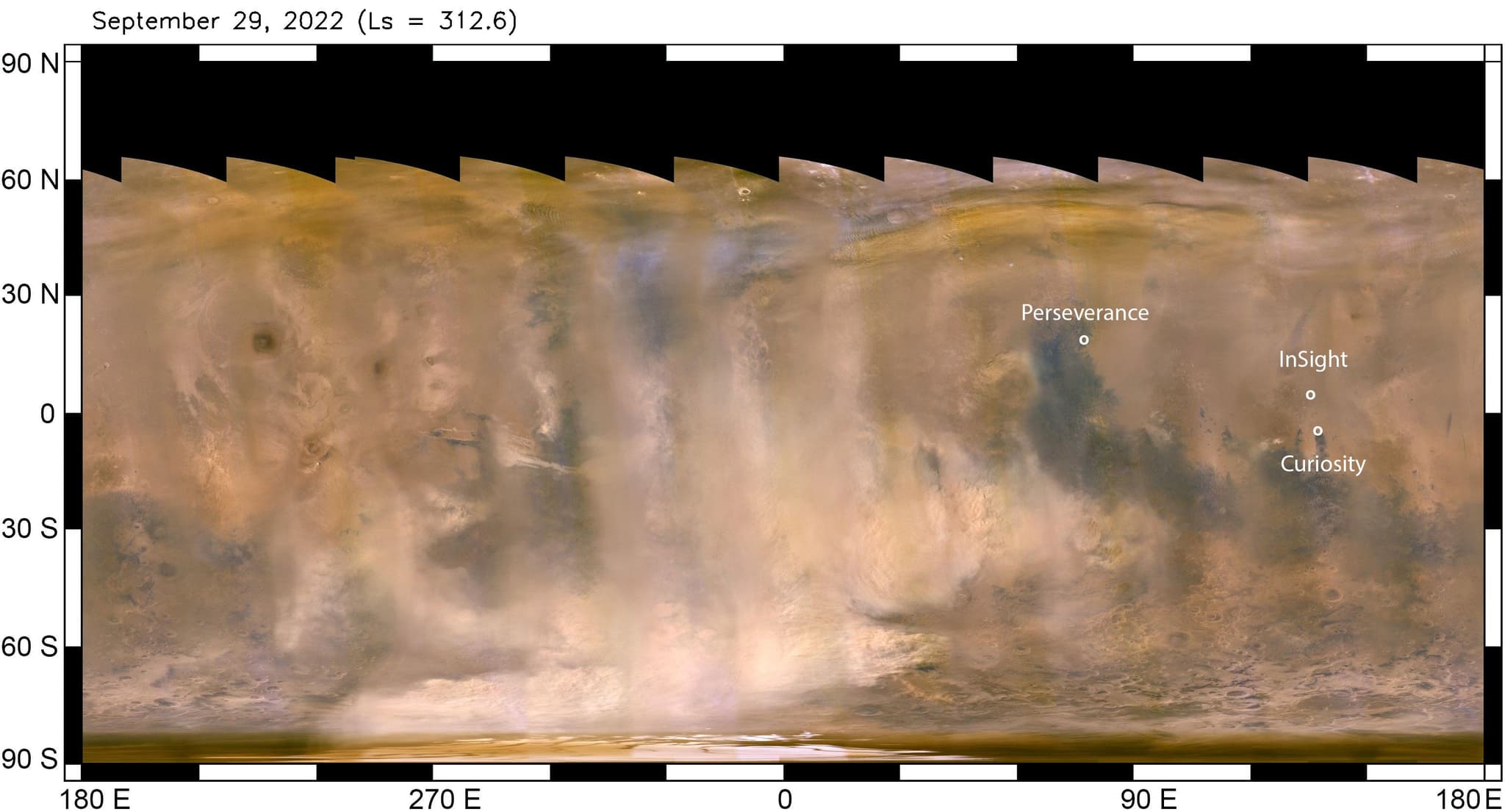
Mars Reconnaissance Orbiter's MARCI camera captured a continent-size dust storm moving across the planet in September 2022, visible as a beige haze spreading over 2,000 kilometers in this flat global projection. By monitoring such storms via MRO's daily imaging, scientists can track circulation patterns that occasionally envelop the entire planet, a phenomenon that blocked 99% of sunlight in 2018 and remains the leading threat to solar-powered rovers.
- –#8
Twin Rover Twins — Curiosity and Perseverance Engineering Models
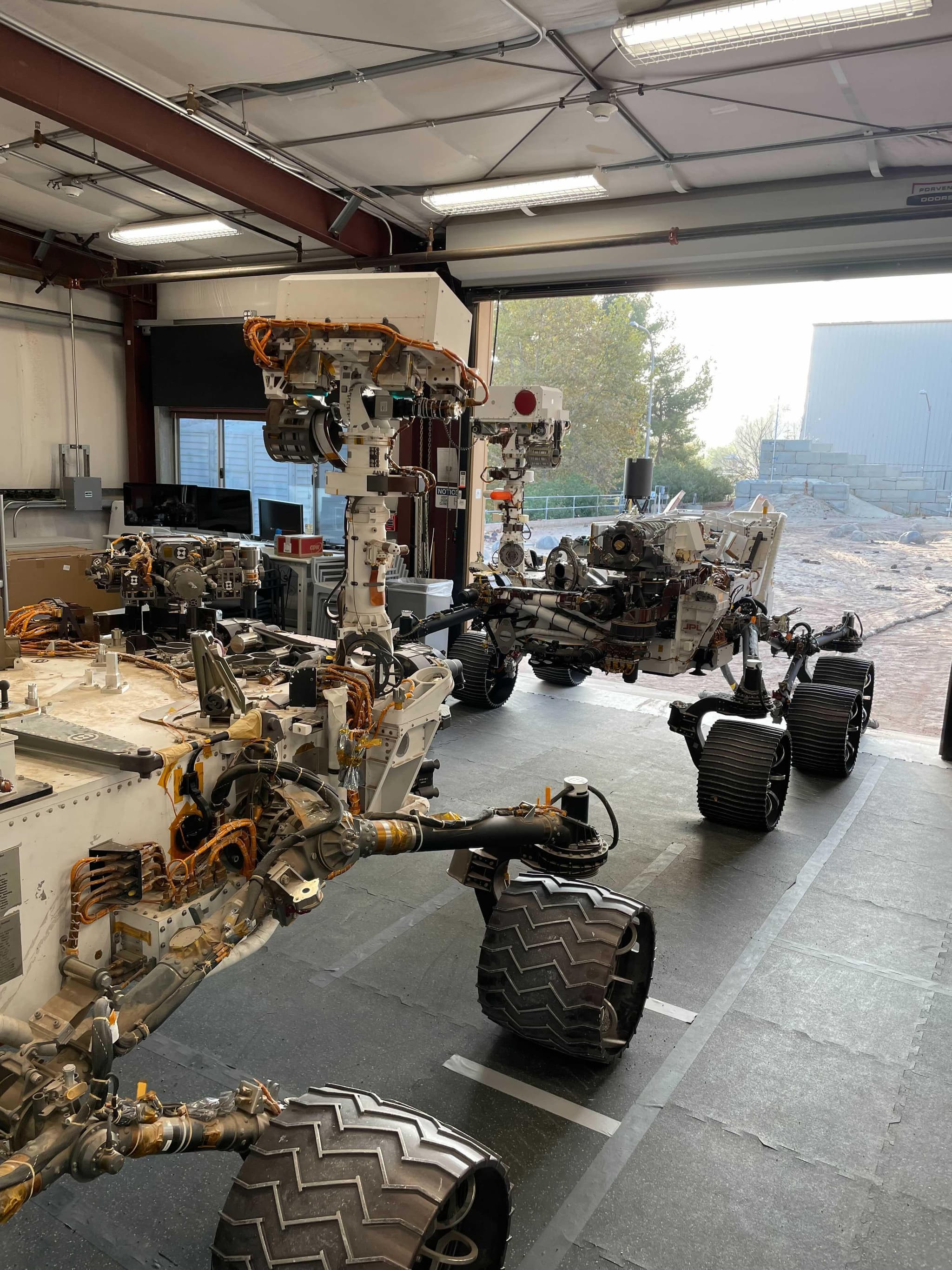
In late 2021, Curiosity's test double MAGGIE and Perseverance's OPTIMISM shared JPL's Mars Yard floor for the first time, full-scale replicas used to rehearse every drive and sample drill before commanding Mars rovers with a 24-minute light-speed delay. Each replica costs $5 million to build and integrates 95% identical hardware to its Martian counterpart, ensuring that every maneuver, from Curiosity's rock abrasion to Perseverance's core sampling, is practiced risk-free on Earth first.
- –#9
Mars Rover Studies Soil — Opportunity at Meridiani Planum
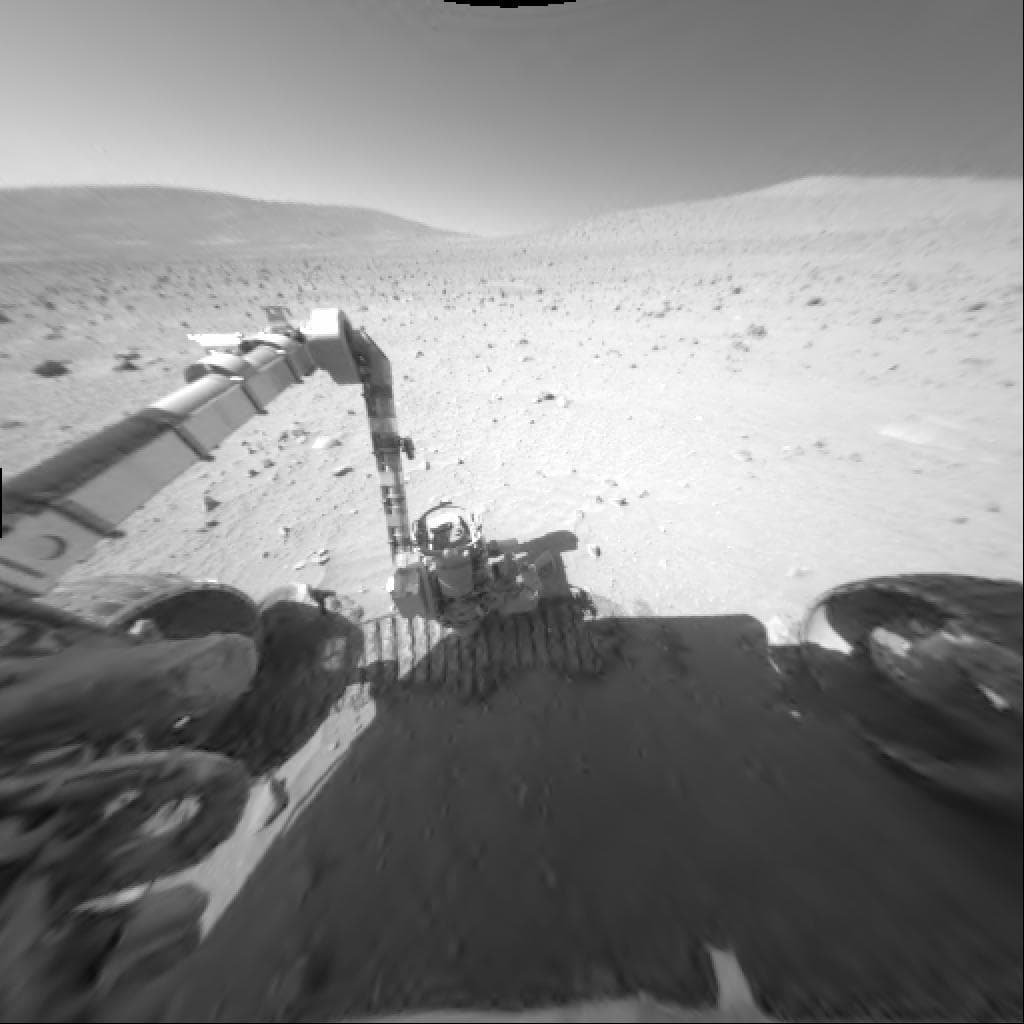
Opportunity's 2004 soil analysis at Meridiani Planum provided definitive proof of past liquid water on Mars, leveraging its arm-mounted spectrometers to detect hematite-rich 'blueberries' — spherical concretions formed in water-saturated conditions. The findings marked a paradigm shift in Mars exploration, establishing Meridiani as a prime candidate for ancient habitable environments and setting a benchmark for subsequent missions like Curiosity to gauge sediment chemistry.
- –#10
Artist Concept of Rover on Mars — Spirit and Opportunity
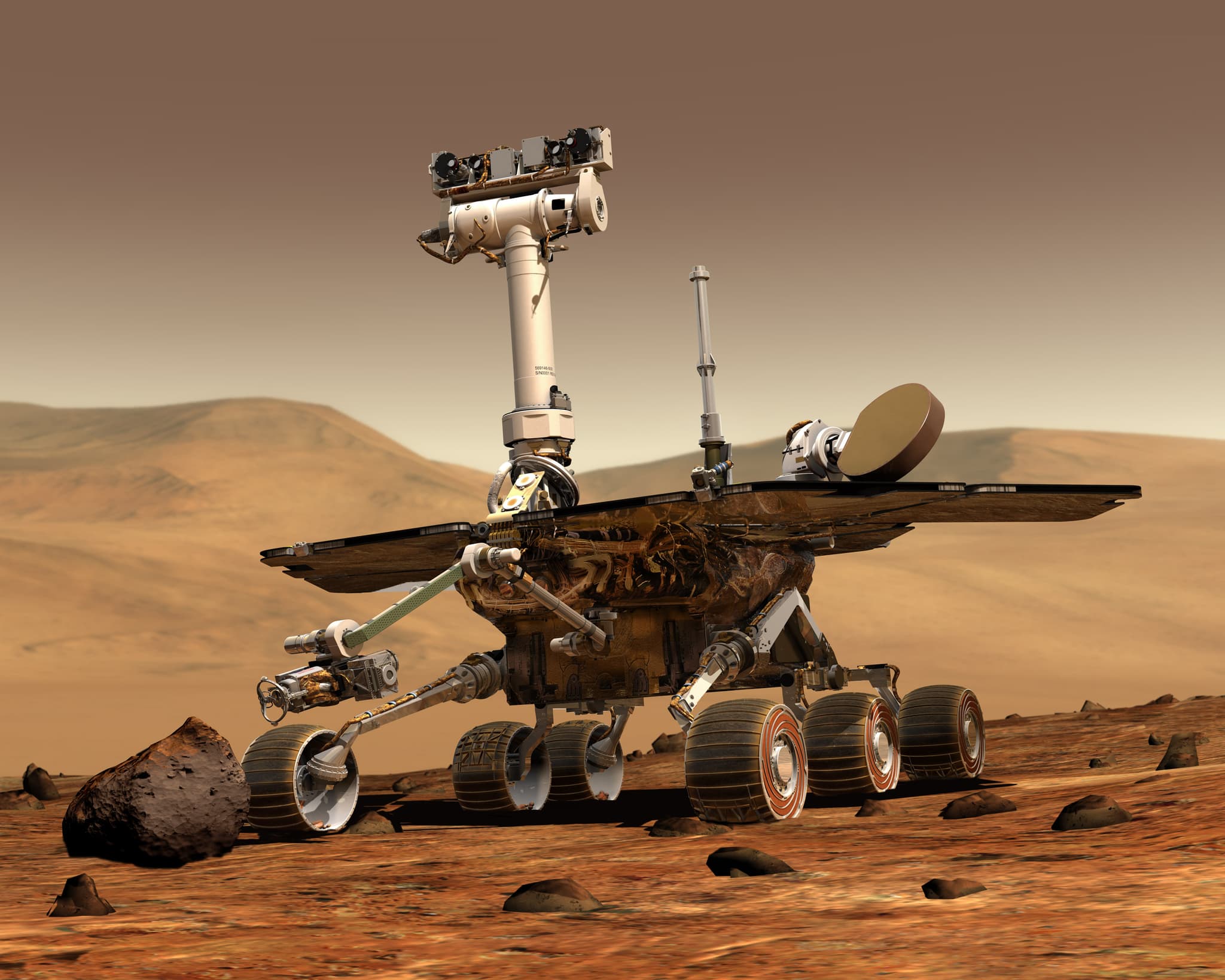
This 2003 artist concept visualizes the Mars Exploration Rover design that enabled Spirit and Opportunity to defy their 90-day planned lifespans, with Opportunity enduring 5,498 Martian days — 60 times longer than the nominal mission. The illustration's value is enhanced by concrete data: Opportunity's hematite discovery at Meridiani Planum was directly tied to this wheeled platform's mobility.
Mars Rover Images: Frequently Asked Questions
Which Mars rovers are still operating? Curiosity landed in 2012 and Perseverance in 2021; both remain active. Opportunity's mission ended in 2018 after a planet-encircling dust storm, and Spirit stopped communicating in 2010.
What cameras do the rovers use? Perseverance carries Mastcam-Z and the MEDA/SHERLOC imaging suite; Curiosity uses Mastcam and its black-and-white Navcams; the now-defunct Opportunity and Spirit relied on Pancam and Navcam.
How do the rovers send images back to Earth? Images are relayed through orbiting spacecraft such as the Mars Reconnaissance Orbiter and Mars Odyssey, then downlinked to NASA's Deep Space Network.
What is the Three Forks sample depot? A cache site where Perseverance deposited duplicate sample tubes in early 2023 so a future mission could retrieve them as a backup to the rover-delivered cache.
Are these images colorized or real? Most are returned in grayscale from engineering cameras and color from Mastcam; NASA publishes both raw and calibrated versions.
Image credits
- Perseverance Views Drifting Clouds: NASA / JPL-Caltech (2023)
- Perseverance Selfie With Sample Tubes — Three Forks Depot: NASA / JPL-Caltech / MSSS (2023)
- Perseverance's Three Forks Sample Depot Selfie: NASA / JPL-Caltech / MSSS (2023)
- Curiosity's Navcam Panorama at "Sequoia": NASA / JPL-Caltech (2023)
- Perseverance's Mastcam-Z Captures a Phobos Solar Eclipse: NASA / JPL-Caltech / ASU / MSSS (2022)
- SHERLOC's View of Organics Within the Garde Abrasion Patch: NASA / JPL-Caltech / MSSS / LANL / PhotonSys (2021)
- Mars Continent-Size Dust Storm — MRO Global View: NASA / JPL-Caltech / MSSS (2022)
- Twin Rover Twins — Curiosity and Perseverance Engineering Models: NASA / JPL-Caltech (2021)
- Mars Rover Studies Soil — Opportunity at Meridiani Planum: NASA / JPL (2004)
- Artist Concept of Rover on Mars — Spirit and Opportunity: NASA / JPL (2003)
Frequently asked questions
Which Mars rovers have captured the most stunning images?
NASA's Perseverance, Curiosity, Opportunity, and Spirit rovers have all captured stunning images, with Perseverance and Curiosity providing the highest-resolution color photos of the Martian surface.
Are the colors in Mars rover images real or enhanced?
Rover images are typically adjusted to show what the scene would look like under Earth-like lighting conditions, but raw images are also available; the adjustments help scientists identify geological features.
What is the most famous Mars rover image ever taken?
One of the most iconic is the 'Seven Minutes of Terror' descent video, but for still images, Curiosity's selfie at the 'Rocknest' sand dune or the 'Atmospheric Entry, Descent and Landing' shots by Perseverance are widely recognized.
How are high-resolution Mars rover images transmitted back to Earth?
Rovers use UHF radio signals relayed through Mars orbiters like Mars Reconnaissance Orbiter, which then beam the data to Earth via X-band radio, allowing images to be downlinked over days.
Can the public access raw Mars rover images?
Yes, NASA makes all raw images from its active rovers publicly available on the Mars Raw Image Explorer websites for Perseverance, Curiosity, and earlier rovers.
Rank it your way
Remix this list into your own ranking, or head to the play hub for every game mode and community breakdown — blind mode, challenges, tier lists, and more.
You Might Also Like
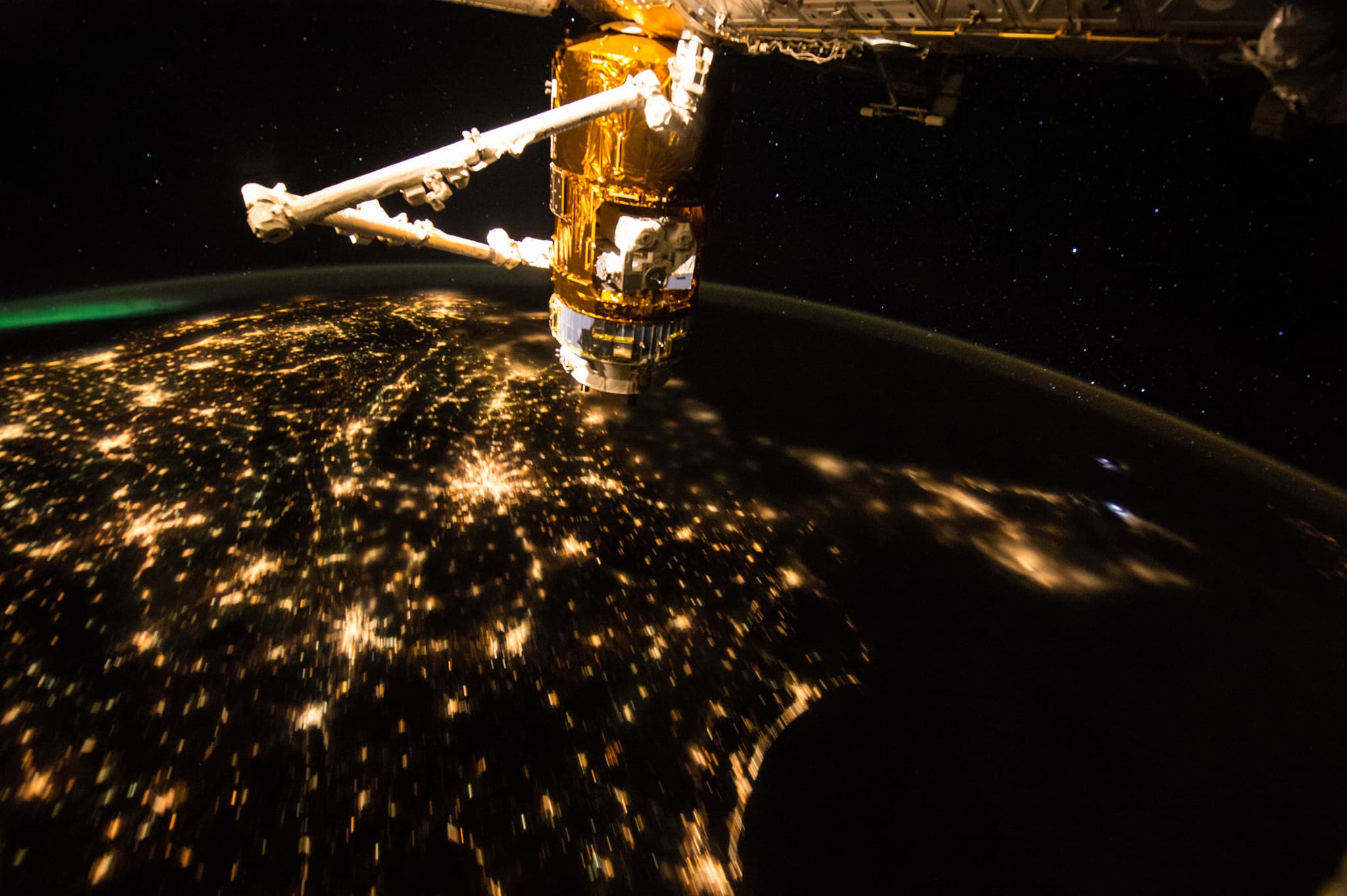
Home, Seen From Above: Earth's Most Breathtaking Views from Space
Home, Seen From Above: Earth's Most Breathtaking Views fr...
Top 10 Best Space Telescopes
Top 10 Best Space Telescopes
Jupiter's Violent Beauty: Juno's Most Extraordinary Discoveries
Jupiter's Violent Beauty: Juno's Most Extraordinary Disco...
Stellar Nurseries: The Nebulae Shaping New Worlds
#1 Horsehead Nebula — Rising From a Sea of Dust and Gas · #2 Dumbbell Nebula (Messier 27) — Infrared Spitzer View · #3 Ant Nebula — The Future of Our Sun

The 10 AI Research Papers That Defined 2012–2024 (From AlexNet to Diffusion Models)
#1 Attention Is All You Need · #2 ImageNet Classification with Deep Convolutional Neural Networks (AlexNet) · #3 Playing Atari with Deep Reinforcement Learning (DQN)

Top 10 Ancient Chinese Inventions
#1 Paper (105 CE) · #2 Printing Press (Movable Type, 1040 CE) · #3 Gunpowder (9th century CE)