








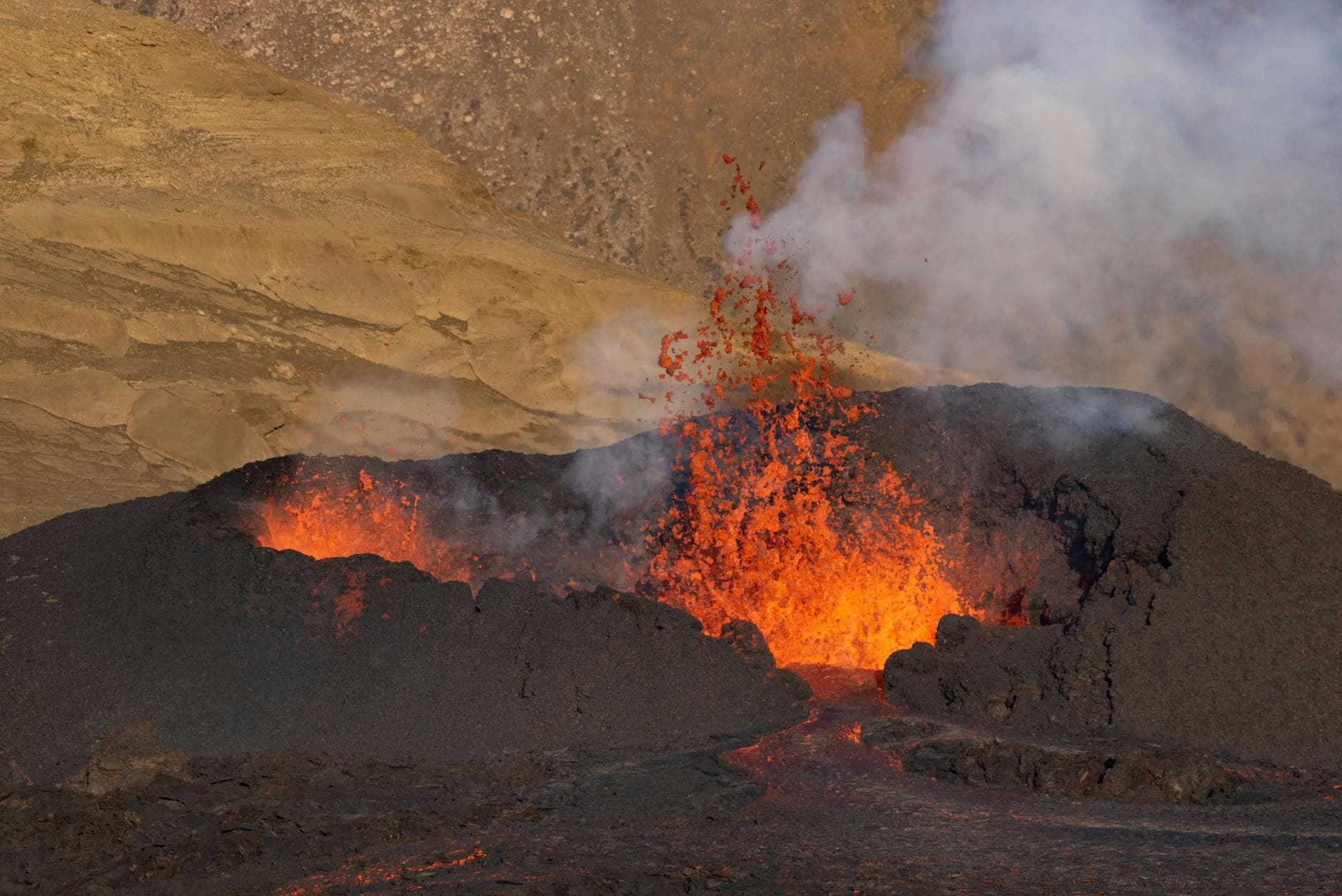
Wikimedia Commons — Pacific Ring of Fire
Scientific Discovery
Tectonic Hotspots: the Week's Most Powerful Earthquakes Ranked
Every week, the USGS logs roughly 1,500 earthquakes above magnitude 4.5 — events powerful enough to be felt locally, to rattle dishes, and in vulnerable regions to cause real damage. Most of them strike in the same dozen tectonic hotspots, the same fault systems and subduction zones that have been generating earthquakes for millions of years. These are the week's largest by raw magnitude: the Pacific's outer arcs, the collision zones of the Mediterranean, the subduction trenches of the western Pacific. Each entry is a data point in the planet's ongoing geological autobiography.
2026112 views
Top10Grid rankings are decided by votes, not algorithms — use the buttons below to move this list.
Current Rankings
Vote items up or down — rankings update instantly
Get the weekly science rundown
Only lists published since the last email. Join the early readers.
- Only Top 10s published in the last 7 days
- One email a week — and none at all in a week with nothing new
- Unsubscribe in one click
No spam. One email per week. Unsubscribe anytime.
How is this list compiled?
## Frequently Asked Questions
Where does the earthquake data come from? All events are drawn from the USGS Earthquake Hazards Program feed, which publishes global seismic events in near real time.
Why rank by magnitude? Magnitude is the most consistent cross-region measure of an earthquake's energy release and is reported for every event above magnitude 4.5 worldwide.
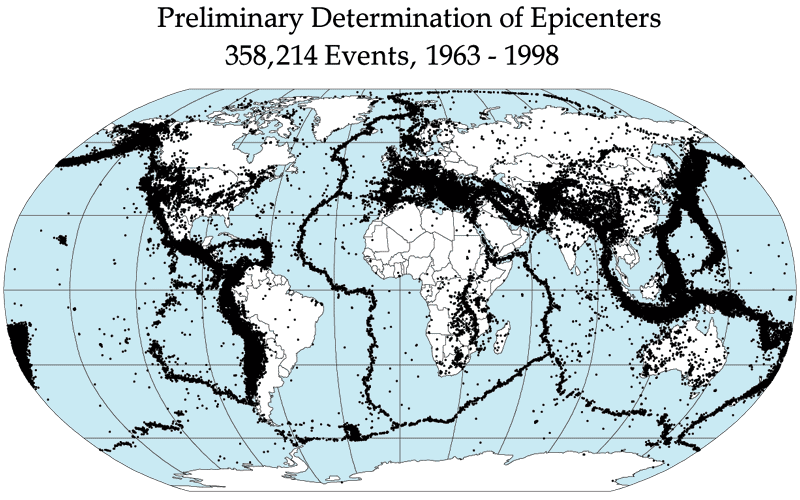
Why do so many events cluster in the same regions? The Ring of Fire, the Alpine-Himalayan belt, and the mid-ocean ridges concentrate ~90% of global seismic energy because that is where tectonic plates meet, subduct, or slide past each other.
Do these events include aftershocks? Yes. When an aftershock falls within the top ten magnitudes of the week, it is included and labeled as an aftershock in its entry.
Frequently Asked Questions About This Week's Largest Earthquakes
How are these earthquakes ranked?
By raw moment magnitude as reported in the USGS real-time earthquake feed for the seven days preceding publication. Larger magnitude means more energy released at the source.
Why do so many of the week's strongest quakes cluster along the Pacific?
Most of the events on this list sit on the Pacific Ring of Fire, the belt of subduction zones and transform faults that rings the Pacific Ocean. Subduction zones — where one tectonic plate dives beneath another — produce the largest earthquakes on Earth.
What does 'M 6.3' mean?
'M' stands for moment magnitude, the modern scale used for earthquakes above roughly magnitude 3.5. Each whole-number increase represents about 32 times more energy released.
Is a magnitude 5.5 earthquake dangerous?
In a populated area with vulnerable buildings, yes — a magnitude 5.5 can cause significant damage. At sea, as with several events on this list, it typically produces only small, locally felt shaking.
Where can I verify these events?
Every entry links to the corresponding USGS event page with origin time, depth, and reviewed coordinates.
Readers Also Ranked
More Lists Like This

Top 10 Deadliest Pandemics in Human History — The Diseases That Reshaped Civilization
- #1The Black Death (1347-1351) — 75-200 Million Dead
- #2Spanish Flu (1918-1920) — 50-100 Million Dead
- #3The Plague of Justinian (541-549 AD) — 25-50 Million Dead

Top 10 Robotics & AI Breakthroughs of 2024–2025
- #1AlphaFold 3
- #2Figure 02 Humanoid Robot
- #3Sora Text-to-Video Model
Top 10 Best Scientific Documentaries
- #1Cosmos: A Personal Voyage (1980)
- #2Planet Earth (2006)
- #3An Inconvenient Truth (2006)
Frequently asked questions
How are earthquakes ranked by power in a weekly list?
Earthquakes are ranked by their magnitude, which is a measure of the energy released at the source, typically using the moment magnitude scale (Mw) or Richter scale.
What are tectonic hotspots?
Tectonic hotspots are regions of intense seismic activity driven by plate boundaries or mantle plumes, such as the Ring of Fire, where frequent and powerful earthquakes occur.
Why do the most powerful earthquakes often happen near plate boundaries?
Plate boundaries are zones where tectonic plates collide, pull apart, or slide past each other, building up stress that is released as powerful earthquakes.
What does the magnitude of an earthquake indicate?
Magnitude quantifies the amount of seismic energy released; each whole number increase represents about 32 times more energy release (e.g., a magnitude 6 is 32 times stronger than a magnitude 5).
How can I stay updated on the week's most powerful earthquakes?
Check real-time seismic reports from agencies like the USGS (U.S. Geological Survey) or EMSC (European-Mediterranean Seismological Centre), which provide weekly rankings and maps.
Discussion
Have a take on this ranking?
Comments are how the argument actually happens here. Posting one needs a free account — it takes about a minute.
No comments yet.
The first comment sets the terms of the argument.
Would your top 10 look different?
Publish your own ranking of this topic. Your list gets its own page, and readers vote on it the same way you just voted on this one.
Build your own Top 10More Scientific Discoveries Rankings
6
James Webb's First Year: Images That Rewrote What We Know
107 views · @admin
Jupiter's Violent Beauty: Juno's Most Extraordinary Discoveries
107 views · @admin
Top 10 Biggest Natural Disasters of 2025
107 views · @admin

Top 10 Most Significant Scientific Discoveries of 2025
107 views · @admin
Discoveries at the Edge of the Universe: Recent Astrophysics Papers
108 views · @admin
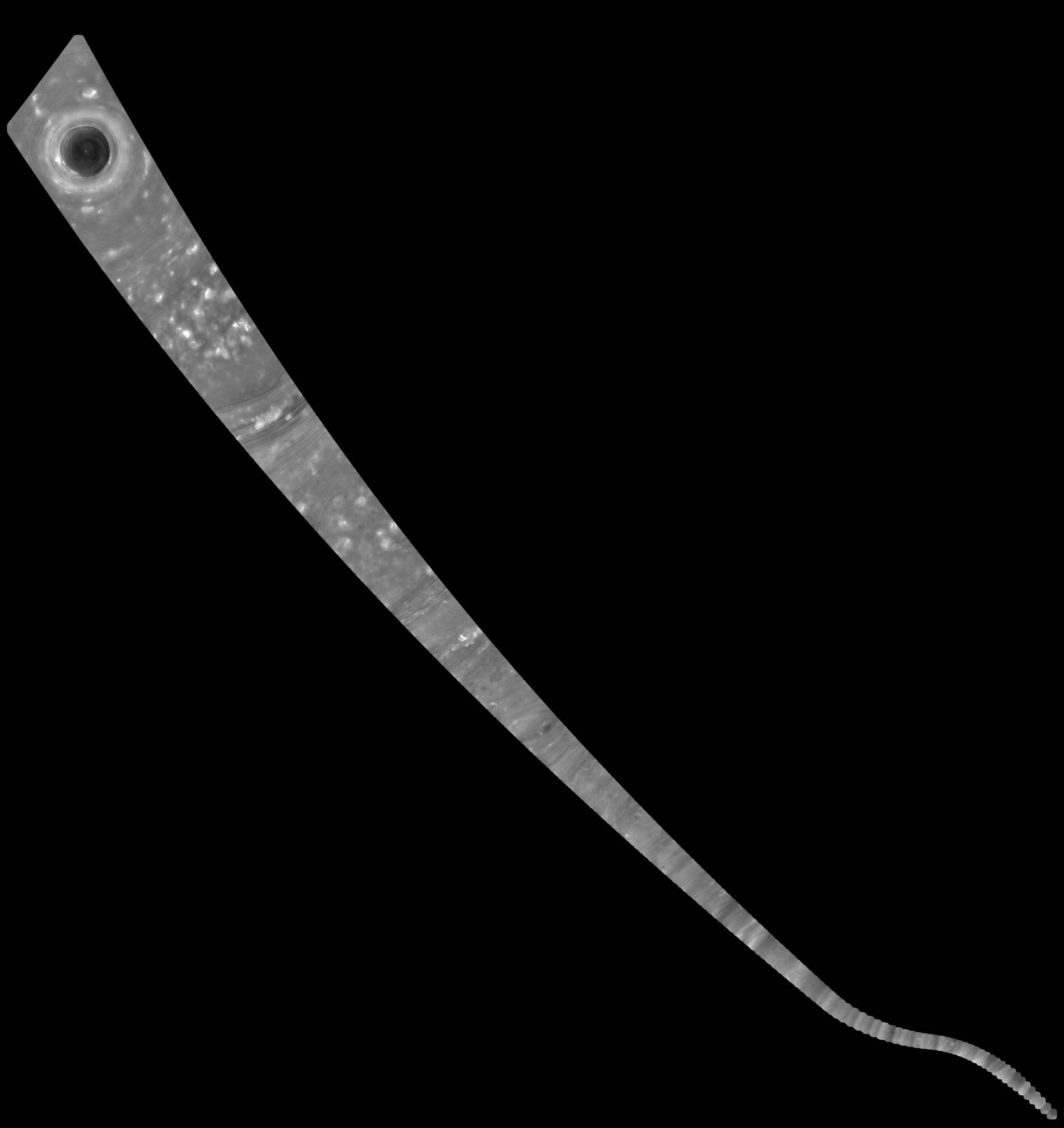
Saturn Up Close: Cassini's Legacy in Its Most Iconic Frames
108 views · @admin
You might also want to rank…
 Top 10 Best Dinosaur Discoveries
 Top 10 Best Scientific Instruments Ever Built
 Top 10 Worst Scientific Frauds
 Top 10 Most Controversial Science Theories
Explore more Science rankings on Top10Grid
People Also Explore
Because you're viewing Science

Wikipedia's 25 Most-Viewed Pages of March 2026: Iran War, Khamenei & Breaking World News
118 views · 0 votes
Ring of Fire: The Pacific's Most Active Earthquake Zones This Month
119 views · 0 votes
Top 10 Archaeological Discoveries That Support the Bible
120 views · 0 votes
Top 10 Tallest Buildings in the World (2026)
121 views · 0 votes

Top 10 Most Impactful Space Events of 2025
122 views · 0 votes

Top 10 Inventions That Changed Human Civilization More Than Anything Else in History
123 views · 0 votes
You might also like
SCIENCESame type
The Earth Shook: The Most Significant Earthquakes of the Past Month
10 items

SCIENCESame type
Top 10 Most Overhyped Science Headlines
10 items
SCIENCESame type
Top 10 Best Marine Biology Discoveries
10 items

SCIENCESame type
Top 10 Worst Pseudoscience Practices
10 items
SCIENCESame type
Top 10 Worst Nuclear Incidents
10 items

SCIENCESame type
Top 10 Debunked Science Myths People Still Believe
10 items