





The original uploader was Snow storm in Eastern Asia at English Wikipedia. / Wikimedia Commons (CC BY 3.0)
Top 10 Best Index Funds for Long-Term Investors in 2026
In 2026, the case for index funds is stronger than ever. With over 90% of active managers trailing their benchmarks over the past 15 years (SPIVA), the real question isn't whether to index—it's which funds to choose. This curated list of the 10 best index funds evaluates each on expense ratio, tracking error, diversification, liquidity, and long-term wealth-building potential. We cover broad market, international, bond, and sector-specific funds, drawing on the latest data from Morningstar, Vanguard, Fidelity, and iShares. Whether you're building a core portfolio or targeting specific asset classes, these picks are designed for the disciplined investor.
433 views
Top10Grid rankings are decided by votes, not algorithms — use the buttons below to move this list.
Current Rankings
Vote items up or down — rankings update instantly
Get the weekly finance rundown
Only lists published since the last email. Join the early readers.
- Only Top 10s published in the last 7 days
- One email a week — and none at all in a week with nothing new
- Unsubscribe in one click
No spam. One email per week. Unsubscribe anytime.
Frequently Asked Questions About Index Funds in 2026
## Frequently Asked Questions About Index Funds in 2026
Are index funds still a good idea in 2026? Yes. With over 90% of active managers trailing their benchmarks over the past 15 years (per SPIVA data referenced in the intro), low-cost index funds remain one of the most reliable ways for long-term investors to build wealth.
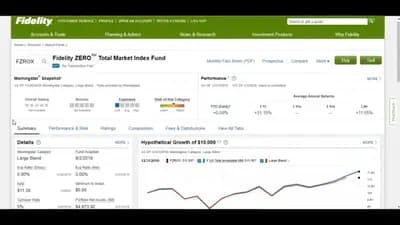
What expense ratio is considered low for an index fund? Anything at or below 0.10% is competitive for broad-market index funds in 2026. Several funds on this list, such as VXUS (0.07%) and FZROX (0.00%), sit at or below that threshold.
VOO vs VTI — which is better for long-term investors? VOO tracks the S&P 500 (500 large-cap U.S. companies), while VTI tracks the entire U.S. stock market (3,800+ companies, including small- and mid-cap). For broadest single-fund U.S. exposure, VTI wins; for the lowest expense ratio on large-caps, VOO wins. Many long-term investors hold both.
How long should I hold an index fund? Most of the funds on this list are designed for multi-decade holding periods. Short-term volatility is normal; the long-term wealth-building benefit comes from compounding over 10+ years.
Do index funds pay dividends? Many do. Funds such as SCHD on this list are specifically chosen for dividend income, while broad-market funds like VOO and VTI also pay quarterly dividends that can be reinvested.
*Have a question we missed? Vote for your favorite fund above and leave a comment — we read every one.*
Core vs. satellite
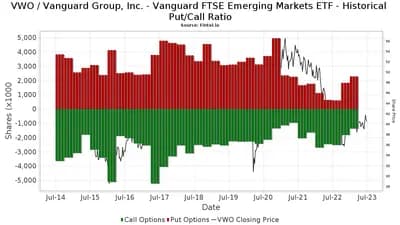
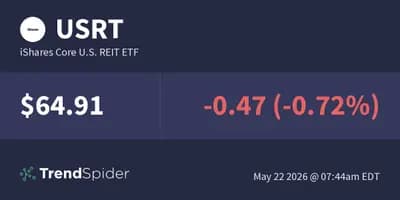
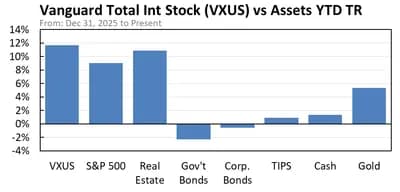
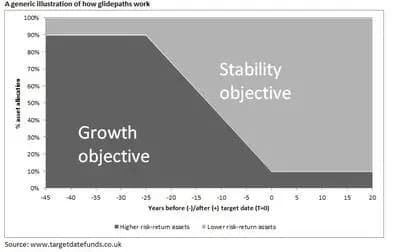
Most of the funds on this list fall into one of two roles. VTI, VOO, and the Vanguard Target Retirement funds are "core" holdings — broad and diversified enough to be the entire portfolio on their own. BND, VWO, SCHD, USRT, and VXUS are "satellite" holdings — they add a specific tilt (bonds, emerging markets, dividends, real estate, international) on top of a core position, not instead of one. If you only want to own a single fund, it should come from the first group.
What actually separates these funds
The expense-ratio differences across this list are small in absolute terms — the gap between the cheapest fund here (FZROX at 0%) and the priciest (several funds around 0.08%) amounts to a few dollars a year on a typical account balance. What actually separates these funds is asset class and role, not cost: a total-market fund, a bond fund, and a REIT fund aren't competing for the same dollar, they're built to do different jobs inside the same portfolio.
Readers Also Ranked
More Lists Like This

Top 10 CoinGecko — Top Cryptocurrencies — August 24, 2026
- #1Bitcoin (BTC)
- #2Ethereum (ETH)
- #3Tether (USDT)
Top 10 CoinGecko — Top Cryptocurrencies — August 23, 2026
- #1Bitcoin (BTC)
- #2Ethereum (ETH)
- #3Tether (USDT)
Top 10 Cryptocurrencies by Market Cap — August 12, 2026
- #1Bitcoin (BTC)
- #2Ethereum (ETH)
- #3Tether (USDT)
Top 10 CoinGecko — Top Cryptocurrencies — August 22, 2026
- #1Bitcoin (BTC)
- #2Ethereum (ETH)
- #3Tether (USDT)
Frequently asked questions
What is an index fund and why is it suitable for long-term investors?
An index fund is a passively managed fund that tracks a specific market index, such as the S&P 500, offering broad diversification and low costs. Its buy-and-hold nature and historical long-term growth make it ideal for investors seeking steady, low-maintenance returns.
How do index funds compare to actively managed funds for long-term growth?
Index funds typically outperform the majority of actively managed funds over long periods due to lower expense ratios and tax efficiency, as active managers often fail to consistently beat the market after fees.
What are the key factors to consider when selecting an index fund for long-term investing?
Focus on low expense ratios, broad diversification (e.g., total market or S&P 500 index), strong historical tracking error, and high liquidity. For 2026, also consider funds with exposure to growth sectors like technology or emerging markets if aligned with your risk tolerance.
Are low-cost index funds better for long-term returns?
Yes, because lower expense ratios directly compound into higher net returns over decades. Even a 0.1% difference in fees can result in tens of thousands of dollars less in gains over a 30-year horizon.
How often should I rebalance my index fund portfolio for long-term investing?
Rebalancing once or twice a year is sufficient for long-term investors to maintain target asset allocation without incurring excessive transaction costs or tax consequences. Avoid frequent trading to maximize the benefits of buy-and-hold strategy.
Discussion
Have a take on this ranking?
Comments are how the argument actually happens here. Posting one needs a free account — it takes about a minute.
No comments yet.
The first comment sets the terms of the argument.
Would your top 10 look different?
Publish your own ranking of this topic. Your list gets its own page, and readers vote on it the same way you just voted on this one.
Build your own Top 10You might also want to rank…
 Top 10 Best Health Insurance Plans in Hong Kong
 Top 10 European Reinsurers by Net Premium Written
 Top 10 CoinGecko — Top Cryptocurrencies — May 9, 2026Top 10 CoinGecko — Top Cryptocurrencies — August 10, 2026
Explore more Finance rankings on Top10Grid
People Also Explore
Because you're viewing Finance

Top 10 CoinGecko — Top Cryptocurrencies — March 17, 2026
231 views · 0 votes
Top 10 Credit Card Networks Dominating Global Payments
231 views · 0 votes
Top 10 European Open Banking Platforms
231 views · 0 votes

Top 10 Digital Banks in Hong Kong (2026 Ranked & Reviewed)
232 views · 0 votes
Top 10 US Mortgage Lenders by Origination Volume
233 views · 0 votes

Top 10 US Buy Now, Pay Later (BNPL) Companies in 2025 — Ranked & Reviewed
234 views · 0 votes
You might also like

FINANCESame type
Top 10 FinTech Unicorns 2026
10 items

FINANCESame type
Top 10 Biggest Fortunes Lost in History: Billions Gone Overnight
10 items

FINANCESame type
Top 10 US Investment Banks by Revenue 2025
10 items

FINANCESame type
Top 10 US Hedge Funds by Assets Under Management
10 items

FINANCESame type
Top 10 US Mobile Banking Apps 2026
10 items

FINANCESame type
Top 10 European Microfinance Institutions
10 items