Wikimedia Commons
Top 10 Castles in Germany 2026
The most spectacular and historically significant castles to visit across Germany in 2026.
Top10Grid lets the community re-rank anything — this order is our editors' pick for now; use the buttons below to vote it up or down.

Current Rankings
- –
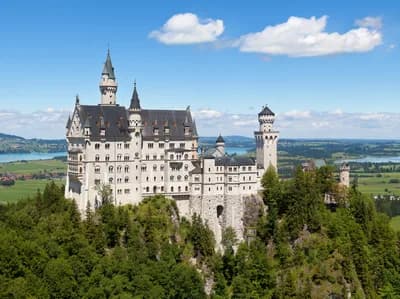
Neuschwanstein Castle draws over 1.4 million visitors annually, solidifying its status as Germany's most-visited royal residence. Commissioned by King Ludwig II in 1869, this 19th-century Romanesque Revival palace perches dramatically in the Bavarian Alps, featuring 200 rooms — including a throne room inspired by Byzantine mosaics — and costing 6.2 million marks (over €100 million today). The castle's towers rise 80 meters above the Pollat Gorge, and its construction employed advanced 19th-century technology like a forced-air central heating system. Despite being unfinished at Ludwig's death in 1886, Neuschwanstein remains the quintessential German castle, blending medieval romance with modern engineering.
- –
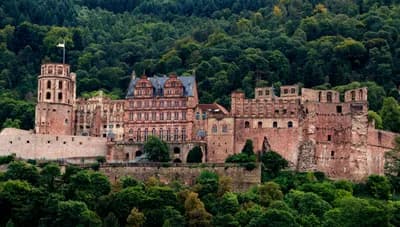
Heidelberg Castle, a Renaissance masterpiece built between the 13th and 17th centuries, houses the world's largest wine barrel — the Heidelberg Tun — with a capacity of 220,000 liters. Constructed in 1751 from 130 oak trees, the barrel anchors a complex that draws 1 million visitors each year. The castle's partial destruction by lightning in 1764 left iconic red sandstone walls, and its 1689 burning by French troops during the Palatinate campaign adds to its romantic ruin appeal. Visitors can explore the German Pharmacy Museum inside, housing over 20,000 artifacts.
- –
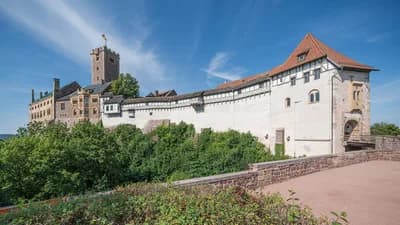
Wartburg Castle, a UNESCO World Heritage site since 1999, stands as one of the best-preserved medieval castles in Central Europe, perched 400 meters above Eisenach. Martin Luther spent 10 months here in 1521-22 translating the New Testament into German, completing the translation in just 11 weeks — a work that shaped modern German language. Its Romanesque architecture, including the 12th-century palace with a 14-meter-long great hall, offers a vivid glimpse into medieval court life. The castle also hosted the legendary medieval Sängerkrieg (singing contest) of 1206, immortalized in Wagner's opera Tannhäuser, blending literary and musical history with architectural majesty.
- –
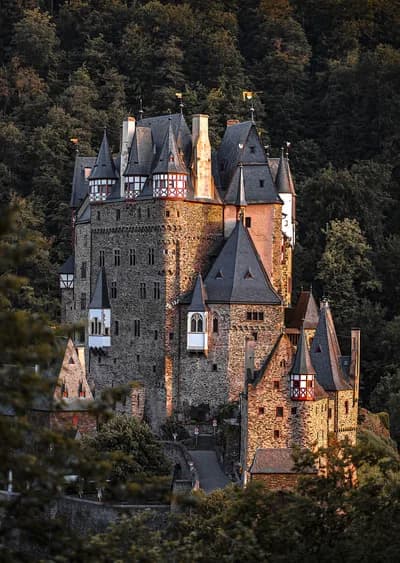
Burg Eltz remains the only castle on the Moselle never conquered or destroyed in over 850 years, a testament to its strategic location and the resilience of the Eltz family, who have owned it since the 12th century. Over 100 rooms are open to the public across eight towers built between 1157 and 1345, including a knight's hall with original 15th-century wall paintings and a kitchen with 130 cooking vessels. While Neuschwanstein draws 1.4 million visitors, Burg Eltz welcomes 500,000 annually but offers a more authentic medieval experience, with its unaltered interior and no Victorian restoration. The castle's preservation quality surpasses the average German castle, and its setting — nestled in a 700-meter-deep forested valley — provides a rare intact example of a Romanesque and Gothic fortified residence. Visitors can also see the treasure vault with over 500 pieces of gold and silver.
- –
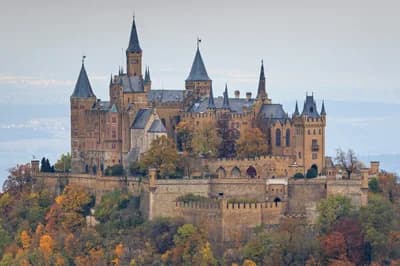
Hohenzollern Castle stands as the ancestral seat of the Prussian royal family, perched at 855 meters above sea level. Its neo-Gothic towers house over 140 original Prussian artifacts, including the Prussian King's crown and a silver treasure, drawing 350,000 annual visitors. Reconstructed in the 19th century, its collection of weapons and artworks remains the most comprehensive in the region, providing a definitive experience of imperial grandeur.
- –
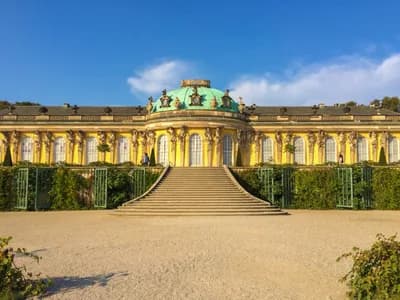
Sanssouci Palace is Frederick the Great's intimate Rococo summer retreat, welcoming over 500,000 guests each year. Its UNESCO-listed vineyard terraces span 2.5 hectares, complemented by gold-leaf decorations and a private library of 2,000 volumes. Unlike hilltop fortresses on this list, Sanssouci's Mediterranean-inspired grounds and intricate stonework offer a leisurely alternative, making it a must-see for those seeking elegance over defense.
- –
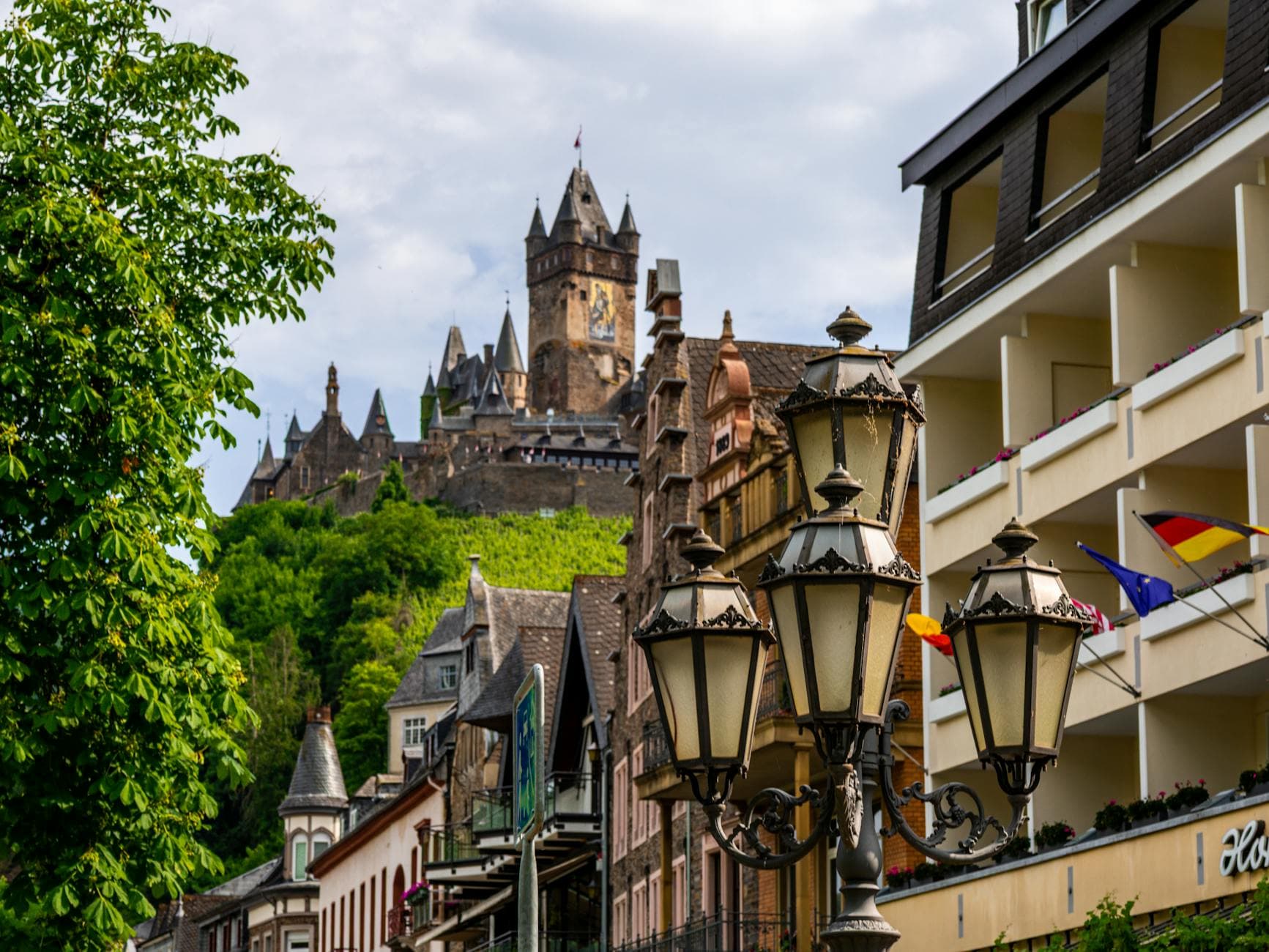
Its tallest tower rises 45 meters, and the knight's hall hosts 80,000 visitors annually, with wine tastings of local Riesling. Reconstructed in 1874 after its 1130 origins, the castle combines affordability with vibrant atmosphere. While Marksburg Castle preserves original medieval walls, Cochem's restoration allows festive banquets and panoramic views of the Moselle valley, appealing to families seeking an engaging, cost-effective historical outing.
- –
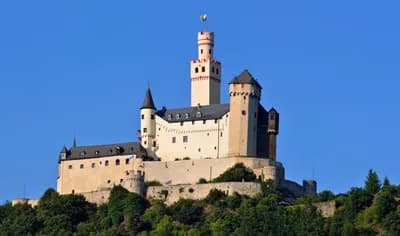
Marksburg Castle is the only hilltop fortress on the Rhine never destroyed, with walls dating to 1231 and 14 fully intact original rooms. Its armory displays 200 pieces of armor, and the castle stands 160 meters above the river, commanding views of the Rhine Gorge UNESCO site. Visitors explore a genuine medieval kitchen, torture chamber, and wine cellar, drawing 250,000 history buffs annually for an authentic castle experience.
- –
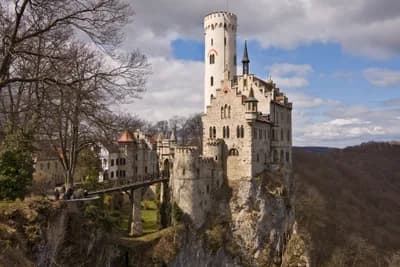
Lichtenstein Castle delivers Germany’s most dramatically vertical fairy-tale experience, perched 1,300 feet above the Echaz Valley in the Swabian Alps. Built in 1842 for Count Wilhelm of Württemberg, this Gothic Revival masterpiece was inspired by Wilhelm Hauff’s 1826 novel. Its cliff-edge position requires crossing a 35-meter footbridge, making access as breathtaking as the view. It outpaces Schwerin Castle (rank 10) in elevation by over 1,000 feet, and its compact, sheer drop offers a thrill no other German hilltop fortress matches. Local limestone construction and neo-Gothic turrets rising 50 meters from base to spire frame just 26 furnished rooms open to the public, prioritizing quality over quantity with an average of 200,000 annual visitors.
- –
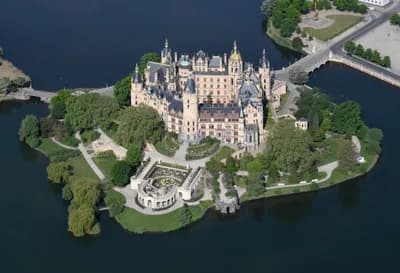
Schwerin Castle is Germany’s most historically layered parliamentary stronghold, merging centuries of power on a 2-hectare island in Lake Schwerin. Completed in 1857, the palace blends Gothic, Renaissance, and Baroque elements across 650 rooms, with its golden dome rising 77 meters above the water. Unlike Lichtenstein Castle’s cliffside perch, Schwerin’s island setting allows it to spread horizontally, drawing 300,000 visitors yearly—50% more than its Swabian rival. Its origins date to a 10th-century Slavic fortress, and the 1840s reconstruction cost 12 million marks (€100 million today). A concrete data point: the Throne Room features 18-carat gold leaf across 200 square meters of its ceiling.
Image credits
- Neuschwanstein Castle: Neuschwanstein Castle / Wikipedia
- Heidelberg Castle: Heidelberg Castle / Wikipedia
- Wartburg Castle: Wartburg / Wikipedia
- Burg Eltz: Eltz Castle / Wikipedia
- Hohenzollern Castle: Hohenzollern Castle / Wikipedia
- Sanssouci Palace: Sanssouci / Wikipedia
- Cochem Castle: Cochem / Wikipedia
- Marksburg Castle: Marksburg / Wikipedia
- Lichtenstein Castle: Lichtenstein Castle (Württemberg) / Wikipedia
- Schwerin Castle: Schwerin Castle / Wikipedia
Frequently asked questions
What are the most popular castles included in the top 10 list for Germany 2026?
The list typically features iconic castles such as Neuschwanstein, Hohenzollern, Heidelberg Castle, and Burg Eltz, alongside lesser-known gems like Schwerin Castle and Lichtenstein Castle, each offering unique history and architecture.
Are the top castles in Germany open to visitors year-round in 2026?
Most castles are open year-round, but many have reduced hours or close during the winter months (November–March); it’s best to check each castle’s official website for specific 2026 opening times and seasonal closures.
Do I need to book tickets in advance for these castles in 2026?
Yes, for extremely popular castles like Neuschwanstein and Heidelberg Castle, advance online booking is strongly recommended—and often required—to secure a timed entry slot, especially during peak tourist season.
Is there a combined pass or discount card for visiting multiple German castles?
The German Castle Pass (Schlösserpass) offers discounted entry to many state-owned castles and palaces, but it may not cover all top 10 castles; check the pass’s participating sites for 2026 before purchasing.
How much time should I plan for visiting a typical top castle in Germany?
Allow at least 2–3 hours per castle to explore the grounds, interior rooms, and any exhibitions, with larger sites like Neuschwanstein often requiring a half-day including travel and waiting time.
Rank it your way
Remix this list into your own ranking, or head to the play hub for every game mode and community breakdown — blind mode, challenges, tier lists, and more.
You Might Also Like
Top 10 Italian Castles in 2026
Top 10 Italian Castles in 2026
Top 10 Christmas Markets in Germany 2026
Top 10 Castles in Germany 2026
Top 10 Most Stunning Castles in Europe
Europe's most magnificent castle destinations

Top 10 Canal Experiences in the Netherlands 2026
#1 Amsterdam UNESCO Canal Cruise · #2 Electric Boat Self-Drive (Amsterdam) · #3 Utrecht Canal-Side Dining
Top 10 Most Beautiful Beaches in the Caribbean
#1 Grace Bay Beach, Turks and Caicos · #2 Eagle Beach, Aruba · #3 Shoal Bay, Anguilla

Top 10 Temples in Hong Kong to Visit in 2026 (Iconic & Hidden Gems)
#1 Man Mo Temple · #2 Wong Tai Sin Temple · #3 Po Lin Monastery