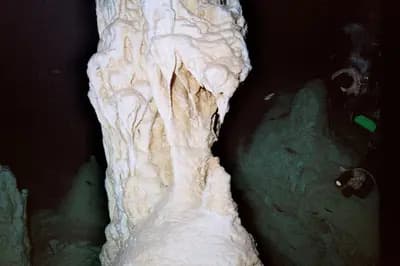
Serge Melki from Indianapolis, USA / Wikimedia Commons (CC BY 2.0)
Top 10 Cenotes in Mexico 2026: Best Sacred Swimming Holes & Cave Dives
The Yucatán Peninsula shelters the world's longest known underwater cave network — over 400 km of flooded passages that the ancient Maya revered as sacred portals to the underworld, as documented by Mexico's National Institute of Anthropology and History (INAH). Our editors ranked these ten cenotes on diver reviews, water clarity, and year-round accessibility. Read through, then vote for your favourite — every vote reshapes the ranking in real time.
Top10Grid lets the community re-rank anything — this order is our editors' pick for now; use the buttons below to vote it up or down.

Current Rankings
- –
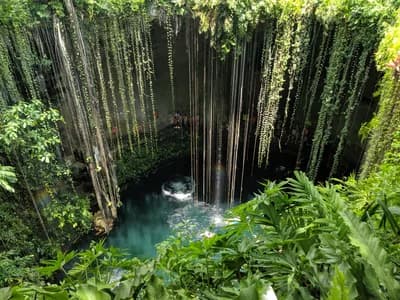
A 60-metre-wide open cenote near Chichen Itza, 40 metres deep and lined with hanging vines and waterfalls, Ik Kil was used for Maya sacrificial rituals and is now the most visited and photographed cenote in Mexico. The swim from the stone staircase platform into the warm turquoise water surrounded by waterfall-draped walls is one of the most dramatic natural swimming experiences in the world.
- –
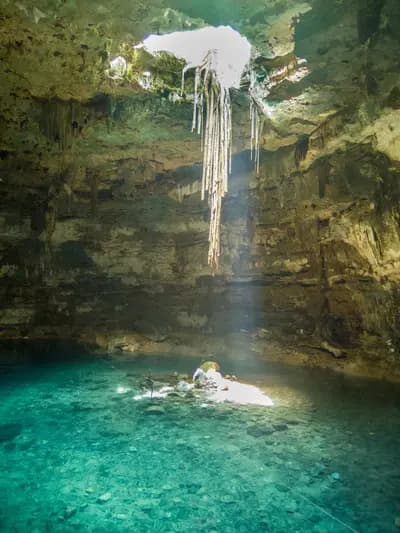
The most accessible cave-diving cenote in the Riviera Maya, Gran Cenote's system of stalactite and stalagmite chambers connected by crystal-clear underwater passages reaches 97 metres of mapped cave and is one of the finest snorkeling experiences in Mexico without scuba gear. The resident freshwater turtles who share the pool with swimmers are the most reliably encountered wildlife in any Mexican cenote.
- –
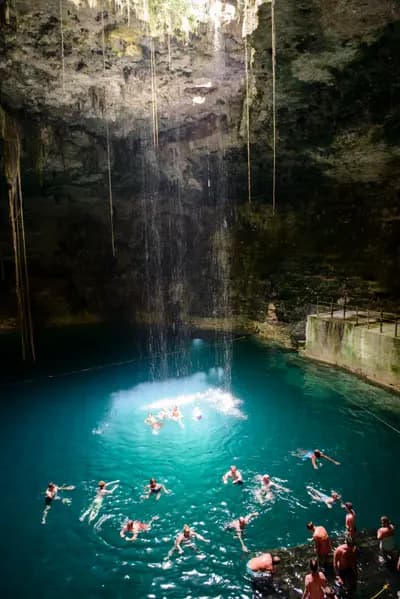
Part of the Sistema Ox Bel Ha — the world's longest underwater cave system at over 268 kilometres of mapped passages — Dos Ojos (Two Eyes) is accessible to both snorkelers in its open lagoons and certified cave divers in its inner passages. The Barbie Cave chamber within Dos Ojos, where crystal-clear 25°C water meets stalactites at 12 metres depth, is the most otherworldly naturally illuminated space in Mexican caves.
- –
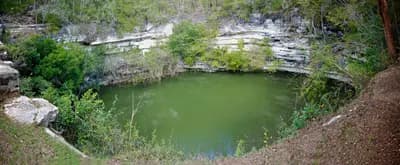
The Sacred Cenote of Chichen Itza, where Maya priests made offerings of jade, gold, and human sacrifices to Chaac the rain god, yielded over 30,000 artefacts when drained and excavated in the early 20th century by Edward Thompson. Though now closed to swimming due to its archaeological significance, the view from the rim over the 60-metre-diameter circular pool and the offerings recovered from its depths make it the most historically significant cenote in Mexico.
- –
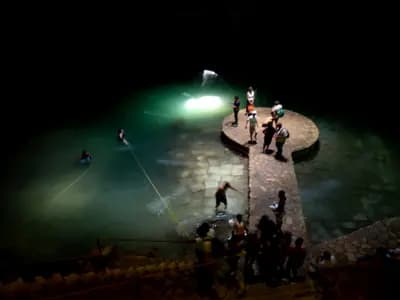
A semi-open cenote near Valladolid whose circular stone platform appears to float in the centre of a perfectly still underground lake illuminated by a circular shaft of light from above — creating one of the most photographed natural light installations in the world. The theatrical morning light beam that strikes the platform between 11am and 1pm makes Suytun the most Instagram-famous cenote in the Yucatan.
- –
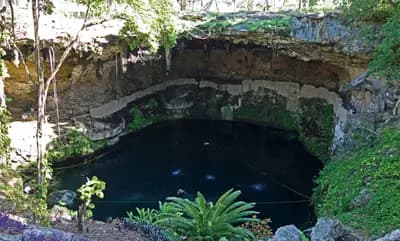
An urban open-air cenote in the center of Valladolid, used as the city's public swimming hole for generations and surrounded by the vegetation growing down the cenote walls, Zaci is the most authentic example of cenote culture as it functions for Mexican families rather than international tourists. The adjacent restaurant serving Yucatecan food overlooking the cenote pool creates a uniquely local experience.
- –
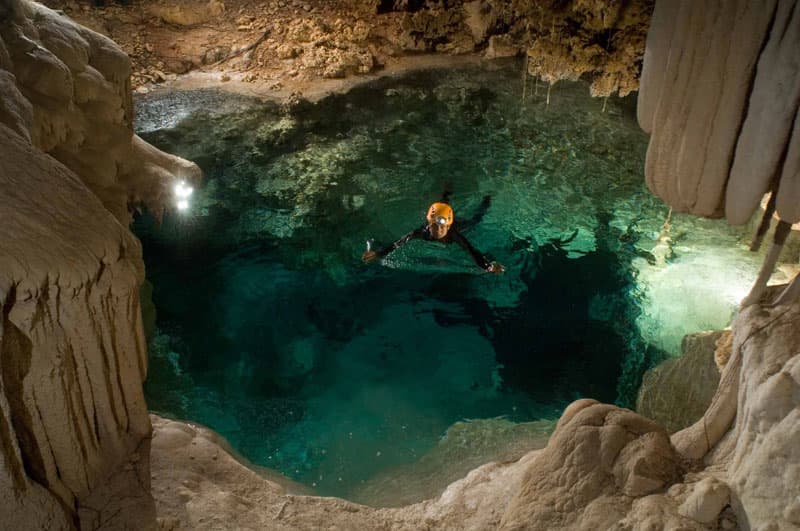
A semi-flooded cave system near Playa del Carmen, Rio Secreto is traversed by guided tours wading and swimming through 620 metres of crystal formations — stalactites, stalagmites, and selenite crystals — in a river of perfectly clear 24°C water. The natural acoustics of the cave chambers create an overwhelming sensory experience that cave guides use to play traditional Maya instruments.
- –
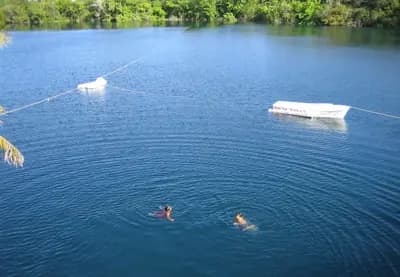
A roadside open cenote near Bacalar in Quintana Roo that is the most genuinely local Mexican cenote experience — favored by Bacalar families over the tourist-oriented cenotes of Tulum, featuring a natural water park with a rope swing, a high dive platform, and depths that become turquoise, blue, and finally black as the water deepens. The freshwater spring feeding it maintains a constant 26°C temperature year-round.
- –
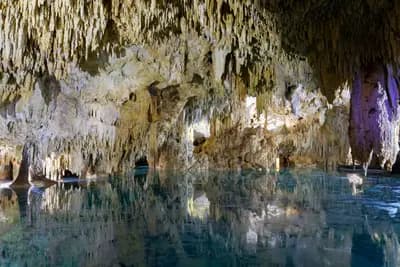
A jungle cave system near Akumal whose main cenote contains a 90-metre vertical stalactite — the longest in Mexico — and whose cave fish and blind cave crustaceans represent one of Mexico's most important subterranean biodiversity reserves. The natural park surrounding it adds a zipline and animal sanctuary to make it the most family-oriented cenote park on the Riviera Maya.
- –
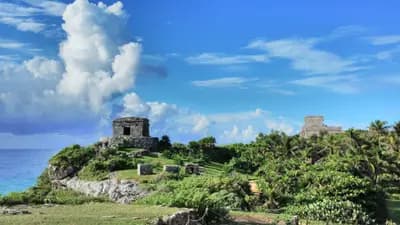
Known locally as Temple of Doom for its three holes in a rocky dome through which brave swimmers jump into the 18-metre-deep pool below, Cenote Calavera is the most adventurous cenote experience in Tulum and the departure point for guided dives into the connected Sistema Sac Actun. The cenote's three circular openings resembling a skull give it its Day of the Dead nickname.
Cenotes in Mexico — Frequently Asked Questions
What is the most famous cenote in Mexico? Cenote Ik Kil, three kilometres from Chichen Itza, is the most photographed cenote in the world. Its 60-metre open pit, hanging vines, and proximity to a UNESCO World Heritage Site make it the default first stop for visitors to the Yucatán.
Are cenotes in Mexico safe for swimming? Yes — tourist-accessible cenotes are well-monitored and generally very safe. Wear a life jacket if you are not a confident swimmer, avoid touching cave formations, and rinse off sunscreen before entering to protect the freshwater ecosystem. Cave-diving sections such as Dos Ojos require a certified dive guide.
What time of year is best to visit cenotes in Mexico? Cenotes hold a constant water temperature of 24–25 °C year-round, so any season works. The dry season (December–April) delivers the clearest water and easiest road access; the wet season (May–October) brings lush jungle surroundings but occasional murky runoff in open-sky cenotes.
Frequently Asked Questions About Cenotes in Mexico
## Frequently Asked Questions About Cenotes in Mexico
What is a cenote? A cenote is a natural sinkhole formed when limestone bedrock collapses to expose the groundwater beneath. The Yucatán Peninsula has thousands of them.
Are cenotes safe to swim in? Most cenotes open to visitors are safe for swimming and snorkeling. Open-air cenotes such as Cenote Azul and Cenote Zaci are typically the most beginner-friendly, while deep cave systems like Dos Ojos require a certified guide.
Do I need a guide to visit a cenote? Day-use swimming cenotes generally do not require a guide. Cave-diving cenotes such as Gran Cenote, Dos Ojos, and Rio Secreto require a certified dive operator.
When is the best time to visit cenotes in Mexico? Cenotes are open year-round. Water visibility is clearest during the dry season from November to April, which is also the busiest period.
Which cenote near Chichen Itza should I visit? Cenote Ik Kil and Cenote Sagrado are both within a short drive of the Chichen Itza archaeological site.
Image credits
- Cenote Ik Kil: Frank Rojas / Pexels
- Gran Cenote, Tulum: Dronepicr / Wikimedia Commons (CC BY 3.0)
- Dos Ojos Cenote System: Cenote / Wikipedia
- Cenote Sagrado, Chichen Itza: Ekehnel (Emil Kehnel) / Wikimedia Commons (CC BY 3.0)
- Cenote Suytun: Daniel Lobo / Wikimedia Commons (CC BY 2.0)
- Cenote Zaci, Valladolid: Haakon S. Krohn / Wikimedia Commons (CC BY 4.0)
- Rio Secreto Underground River: Wikimedia Commons
- Cenote Azul, Bacalar: Elelicht / Wikimedia Commons (CC BY-SA 3.0)
- Cenote Aktun Chen: martin_vmorris / Wikimedia Commons (CC BY-SA 2.0)
- Cenote Calavera, Tulum: Tulum / Wikipedia
Frequently asked questions
What is a cenote?
A cenote is a natural sinkhole resulting from the collapse of limestone bedrock that exposes groundwater, commonly found in Mexico's Yucatán Peninsula and used by the Maya for water and rituals.
What is the best time of year to visit cenotes in Mexico?
The best time is during the dry season from November to April, when water visibility is highest and weather is pleasant, though cenotes maintain a cool temperature year-round.
Are cenotes safe for swimming?
Yes, most cenotes open to the public are safe for swimming, but always follow posted safety guidelines, avoid diving unless permitted, and note that some sacred cenotes prohibit swimming.
Do I need to book in advance to visit a cenote?
For popular cenotes like Ik Kil or Dos Ojos, advance booking is recommended especially during peak season, while less visited cenotes often accept walk-ins.
Which is the most famous cenote in Mexico?
Cenote Ik Kil near Chichén Itzá is among the most famous, known for its dramatic open-sky setting, hanging vines, and clear turquoise waters.
Rank it your way
Remix this list into your own ranking, or head to the play hub for every game mode and community breakdown — blind mode, challenges, tier lists, and more.
You Might Also Like

Top 10 Most Controversial Animal Rights Issues
most controversial animal rights issues
Top 10 Most Polarizing Rewilding Projects (2026): Wolves, Bison & Jaguars
most polarizing rewilding projects globally
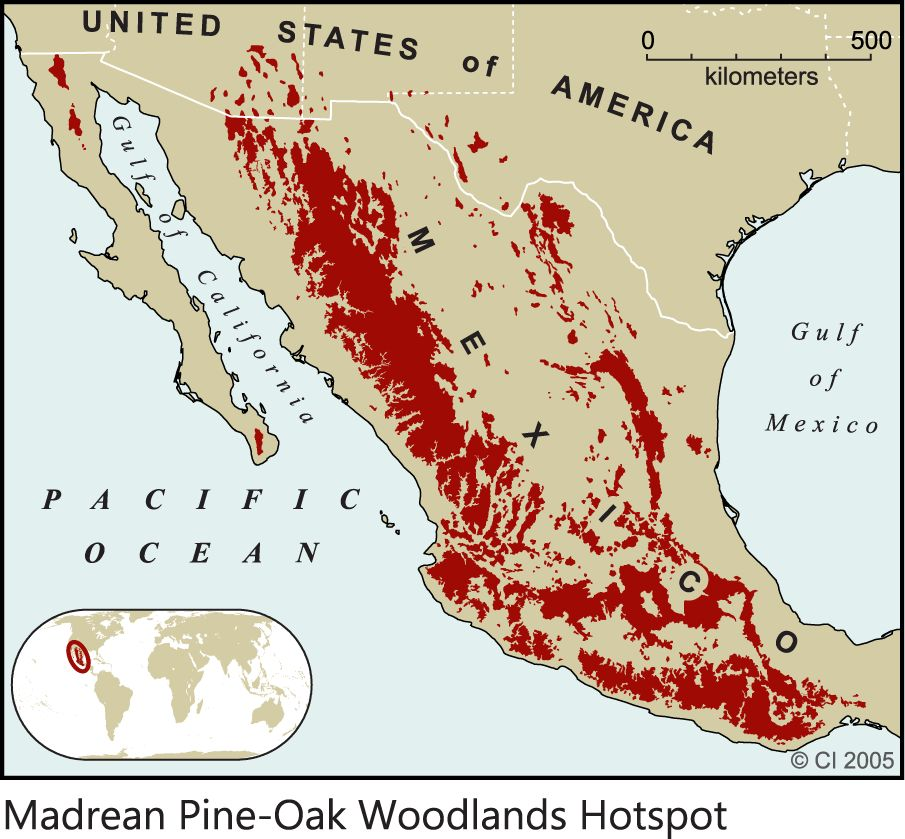
Top 10 Mexican Biodiversity Hotspots
Mexico's most important biodiversity hotspots
Top 10 Chinese Nature Destinations
#1 Jiuzhaigou Valley, Sichuan · #2 Zhangjiajie National Forest Park · #3 Guilin and Li River
Top 10 Indonesian Volcanoes in 2026
#1 Mount Bromo · #2 Mount Rinjani · #3 Kelimutu
Top 10 Best Hiking Trails in the World
#1 Tour du Mont Blanc, France/Italy/Switzerland · #2 Inca Trail to Machu Picchu, Peru · #3 Milford Track, New Zealand