



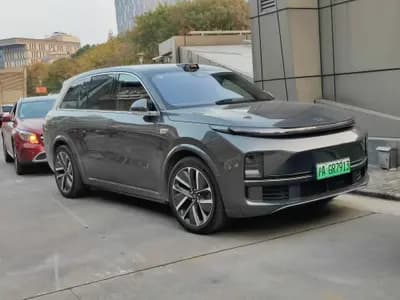
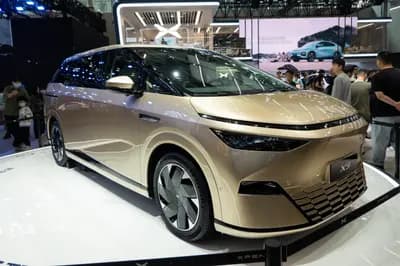
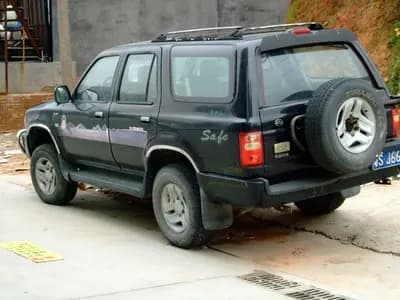
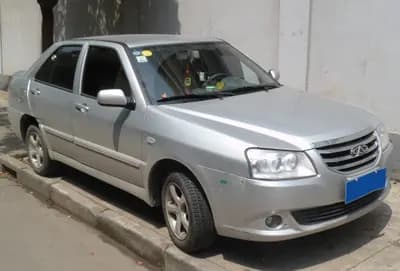

Rutger van der Maar / Wikimedia Commons (CC BY 2.0)
Vehicle
Top 10 Chinese Car Brands Reshaping the Global Auto Industry (2025)
China's automotive industry has undergone one of the most dramatic transformations in industrial history — growing from producing fewer than 2 million cars in 2000 to becoming the world's largest vehicle manufacturer with over 30 million units produced annually by 2023. Fuelled by government EV subsidies, world-class battery supply chains, and a vast domestic market, Chinese brands have achieved in a decade what took Western automakers a century. These ten companies are reshaping the global car industry from the inside out.
Location: CN2026275 views
Top10Grid rankings are decided by votes, not algorithms — use the buttons below to move this list.
Product
Community rankings for this product
Current Rankings
Vote items up or down — rankings update instantly
Get the weekly business rundown
Only lists published since the last email. Join the early readers.
- Only Top 10s published in the last 7 days
- One email a week — and none at all in a week with nothing new
- Unsubscribe in one click
No spam. One email per week. Unsubscribe anytime.
Frequently Asked Questions About Chinese Car Brands
Why did China's auto industry grow so quickly? A combination of government EV subsidies, a deep domestic battery supply chain, and a huge internal market allowed Chinese automakers to scale production from under 2 million vehicles in 2000 to over 30 million annually by 2023, as noted above.
Are these brands sold outside China? Yes. The brands listed here — including BYD, Geely, SAIC, Chery, Great Wall, GAC, NIO, Xpeng, Li Auto and Zeekr — export to Europe, Southeast Asia, the Middle East, Latin America and Africa, either through direct sales or via partnerships with local distributors.
Which brand sells the most cars? By total volume, established groups such as SAIC, Geely, Great Wall and Chery lead; by EV-only output, BYD is the dominant Chinese player. Volume figures change year to year, so check each brand's latest annual report for current numbers.
What is the difference between NIO, Xpeng, Li Auto and Zeekr? All four are EV-focused, but they target different segments: NIO positions as a premium EV maker with battery-swap infrastructure, Xpeng emphasises assisted-driving technology, Li Auto focuses on extended-range electric SUVs, and Zeekr sits within the Geely group as a premium performance EV brand.
EV-Native vs. Legacy: Two Different Bets
Not every brand on this list is playing the same game. BYD, NIO, Xpeng, and Li Auto were built from the ground up around electric and hybrid powertrains, which let them design the car and the battery pack together rather than retrofitting an existing platform. SAIC, Geely, Great Wall, Chery, and GAC come from the opposite direction: decades of combustion-engine manufacturing that they are now converting, plant by plant, into EV and plug-in hybrid production alongside their traditional lineups.
That difference shows up in strategy, not just spec sheets. Li Auto's bet on extended-range EVs — a small petrol engine that only ever charges the battery, never drives the wheels — sidesteps China's uneven charging infrastructure outside major cities, while NIO's battery-swap network is a direct attempt to make range anxiety disappear in under five minutes rather than solve it with a bigger battery. Neither approach is inherently better; they're answers to different questions about what Chinese car buyers actually worry about.
Why Vertical Integration Is the Real Moat
The single biggest advantage separating the strongest brands here from the rest is control over the battery supply chain. BYD manufactures its own LFP cells in-house (its "Blade Battery" line), which insulates it from the price swings and allocation disputes that battery-buying automakers face when a supplier like CATL has to split capacity across dozens of customers. Brands without that vertical integration are still competitive on design and software, but they are more exposed to raw-material cost shocks than a company that owns its own cell production.
Export politics are the other variable worth watching. As Chinese-built EVs pushed into the European market at prices Western automakers struggled to match, the EU responded with tariffs on vehicles built in China, regardless of brand — a policy that affects a joint venture like SAIC-owned MG as much as it affects newer entrants like Zeekr. That has pushed several of these companies toward local assembly plants in Europe and Southeast Asia rather than exporting finished cars, a shift in strategy the sales figures alone won't show you.
Readers Also Ranked
More Lists Like This

Top 10 Business Podcasts That Replace an MBA
- #1How I Built This
- #2Acquired
- #3All-In Podcast

Top 10 Coworking Spaces in Hong Kong 2026
- #1WeWork Tower 535
- #2The Hive Central
- #3Spaces Lee Garden

Top 10 Best Side Hustles That Became Empires
- #1Apple
- #2Amazon
- #3Spanx

Top 10 Most Controversial Mergers
- #1AOL-Time Warner ($164 Billion, 2000)
- #2Microsoft-Activision Blizzard ($69 Billion, 2023)
- #3Bayer-Monsanto ($63 Billion, 2018)
Frequently asked questions
What are the top 10 Chinese car brands?
The top 10 Chinese car brands typically include BYD, Geely, SAIC Motor, Changan, Great Wall Motors, Chery, NIO, XPeng, Li Auto, and FAW, based on sales volume, market presence, and innovation.
Which is the largest Chinese car brand by sales?
BYD is currently the largest Chinese car brand by sales, having surpassed SAIC Motor in 2023, driven by its strong lineup of electric vehicles.
Are Chinese car brands reliable compared to established automakers?
Chinese car brands have significantly improved reliability in recent years, with models from BYD, Geely, and Chery now competing well with mainstream global brands in quality and safety ratings.
Do Chinese car brands sell cars outside of China?
Yes, many Chinese car brands have expanded globally, with BYD, Geely, and SAIC Motor exporting to Europe, Southeast Asia, South America, and other regions, and some also producing vehicles in local factories.
Which Chinese car brand is best for electric vehicles?
BYD is widely considered the leading Chinese brand for electric vehicles, offering a range of affordable EVs and plug-in hybrids, followed by NIO, XPeng, and Li Auto in the premium segment.
Discussion
Have a take on this ranking?
Comments are how the argument actually happens here. Posting one needs a free account — it takes about a minute.
No comments yet.
The first comment sets the terms of the argument.
Would your top 10 look different?
Publish your own ranking of this topic. Your list gets its own page, and readers vote on it the same way you just voted on this one.
Build your own Top 10Related Videos
More Vehicles Rankings
6
Top 10 Best Electric Vehicles of 2025
107 views · @admin
Top 10 Chinese Electric Vehicle Brands 2026
114 views · @admin
Top 10 Overlanding Vehicles That Can Actually Go Anywhere
115 views · @admin
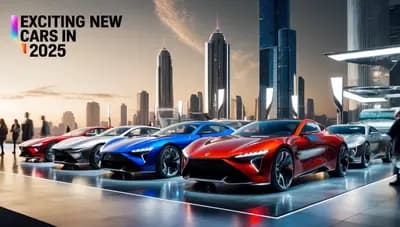
Top 10 Car Mods That Actually Improve Performance (Not Just Looks)
134 views · @admin

Top 10 Cars That Became Legends Before Their Time
139 views · @admin

Top 10 Driving Roads Every Car Enthusiast Should Experience
152 views · @admin
You might also want to rank…
 Top 10 Product Launches So Successful They Changed Entire Industries Forever
 Top 10 Worst Corporate Scandals
 Top 10 Self-Made Women Billionaires Who Started With Nothing
 Top 10 Most Failed Startup Ideas
Explore more Business rankings on Top10Grid
People Also Explore
Because you're viewing Business

Top 10 Best Job Sites & Apps for Getting Hired in 2026
243 views · 0 votes
Top 10 Richest People in the World 2026
548 views · 0 votes
Top 10 Richest People in the World (Forbes 2026)
725 views · 0 votes

Top 10 Richest People in India 2026
1,881 views · 1 votes
Best 13 Free & Discounted Tools for HKU MBA Students
34 views · 1 votes
You might also like
BUSINESSSame category
Top 10 Chinese Business Entrepreneurs
10 items
BUSINESSSame category
Top 10 Most Valuable Brands in the World 2026
10 items
BUSINESSSame category
Top 10 Best Job Sites & Apps for Getting Hired in 2026
10 items

BUSINESSSame category
Top 10 Christian Charities Making the Biggest Impact
10 items

BUSINESSSame category
Top 10 Side Hustles That Actually Pay More Than Minimum Wage
10 items
BUSINESSSame category
Top 10 Richest People in the World 2026
10 items