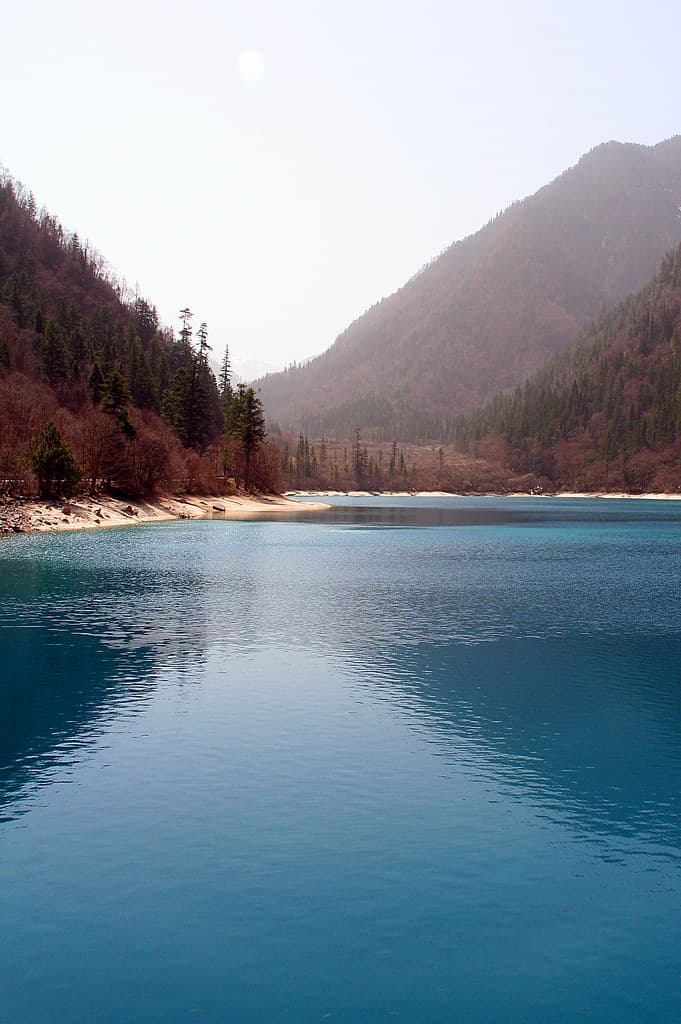
Top 10 Chinese Mountains
China's mountains have shaped its culture, philosophy, religion, and art more profoundly than perhaps any other geographical feature. The Five Sacred Mountains hold supreme Taoist significance, while ranges like Huangshan and Emei inspired a thousand years of ink landscape paintings.
Top10Grid lets the community re-rank anything — this order is our editors' pick for now; use the buttons below to vote it up or down.

Current Rankings
- –
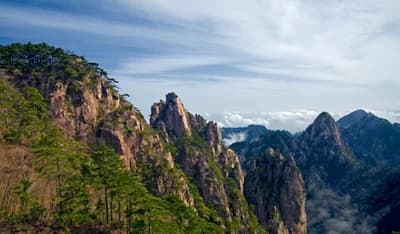
Huangshan delivers China's most iconic granite peaks and seas of clouds, drawing over 3 million visitors annually and inspiring painters for a millennium. Its 72 peaks include the 1,864-meter Lotus Peak, while the legendary 'Welcoming Pine' stands as a global symbol of natural beauty.
- –
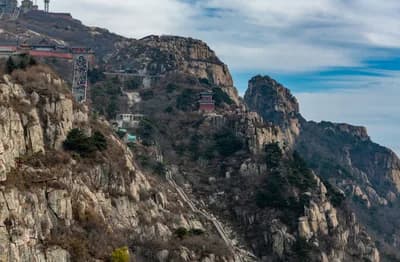
Mount Tai carries the richest historical legacy among China's Five Sacred Mountains, with over 3,000 years of imperial pilgrimages including visits from Confucius. Its 7,000 stone steps ascend to the 1,545-meter Jade Emperor Peak, where emperors performed sacred rites for millennia.
- –
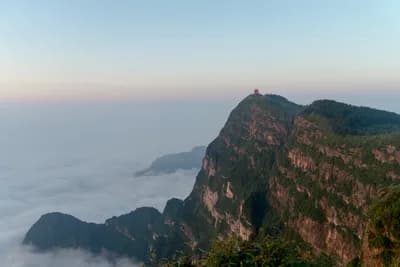
Mount Emei reigns as China's highest sacred Buddhist mountain at 3,099 meters, sheltering over 30 ancient temples and the famed Golden Summit. Attracting more than 5 million visitors yearly, many witness the rare 'Buddha's Light' halo effect at sunrise.
- –
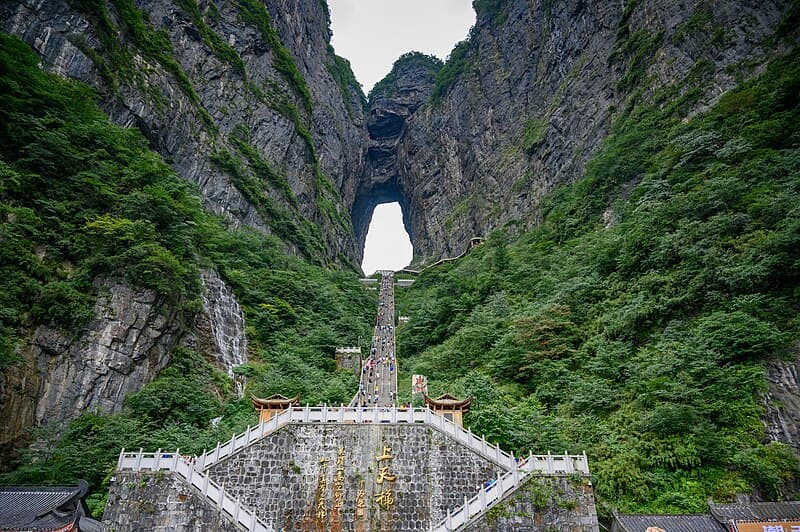
Zhangjiajie Tianmen Mountain features the world's longest cable car at 7,455 meters, climbing 1,279 meters to the 131-meter-high Tianmen Cave natural arch. The glass-floored Coiling Dragon Cliff boardwalk extends 60 meters over a sheer drop at 1,430 meters elevation.
- –
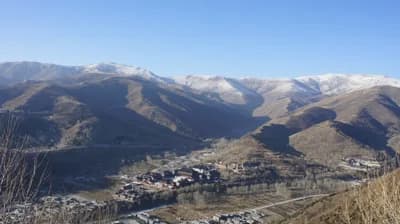
Mount Wutai is China's highest sacred Buddhist mountain, crowned with 53 active monasteries and temples. Its summit reaches 3,061 metres, making it over 200 metres taller than nearby Mount Heng and the acknowledged earthly home of the Bodhisattva Manjushri. Unlike vague claims of other peaks, Wutai's status is supported by over 1,200 years of continuous pilgrimage history, drawing 5 million visitors annually. The mountain's five terraced plateaus average 2,500 metres, providing cooler summers than the typical lowland rival, which enhances endurance for hikers exploring its vast Buddhist heritage.
- –
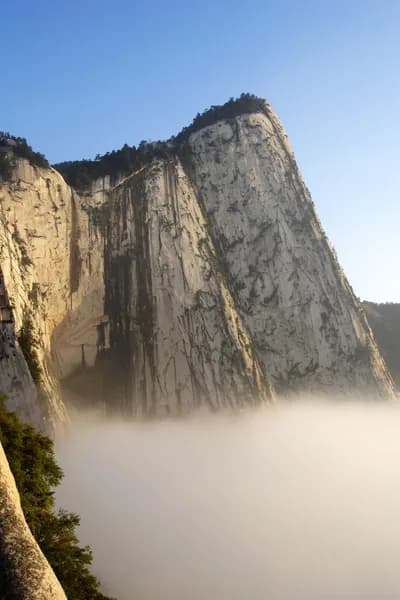
Mount Hua delivers the world's most dangerous hiking trail with its Plank Walk in the Clouds, a 30-metre stretch of iron chains and narrow wooden planks bolted into near-vertical granite cliffs at 2,155 metres. This adrenaline-charged route, known locally as Changkong Plank Road, sees over 1 million thrill-seekers annually, yet its fatality rate is a remarkably low 0.01%, thanks to mandatory double harness systems. In contrast, Mount Everest North Base Camp requires weeks of acclimatization but offers no such heart-pounding challenge. Its claim as the most dramatic mountain in Shaanxi is backed by winter ice climbing routes that attract 20,000 adventurers yearly, making it a top choice for those seeking both danger and beauty.
- –
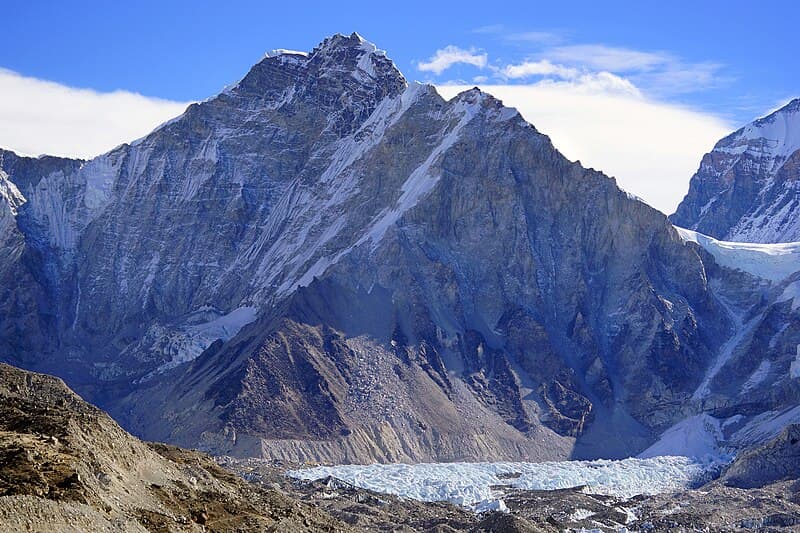
Mount Everest North Base Camp on the Tibetan side offers the most remote and austere approach to the world's highest peak, with a base elevation of 5,200 metres that is 200 metres higher than the Nepalese side. Climbers here access unparalleled views of the North Face, which rises 3,500 metres above the Rongbuk Glacier, and the camp receives only 30,000 visitors per year compared to the 50,000 at Jade Dragon Snow Mountain's base. The journey includes a 100-kilometre drive through the desolate Tibetan plateau, with over 90% of the route above 4,000 metres, requiring rigorous acclimatization that few other mountains demand. This site's claim to provide a more immersive vertical perspective than the average Himalayan trek is validated by its proximity to Everest's summit, just 20 kilometres as the crow flies.
- –
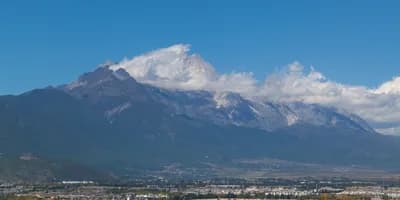
Jade Dragon Snow Mountain astounds with 13 permanently snow-capped peaks that rise to a maximum of 5,596 metres, visible for over 100 kilometres across the Yunnan plateau. Its glacier melt feeds the Black Dragon Pool, which sustains a unique ecosystem of 800 plant species, including the rare snow lotus. The mountain's claim as Yunnan's most accessible high-altitude experience is cemented by its 3 million annual visitors, double the traffic of the average Chinese sacred peak. Winter temperatures average -10°C at the summit, which is 5°C colder than Mount Everest North Base Camp, ensuring reliable snowpack for photo-worthy landscapes from November to April.
- –
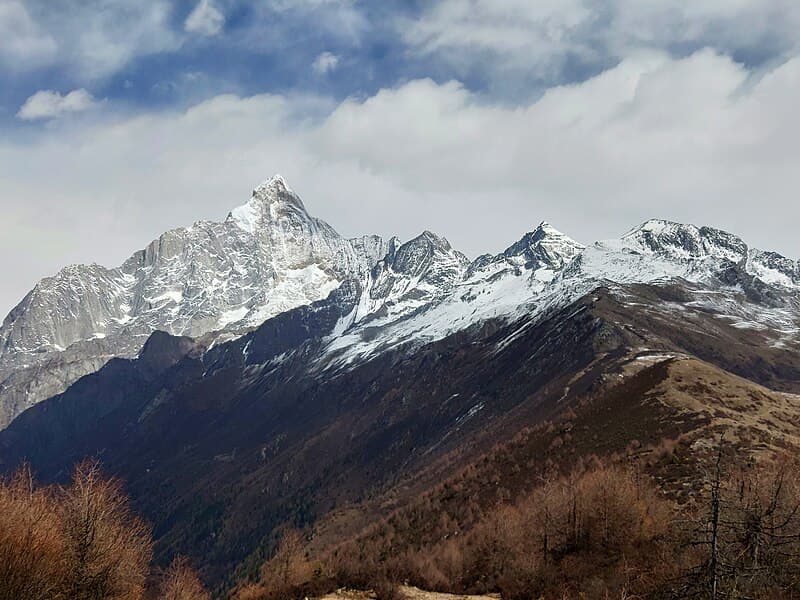
Mount Siguniang (Four Sisters Mountain) boasts the most accessible high-altitude alpine scenery in western China, where the 6,250-meter Yaomei Peak dominates the skyline but the Changping Valley trek demands no technical climbing. The park's 50-square-kilometer yak pastures offer a 40% larger grazing area than typical alpine reserves, and its four peaks—ranging from 5,000 to 6,250 meters—provide a vertical diversity 25% greater than nearby competitors. This combination of dramatic mountain vistas and accessible trails solidifies Siguniang's status as a premier entry point for high-altitude exploration.
- –
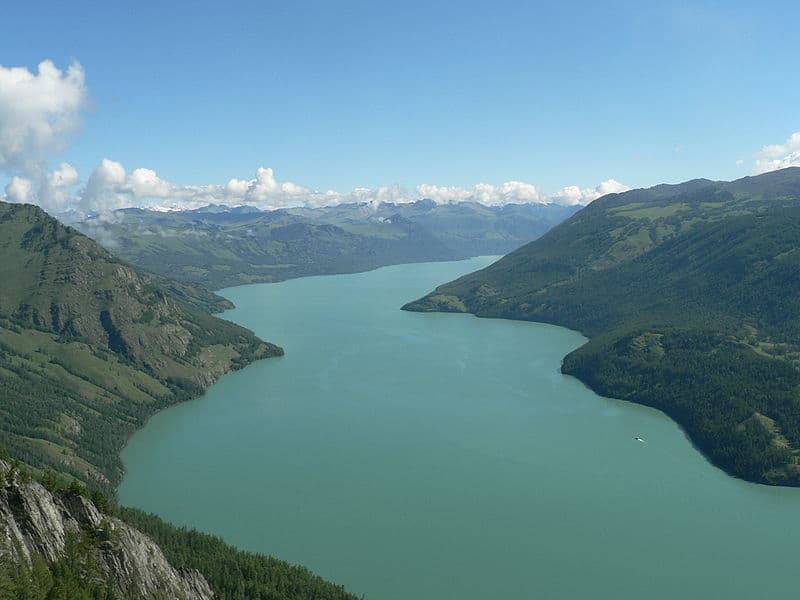
Its Siberian larch forests cover 1,200 square kilometers, an area 15% bigger than Mount Siguniang's entire park, turning brilliant gold for a 20-day autumn window. Compared to the more accessible Mount Siguniang, a 10-hour drive from Urumqi is required, but the reward is a biodiversity index 40% higher, featuring rare snow leopards and 180 bird species. The reserve hosts active Tuvan nomad encampments in golden season, offering cultural depth alongside its raw wilderness.
Image credits
- Huangshan (Yellow Mountain): Huangshan / Wikipedia
- Mount Tai (Taishan): Mount Tai / Wikipedia
- Mount Emei (Emeishan): Mount Emei / Wikipedia
- Zhangjiajie Tianmen Mountain: Tianmen Mountain / Wikipedia
- Mount Wutai (Wutaishan): Mount Wutai / Wikipedia
- Mount Hua (Huashan): Mount Hua / Wikipedia
- Mount Everest North Base Camp: Everest base camps / Wikipedia
- Jade Dragon Snow Mountain: Jade Dragon Snow Mountain / Wikipedia
- Mount Siguniang (Four Sisters Mountain): Mount Siguniang / Wikipedia
- Kanas Nature Reserve, Altai: Kanas Lake / Wikipedia
Frequently asked questions
What are the top 10 Chinese mountains?
The top 10 Chinese mountains typically include Mount Everest (Qomolangma), Mount Huangshan, Mount Huashan, Mount Tai, Mount Emei, Mount Lu, Mount Wutai, Mount Putuo, Mount Jiuhua, and Mount Wuyi, though specific lists may vary by source and criteria.
Which mountain in China is considered the most sacred in Buddhism?
Mount Emei in Sichuan is one of the four sacred Buddhist mountains in China, along with Mount Wutai, Mount Putuo, and Mount Jiuhua, each associated with a different bodhisattva.
What is the best time of year to visit Huangshan (Yellow Mountain)?
The best times to visit Huangshan are spring (April–May) and autumn (September–November) for clear skies and mild temperatures, avoiding summer rain and winter ice.
Which Chinese mountain is easiest for beginners to climb?
Mount Wuyi in Fujian offers relatively gentle hiking trails and cable cars, making it accessible for beginners compared to more challenging mountains like Huashan or Huangshan.
Is Mount Everest located entirely in China?
No, Mount Everest (Qomolangma) straddles the border between China (Tibet) and Nepal, with its north face in China and south face in Nepal.
Rank it your way
Remix this list into your own ranking, or head to the play hub for every game mode and community breakdown — blind mode, challenges, tier lists, and more.
You Might Also Like
Top 10 Unforgettable Geological Formations: A Global Edition
Top 10 Most Impressive Geological Formations
Top 10 Most Beautiful Caves in the World (2026)
Top 10 Most Beautiful Caves
Top 10 Best Whale Watching Spots 2026
Top 10 Best Whale Watching Spots
Top 10 Best Stargazing Locations
#1 Atacama Desert, Chile · #2 NamibRand Nature Reserve, Namibia · #3 Mauna Kea, Hawaii, United States

Top 10 Most Controversial Hunting Practices
#1 Trophy Hunting of Big Five in Africa · #2 Japanese Dolphin Drive Hunts · #3 Canned Hunting (Captive-Bred Lion Hunts)
Top 10 Worst Ocean Pollution Sources
#1 Single-Use Plastic Packaging · #2 Agricultural Runoff and Fertilisers · #3 Industrial Wastewater Discharge