Chi Lin Nunnery
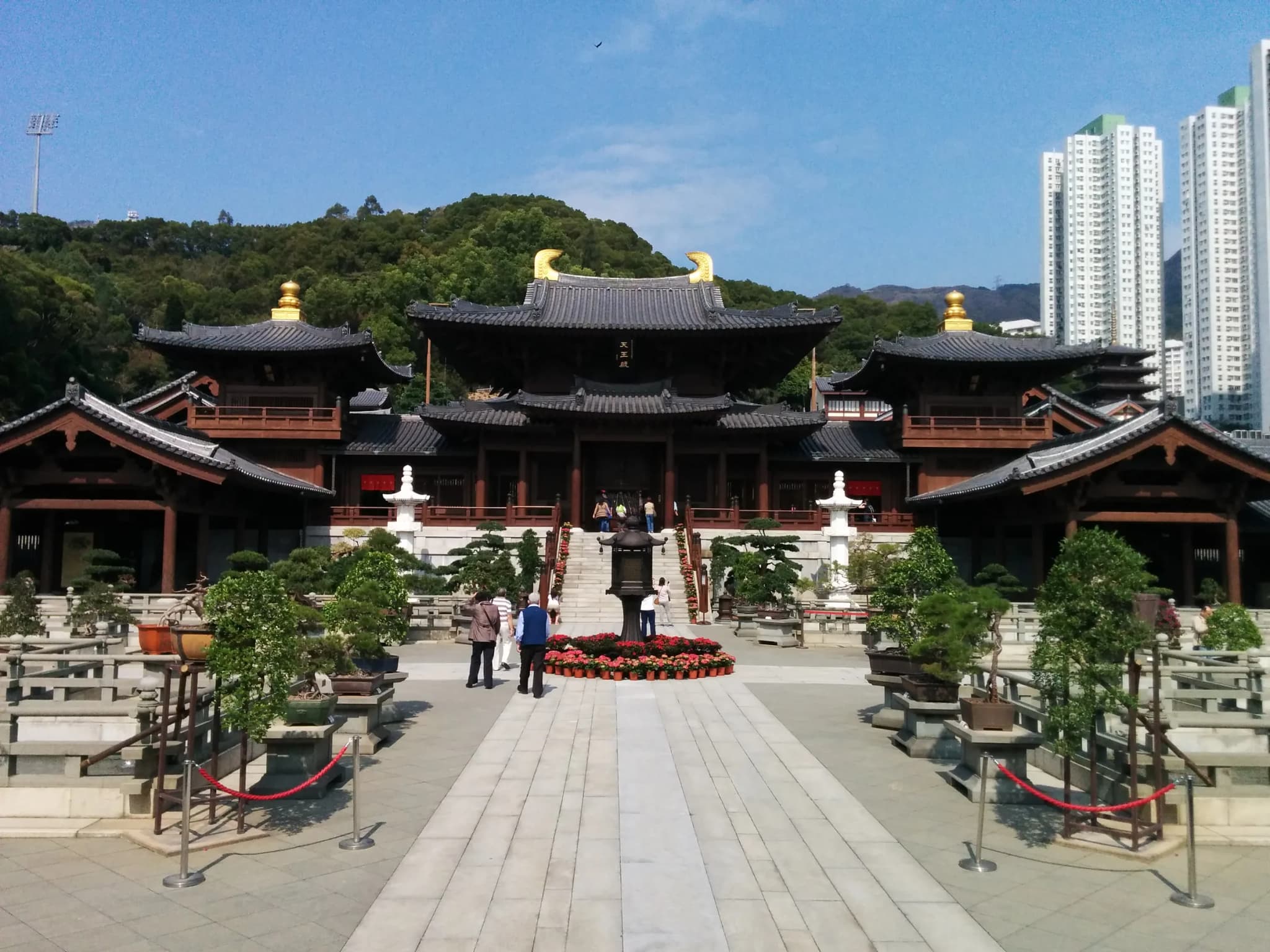
Walk up Chi Lin Drive from Diamond Hill and the city seems to stop. In its place are grey tiled roofs and timber halls set in strict Tang dynasty symmetry. Chi Lin Nunnery was founded in 1934 on the site of an old mansion. The complex you see today is much newer: it was rebuilt between 1994 and 1997 as a timber monastery in the style of eighth- and ninth-century China. The halls are made of cypress wood and held together by interlocking joints rather than nails, and all the timber was shaped and fitted by hand. The builders took their model from real Tang buildings. The Main Hall is based on the East Main Hall of Foguang Temple in Shanxi, built in 857 and one of the oldest surviving timber buildings in China. Space was tight in Diamond Hill, so the design was cut from seven bays to five. The courtyard layout follows a Pure Land mural in the Dunhuang caves, with halls linked by covered corridors. In 2012 the nunnery and its garden were added to China's tentative list for World Heritage status. You enter through the gate into the first courtyard, where four lotus ponds sit in a neat, balanced square. Beyond them the halls step back along a central axis towards the hills. Inside are statues of the Sakyamuni Buddha, Guanyin and other bodhisattvas, made from gold, clay, wood and stone. Look up at the eaves to see the dougong, the stacked wooden brackets that carry the roofs. This is a working nunnery, not a museum, so keep your voice down and follow any signs about photography inside the halls. The temple halls are open to the public every day free of charge. Nan Lian Garden, run by the nunnery, sits just across the road, and the two make an easy pair.
Photos (1)
Comments on "Chi Lin Nunnery"
Have a take on this ranking?
Comments are how the argument actually happens here. Posting one needs a free account — it takes about a minute.
No comments yet.
The first comment sets the terms of the argument.