Hong Kong Zoological & Botanical Gardens
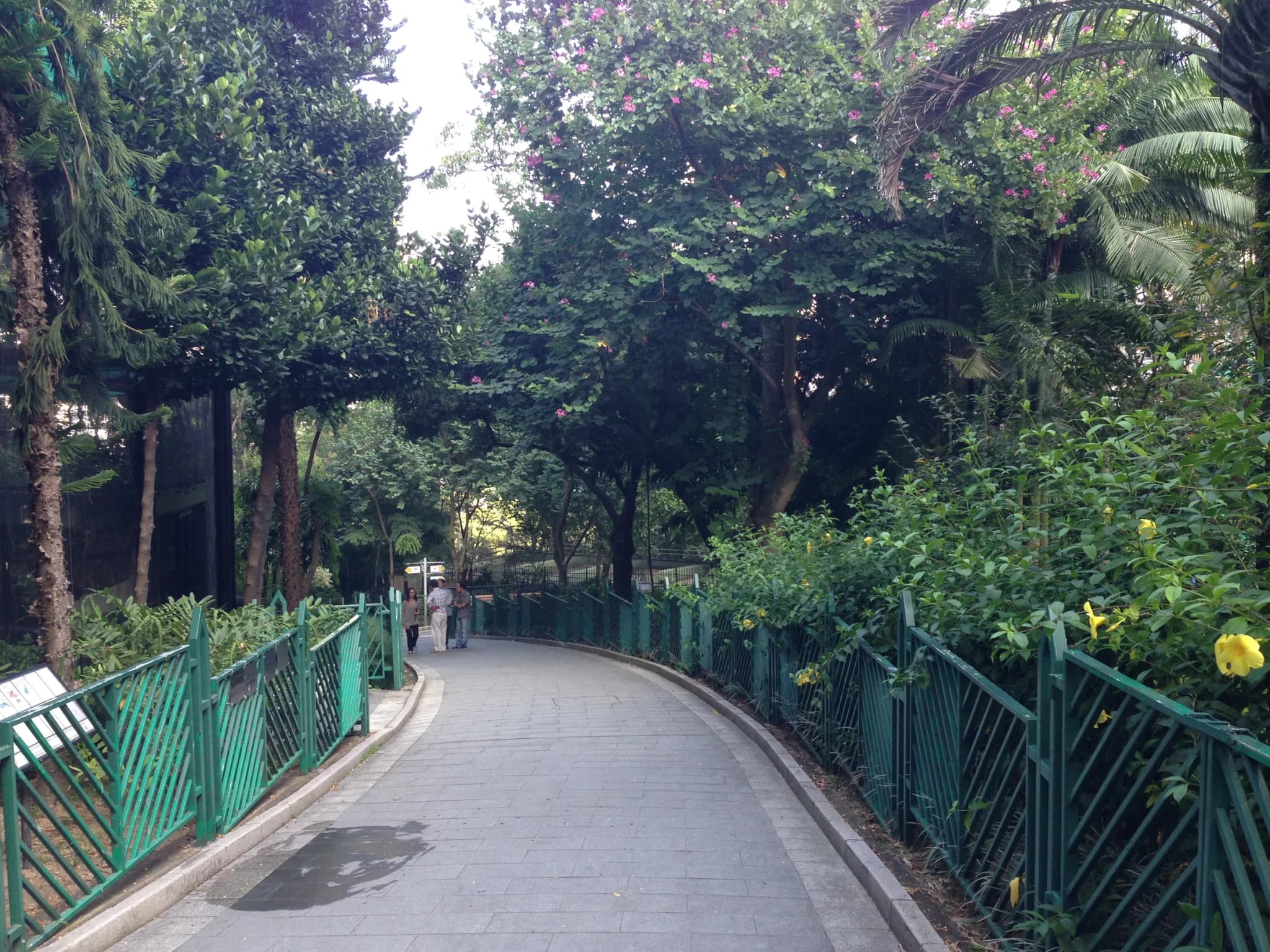
Step through the gates on Albany Road and the towers of Central fall away behind the trees. The Hong Kong Zoological and Botanical Gardens is the oldest park in the city. Work began in the early 1860s, the stone pillars and flight of steps date from 1861 to 1864, and the gardens were fully completed and opened to the public in 1871. Older Cantonese speakers still call it Bing Tau Fa Yuen, the garden of the commander-in-chief, because it sits opposite the old Government House. The 5.6-hectare site climbs the lower slope of the Peak in terraces and is split in two by Albany Road, with a pedestrian subway joining the halves. The eastern Old Garden holds the aviaries, a children's playground, the fountain terrace and a greenhouse full of orchids, ferns, bromeliads, vines and carnivorous plants. The western New Garden is home to the mammals and reptiles. The primates draw the crowds: orangutans, gibbons and ring-tailed and black-and-white ruffed lemurs. The gibbons' calls carry right across the park in the morning. The gardens are also an open-air history lesson. The Pavilion, built in 1866 as a bandstand, is the oldest structure on the site. A granite memorial arch from 1928 honours Chinese who died helping the Allies in the two world wars. A bronze statue of King George VI marks the centenary of British rule in 1941, and the fountain at the heart of the terrace is the park's best-known landmark. Admission is free, and it takes under two hours to see both halves properly. It sits a short uphill walk from Central and Admiralty, which makes it an easy morning before the Peak or lunch in the business district.
Photos (1)
Comments on "Hong Kong Zoological & Botanical Gardens"
Have a take on this ranking?
Comments are how the argument actually happens here. Posting one needs a free account — it takes about a minute.
No comments yet.
The first comment sets the terms of the argument.