Honai (Dani, Papua highlands)
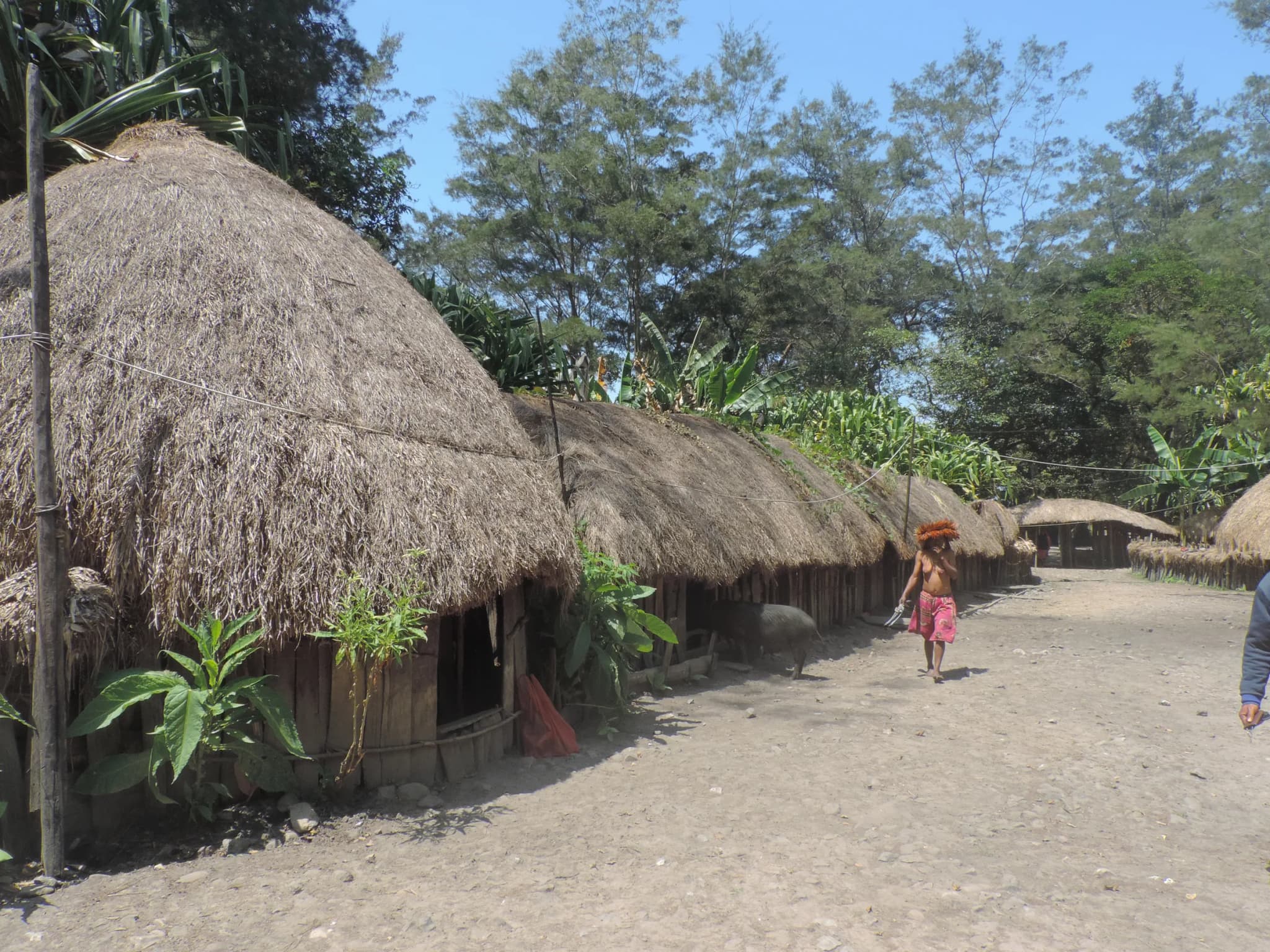
Honai is the traditional round house of the Dani people and other highland communities of Central Papua and Highland Papua provinces, built for a climate that is nothing like the tropical coast most visitors associate with Indonesia: nights in the Baliem Valley highlands, at well over 1,500 metres elevation, regularly turn cold. The building's whole design answers that cold directly. A honai is small, round and low, typically standing five to seven metres tall across two internal levels, with thick chopped-plank walls, a wooden beam frame, and a steeply thatched roof of fruitwood and cogongrass that comes almost to the ground, leaving only a small door and no windows at all. That tight, enclosed shape traps heat efficiently, and a central hearth called a hipere, kept burning through the night, warms both the cooking and sleeping levels above it, doing double duty as stove and heater in a house with no glazing to lose warmth through. Traditional Dani settlement is organised by sex as much as by family: the honai proper houses men, a separate round house called the ebai shelters women and young children, and a third structure, the wamai, keeps domestic animals such as pigs. All three take their names from the Dani word ai, meaning house, with a descriptive prefix attached. Construction traditionally used rattan rope or split tree roots for binding rather than nails, though contemporary honai increasingly incorporate nails, small windows and zinc roofing sheets, trading some of the original insulation for lower maintenance. Honai remain in everyday use, not just as heritage displays, in villages around Wamena in the Baliem Valley, and a number of them are open to visitors travelling with local guides as part of wider Baliem Valley cultural treks.
Photos (1)
Comments on "Honai (Dani, Papua highlands)"
Have a take on this ranking?
Comments are how the argument actually happens here. Posting one needs a free account — it takes about a minute.
No comments yet.
The first comment sets the terms of the argument.