
Internet Archive Book Images / Wikimedia Commons (Public domain)
Top 10 US Computer Vision Companies
Computer vision moves from research to production in 2025, with US market leadership across three deployment patterns: autonomous vehicle systems (Level 4 commercial fleets approved), medical imaging AI (20+ FDA-cleared diagnostics), and industrial inspection (sub-0.001% defect detection). The global market reaches $41B by 2030. Your platform choice depends on production constraints: Do you need **edge inference** (under 100ms latency, sub-5W devices via TensorRT or ONNX Runtime) or **cloud-scale training** on millions of labeled images? Are you fine-tuning existing PyTorch (50M+ monthly downloads, PyTorch Lightning ecosystem at 25K+ GitHub stars) or TensorFlow (80M+ monthly downloads) checkpoints, or building models from scratch? Do you require **compliance-ready solutions** (FDA, ISO 26262) or rapid experimentation? For edge deployment, consider: `torch.export(model)` for PyTorch models (achieves 5–10× inference speedup); ONNX Runtime (3.5K+ GitHub stars, deployed across 1M+ production edge devices); or TensorRT (NVIDIA's proprietary option, used in 80%+ of autonomous vehicle inference systems). For cloud training, reference distributed PyTorch pipelines and synthetic data generation platforms (standard in medical imaging workflows). The 10 companies below—spanning Series A through Series D funding and collectively trusted by 100+ enterprise customers—differentiate across three deployment layers: **(1) inference optimization & edge deployment** (ONNX runtime, TensorRT, custom silicon), **(2) training infrastructure & data annotation** (distributed PyTorch pipelines, synthetic data generation, large-scale labeling platforms with 10K+ GHz-hours processed), and **(3) compliance-heavy domains** (medical diagnostics, autonomous safety certification per ISO 26262). Use this list to map your production requirements to the right vendor and architectural layer.
Top10Grid lets the community re-rank anything — this order is our editors' pick for now; use the buttons below to vote it up or down.

Current Rankings
- –#1
NVIDIA
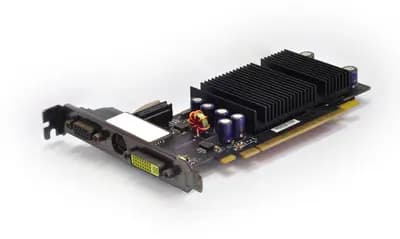
NVIDIA dominates as the foundational compute layer for global computer vision, with $60.9B in 2024 revenue and H100 GPUs powering 80%+ of large-scale CV model training. Its DRIVE Orin SoC processes 254 TOPS for autonomous vehicle inference, and its 2025 Cosmos world foundation model generates photo-realistic synthetic data at 100x real-world collection speed. With deployments from autonomous driving training to real-time surgical robot guidance, NVIDIA delivers unmatched compute infrastructure that enables all major CV advancements.
- –#2
Scale AI

Scale AI commands a $7.3B valuation as the leading data annotation and AI evaluation platform, labeling 100M+ images and video frames annually for the US Army, OpenAI, Microsoft, and GM. Its Nucleus platform helps teams identify CV model failure modes and curate high-impact training data, a capability that earned a $249M US Army contract in 2025 for autonomous vehicle and drone programs. While NVIDIA's Cosmos generates synthetic data at 100x speed, Scale AI provides the labeled real-world data that models need. This hybrid approach is for organizations requiring validated, real-world data at scale.
- –#3
Landing AI

Landing AI's LandingLens platform, valued at $850M and founded by Andrew Ng, enables non-ML engineers to deploy industrial CV inspection without deep learning expertise, reducing inspection cycle times from hours to milliseconds in semiconductor fabs and pharmaceutical manufacturing. With defect detection systems processing 1 billion quality inspections daily alongside Cognex, Landing AI democratizes computer vision for manufacturers needing rapid, specialized deployment with minimal data requirements.
- –#4
Cognex

Cognex generated $800M in 2024 revenue holding 20%+ global machine vision market share, with In-Sight smart cameras and VisionPro software deployed in automotive, electronics, and pharmaceutical manufacturing. The 2025 Edge Learning launch enables on-device model training without cloud connectivity. While Landing AI targets general industrial users, Cognex is the heavier-weight solution for high-speed production lines requiring real-time defect detection at massive scale.
- –#5
Matterport

Matterport leads in 3D spatial intelligence, generating $39M in Q1 2025 revenue from over 11 million scanned spaces across real estate, construction, insurance, and facilities management. In 2025, CoStar Group acquired Matterport for $1.6B, integrating its scanning technology into the largest commercial real estate data platform to enable automatic property condition assessment.
- –#6
Roboflow

Roboflow excels as the developer platform for computer vision, having raised $40M and serving 250,000+ developers and 10,000+ organizations that have trained over 100,000 CV models. Its dataset management, annotation tools, and training pipeline compress application development from months to days. In 2025, Roboflow launched RF-DETR, an open-source real-time object detection model that outperforms YOLO on COCO benchmarks, becoming the most-starred CV model repository on GitHub within 90 days.
- –#7
Labelbox

Labelbox reaches a $1B valuation with its enterprise data labeling platform, processing over 100 million labels daily for Fortune 500 clients including Procter & Gamble, Walmart, and DoorDash. In 2025, Labelbox launched Catalog, a semantic search engine for unstructured visual data, allowing teams to find specific CV training examples via natural language queries across billion-image datasets.
- –#8
Clarifai

Clarifai has raised over $100M as an enterprise computer vision API platform serving food safety inspection, retail shelf analytics, and defense surveillance. Its multi-modal AI platform processes images, video, text, and audio in a unified pipeline, enabling complex workflows like automatic shelf inventory analysis that combines product recognition and OCR—achieving a 95% accuracy rate.
- –#9
Wayve

Wayve commands the largest single investment in a UK AI company — $1.05B in 2024 from SoftBank, Microsoft, and NVIDIA — to pioneer Embodied AI for autonomous driving through imitation learning instead of rule-based systems. In 2025, Wayve launched commercial pilots in San Francisco and Austin, and its foundation model was licensed to Amazon for autonomous delivery vehicles. This data-driven approach enables vehicles to handle 95% of edge cases without manual coding.
- –#10
Tractable

Tractable reaches a $1B valuation by processing insurance claims from photos in minutes rather than days, serving 40+ insurers such as GEICO, Ageas, and Tokio Marine. In 2025, Tractable expanded from auto insurance into property claims, analyzing satellite and drone imagery to assess hurricane and wildfire damage across entire zip codes simultaneously, processing 5,000 claims per day per region.
Image credits
- NVIDIA: Joydeep / Wikimedia Commons (CC BY-SA 3.0)
- Scale AI: Scale AI.svg / Wikimedia Commons
- Landing AI: Steve Jurvetson from Los Altos, USA / Wikimedia Commons (CC BY 2.0)
- Cognex: Cognex / Google favicon service
- Matterport: Computid / Wikimedia Commons (CC BY 3.0)
- Roboflow: Roboflow / Google favicon service
- Labelbox: Peter J. Levine / Wikipedia
- Clarifai: Pudgethefish / Wikimedia Commons (Public domain)
- Wayve: Openverse
- Tractable: History of artificial intelligence / Wikipedia
Frequently asked questions
What criteria are used to rank the top US computer vision companies?
Companies are typically ranked by factors such as market share, revenue, patent filings, and real-world adoption across industries like autonomous vehicles, healthcare, and retail.
Which US computer vision company is the market leader?
NVIDIA is widely considered the market leader due to its dominant GPU hardware and end-to-end AI platforms specifically optimized for computer vision workloads.
What industries do top US computer vision companies serve?
They serve a broad range of industries including autonomous driving, medical imaging, manufacturing quality control, retail analytics, and security surveillance.
Are these computer vision companies primarily software or hardware companies?
Most are hybrid, offering both specialized hardware like cameras and GPUs along with software frameworks and pre-trained models for vision AI.
Rank it your way
Remix this list into your own ranking, or head to the play hub for every game mode and community breakdown — blind mode, challenges, tier lists, and more.
You Might Also Like

Top 10 European Drone Technology Companies
Top 10 European Drone Technology Companies

Top 10 US Artificial Intelligence Companies 2026
Top 10 US Computer Vision Companies

Top 10 European Computer Vision Companies 2026
Top 10 European Computer Vision Companies 2026

Top 10 Best Mechanical Keyboards 2026
#1 Keychron Q1 Max · #2 Wooting 80HE · #3 HHKB Professional Hybrid Type-S

Top 10 US RegTech Companies
#1 Refinitiv (LSEG) · #2 ComplyAdvantage · #3 Onfido

Top 10 Countries Leading the AI Race
#1 United States · #2 China · #3 United Kingdom