












The original uploader was Snow storm in Eastern Asia at English Wikipedia. / Wikimedia Commons (CC BY 3.0)
Top 10 Biggest US Credit Unions by Assets (2025)
The US credit union sector manages over $2.2 trillion in assets across 4,700+ federally insured institutions serving 135 million members. Unlike commercial banks, credit unions operate as member-owned nonprofits—a structural advantage that translates directly into your wallet through lower loan rates, higher deposit yields, and profits reinvested in membership rather than shareholders. The 10 largest credit unions command the bulk of these assets and lead the charge in digital banking innovation: advanced mobile platforms, fintech partnerships, and member-centric technology that deliver institutional banking power without corporate layers. Whether you're a military family exploring credit union benefits, a tech professional seeking flexible banking, or a saver hunting higher yields, the market leaders profiled here demonstrate what member ownership delivers in practice. This ranking identifies which credit unions dominate by assets and offer the resources, innovation, and customer-first approach that defines the modern financial alternative.
Location: US2026208 views
Top10Grid rankings are decided by votes, not algorithms — use the buttons below to move this list.
Current Rankings
Vote items up or down — rankings update instantly
Get the weekly finance rundown
Only lists published since the last email. Join the early readers.
- Only Top 10s published in the last 7 days
- One email a week — and none at all in a week with nothing new
- Unsubscribe in one click
No spam. One email per week. Unsubscribe anytime.
Frequently Asked Questions About US Credit Unions
## Are credit unions safer than banks? Yes. Federally insured credit unions are backed by the National Credit Union Administration (NCUA) up to $250,000 per depositor, per institution—the same coverage limit as FDIC banks.
## Who can join a credit union? Membership is limited to a defined field of membership (FOM). Common FOMs include military service and veterans (Navy Federal, PenFed), public employees (SECU), educators (SchoolsFirst), employees of specific companies (BECU, First Tech), or residents of a state or county. Many credit unions now have very broad FOMs open to anyone who joins a small associated nonprofit or makes a one-time donation.
## How is this list ranked? Rankings are based on total assets reported in each credit union's most recent NCUA call report. Asset size is a proxy for membership scale, branch reach, and product depth, but it does not necessarily reflect rates or customer service.
## Are deposits at credit unions tax-deductible? No. Deposits are not tax-deductible, but interest earned on deposits is taxable in the same way as bank interest. The nonprofit status of credit unions refers to their ownership structure, not a tax exemption on member deposits.
Readers Also Ranked
More Lists Like This

Top 10 US Pet Insurance Companies 2026
- #1Nationwide Pet Insurance
- #2Trupanion
- #3Figo Pet Insurance

Top 10 US Property & Casualty Insurers by Premium Volume (2025)
- #1State Farm
- #2Berkshire Hathaway (GEICO + General Re)
- #3Progressive

Top 10 Trending Crypto Coins - Week 20, 2026
- #1Telcoin (TEL)
- #2Sahara AI (SAHARA)
- #3Irys (IRYS)

Top 10 CoinGecko — Top Cryptocurrencies — August 8, 2026
- #1Bitcoin (BTC)
- #2Ethereum (ETH)
- #3Tether (USDT)
Frequently asked questions
What are the largest credit unions in the US by assets?
The top US credit unions by assets include Navy Federal Credit Union, State Employees’ Credit Union, and PenFed Credit Union, among others, with assets typically exceeding $10 billion.
How do credit unions differ from banks?
Credit unions are not-for-profit member-owned cooperatives, often offering lower fees and better interest rates than banks, but they require membership eligibility based on location, employer, or affiliation.
Can anyone join a top US credit union?
No, each credit union has specific membership requirements; for example, Navy Federal is open to military members and families, while others may be limited to state employees or residents of certain regions.
What is the asset size of the largest credit union?
Navy Federal Credit Union is the largest, with assets over $170 billion as of the latest reports, making it significantly larger than most other credit unions.
Are credit unions safer than banks?
Both are insured: credit unions by NCUA and banks by FDIC, each up to $250,000 per depositor, so they offer similar safety for deposits.
Discussion
Have a take on this ranking?
Comments are how the argument actually happens here. Posting one needs a free account — it takes about a minute.
No comments yet.
The first comment sets the terms of the argument.
Would your top 10 look different?
Publish your own ranking of this topic. Your list gets its own page, and readers vote on it the same way you just voted on this one.
Build your own Top 10You might also want to rank…
 Top 10 CoinGecko — Top Cryptocurrencies — March 21, 2026
 Top 10 CoinGecko — Top Cryptocurrencies — April 28, 2026
 Top 10 CoinGecko — Top Cryptocurrencies — March 23, 2026
 Top 10 CoinGecko — Top Cryptocurrencies — April 3, 2026
Explore more Finance rankings on Top10Grid
People Also Explore
Because you're viewing Finance

Top 10 European Wealth Management Apps
167 views · 0 votes

Top 10 Wealthiest People in the World (2026)
168 views · 0 votes
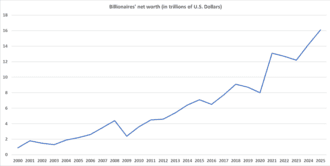
Top 10 Richest People in the World 2026 — Ranked by Net Worth
170 views · 0 votes

Top 10 European Pet Insurance Companies
171 views · 0 votes

Top 10 US Blockchain Finance Applications
171 views · 0 votes

Top 10 US Quantitative Hedge Funds
171 views · 0 votes
You might also like
FINANCESame type
Top 10 US Wealth Management Firms
10 items

FINANCESame type
Top 10 US Algorithmic Trading Firms
10 items

FINANCESame type
Top 10 Most Impactful US Federal Reserve Decisions in History
10 items

FINANCESame type
Top 10 US IPOs of 2025 by First-Day Performance
10 items

FINANCESame type
Top 10 US Green Bond Issuers
10 items

FINANCESame type
Top 10 US Payment Processors Ranked by Transaction Volume (2024)
10 items