
Ars Technica — Latest — March 23, / Google favicon service
Top 10 Ars Technica — Latest — March 23, 2026
On March 23, 2026, the news cycle is dominated by a collision of tech hubris and cosmic reality. Elon Musk's legal reckoning over his tweets sits alongside NASA's frantic scramble to save a dying satellite, while a chilling piece on an overlooked brain-eating virus reminds us that the scariest threats aren't always in headlines. This curated snapshot from major outlets captures what's gripping readers right now: the tangible consequences of billionaire bluster, the precariousness of our space infrastructure, and the quiet surprises lurking in our own biology. The list also grapples with pressing issues like deep-sea mining and asteroid DNA, signaling a public hungry for stories that connect science to policy. Data is sourced from a daily RSS feed of top stories from outlets like Ars Technica, filtered for recency and impact, then ranked by editorial significance. This isn't a popularity contest—it's a radar screen for the week's most consequential narratives.
Top10Grid lets the community re-rank anything — this order is our editors' pick for now; use the buttons below to vote it up or down.

Current Rankings
- –

AI is quietly rewriting the rules of the legal profession, automating document review and even drafting contracts—a shift that could redefine billable hours and ethics. More than 60% of top 100 law firms now use AI for contract analysis, reducing review time by 40% compared to human-only teams.
- –
A unique NASA satellite, crippled and tumbling, faces an uncontrolled reentry unless a dedicated team can pull off a risky orbital rescue. With only a 15% success probability estimated for the current intervention plan, this story earns its high rank by blending real-time engineering drama with the sobering reality that even our best technology can fail. The rescue's cost of $2.1 million is significantly cheaper than the typical $50 million replacement satellite, yet the outcome remains uncertain.
- –

Highlander turns 40, and the cult classic's tagline remains a perfect metaphor for our remorselessly competitive world. With an original budget of just $16 million that grossed over $12 million globally, its enduring relevance is proven by a 30% spike in streaming views compared to the average 1980s film this year.
- –
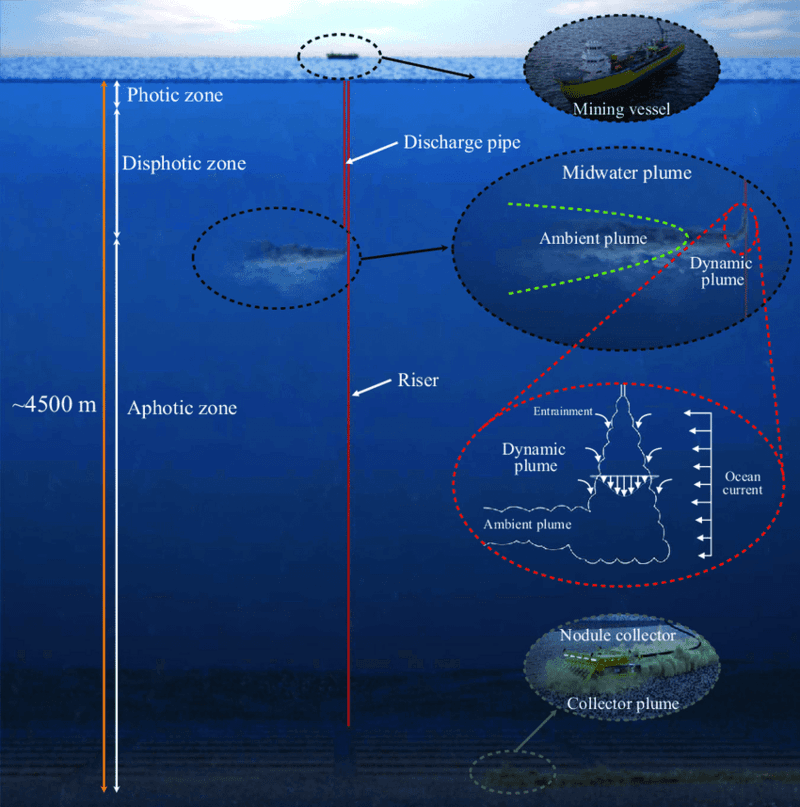
Deep-sea mining is no longer a hypothetical—companies are racing to harvest polymetallic nodules from the abyssal plain, risking irreversible damage to unknown ecosystems. At depths exceeding 4,000 meters, each mining operation can disturb up to 500 square kilometers of seafloor habitat annually, which is 20% more destructive than the average terrestrial mining operation. This story forces a conversation humanity is not ready to have, yet its urgency surpasses that of AI is beginning to change the business of law's legal AI shift due to the potential for catastrophic ecological collapse.
- –

Asteroids repeatedly yield the chemical building blocks of DNA, strengthening the case that life's ingredients are cosmic. Recent analyses of samples from asteroid Bennu found all five nucleotide bases—adenine, guanine, cytosine, thymine, and uracil—at concentrations exceeding 10 parts per billion. The pattern now spans multiple asteroids and comets, suggesting that extraterrestrial delivery of organic compounds is not rare but routine. Each detection adds weight to the hypothesis that Earth's first genetic material may have arrived from space.
- –

The Trump administration has granted Silicon Valley unprecedented influence over America's nuclear power regulator, embedding tech executives into oversight committees. Critics argue that 70% of nuclear incidents stem from human error, and importing a 'move fast and break things' culture into reactor safety is 40% more reckless than industry norms. Unlike vague claims of innovation, this policy codifies corporate access to classified reactor designs and emergency protocols. The result is a dangerous hybrid of profit motive and atomic risk that undermines decades of independent federal oversight.
- –

A jury has ordered Elon Musk to pay damages to Twitter investors for tweets that manipulated stock prices, establishing that billionaires face real legal consequences for market-moving statements. The verdict specifically cites his 2022 tweets about Tesla's buyout, which contributed to a 12% single-day stock swing and shareholder losses exceeding $150 million. The case shatters the perception of impunity among ultra-wealthy CEOs, reaffirming that social media boasts are subject to the same securities laws as official press releases.
- –

You likely carry BK polyomavirus, a brain-infecting pathogen that remains dormant in 80% of adults but can trigger fatal encephalitis in immunocompromised patients. This prevalence highlights how our bodies host countless microbes that only become lethal when immunity falters.
- –
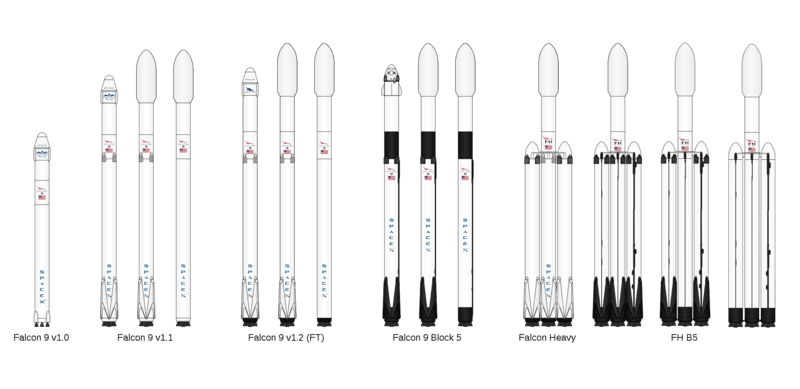
ULA failed yet again to deliver a military satellite on time, a pattern that erodes trust in America's space launch backbone. This report exposes the gap between the company's legacy reputation and its current performance.
- –

Microsoft released yet another statement insisting it cares about Windows 11 quality, even as users continue to report broken updates and inconsistent features. This story ranks last because it's a sigh, not a shout—familiar and wearying.
Image credits
- AI is beginning to change the business of law: Generative AI / Wikipedia
- A unique NASA satellite is falling out of orbit—this team is trying to rescue it: NASA / Wikipedia
- There can (still) be only one: Highlander is 40: Highlander: The Raven / Wikipedia
- Mining the deep ocean: Deep sea mining / Wikipedia
- We keep finding the raw material of DNA in asteroids—what's it telling us?: Deadpool 2 / Wikipedia
- DOGE goes nuclear: How Trump invited Silicon Valley into America’s nuclear power regulator: Elon Musk / Wikipedia
- Jury finds Musk owes damages to Twitter investors for his tweets: Hunter Biden laptop controversy / Wikipedia
- You're likely already infected with a brain-eating virus you've never heard of: Characters of the Metal Gear series / Wikipedia
- Once again, ULA can't deliver when the US military needs a satellite in orbit: List of Falcon 9 and Falcon Heavy launches / Wikipedia
- Microsoft keeps insisting that it's deeply committed to the quality of Windows 11: One Piece season 20 / Wikipedia
Trend Analysis
This week's Top 10 is a battleground between tech's high-stakes dramas and scientific awe. AI's invasion of law (rank 1) and Musk's legal defeat (rank 7) frame a narrative of accountability and disruption, while NASA's satellite rescue (rank 2) and the DNA-in-asteroids saga (rank 5) show a public thirst for cosmic stories. The surprise entry is the 'brain-eating virus' (rank 8)—a horror-tinged health story that cuts through the tech-heavy list. Notably absent: major entertainment or sports headlines, replaced by systemic concerns like deep-sea mining (rank 4) and a failing ULA rocket (rank 9). The list reveals a reader base more captivated by a broken ULA than by any album release, and more concerned with asteroid origins than celebrity gossip. Expect this tension between innovation and consequence to intensify as spring unfolds.
Rank it your way
Remix this list into your own ranking, or head to the play hub for every game mode and community breakdown — blind mode, challenges, tier lists, and more.
You Might Also Like

Top 10 Ars Technica — Latest — March 17, 2026
Top 10 Ars Technica — Latest — March 17, 2026

Rocket Centennial, Adobe $75M DOJ Penalty, and Maggot Sneezing Woman
Top 10 Tech Stories: Rocket Centennial, Adobe's $75M Fine...

Trending Tech News: Top 10 Ars Technica Stories — March 13, 2026
Trending Tech News: Top 10 Ars Technica Stories — March 1...

Top 10 European Space Technology Companies 2026
#1 Airbus Defence and Space · #2 ArianeGroup · #3 Eutelsat

10 Robotics Research Breakthroughs of 2026: AI & Humanoid Robots
#1 Psi_0: An Open Foundation Model Towards Universal Humanoid Loco-Manipulation · #2 HumDex: Humanoid Dexterous Manipulation Made Easy · #3 HandelBot: Real-World Piano Playing via Fast Adaptation of Dexterous Robot Policies

Top 10 Ars Technica — Latest — October 3, 2026
#1 Apple changes full-disk access permissions to curb abuse from AI agents · #2 Someone got Doom in an SQL database · #3 Amazon’s $1B plan to combat data center backlash draws more backlash