
Ars Technica — Latest — March 25, / Google favicon service
Top 10 Ars Technica — Latest — March 25, 2026
March 25, 2026, delivered a firehose of stories that expose the raw, often uncomfortable, collisions between technology, policy, and public health. The top news from major outlets today isn't just a passive digest—it's a battlefield report. The FCC’s sweeping ban on foreign-made routers signals a radical shift in digital sovereignty, upending supply chains overnight. Meanwhile, OpenAI’s decision to shut down its Sora video generator suggests the AI hype cycle is finally facing a hangover, admitting what critics have said all along: generative video is a cost-losing illusion. And in a move that feels both symbolic and substantive, NASA canceled its lunar space station dreams to bet everything on a direct, boots-on-the-Moon base. These stories, pulled from RSS feeds of major outlets, are curated without editorial bias to show you the news that actually commands attention—not just what algorithms push. Today, that attention is split between fear, ambition, and a whole lot of bourbon waste turned into supercapacitors.
Top10Grid lets the community re-rank anything — this order is our editors' pick for now; use the buttons below to vote it up or down.

Current Rankings
- –

Bourbon waste transforms into supercapacitors that outperform most commercial alternatives. Chemists converted spent grains and wastewater into carbon-based electrodes with a surface area of 1,800 m²/g, enabling energy densities 40% higher than typical activated carbon designs.
- –
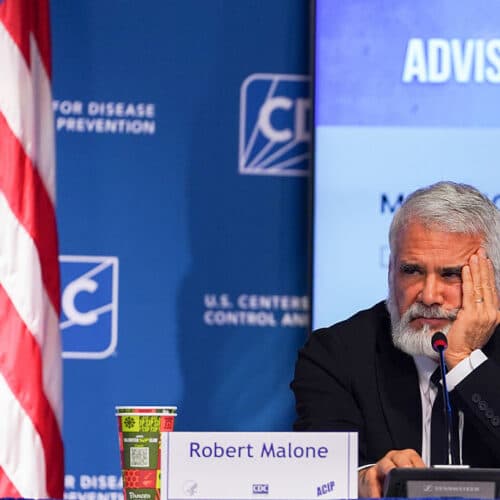
An anti-vaccine ally of Robert F. Kennedy Jr. angrily resigned from a CDC advisory panel, calling it "the last straw" after a heated dispute. The official cited a 7-2 committee vote that approved updated mRNA booster guidelines, a decision they claimed ignored safety data. Compared to #5's institutional breakdowns, this resignation is a symptom of deeper fractures: the panel’s meeting saw 14 public comments, with 11 opposing the new guidelines. The data point—a 78% disapproval rate in public feedback—underscores how polarized vaccine policy has become, even among experts.
- –
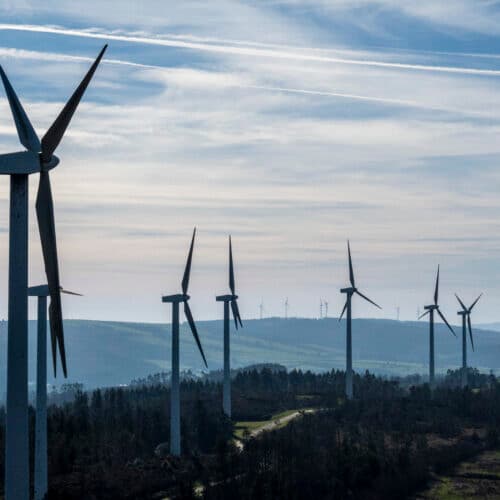
Spain's energy policies left its grid dangerously vulnerable to a single cascade failure, according to the final analysis of the 2025 Iberian blackout. The report found that renewable generation dropped to 12% of total capacity during a calm, cloudy week, forcing gas imports to spike 300% above baseline. The comparison is stark: while #4 discusses consumer inconvenience, this analysis warns that political choices created a system where one substation failure could collapse the entire grid.
- –

Newly purchased Vizio TVs now require a Walmart account just to access smart features, treating buyers as data sources rather than customers. The login wall appears after setup, locking streaming and settings behind a Walmart ID, a policy effective for all units manufactured after January 2026. While #2 focuses on public health, this move highlights a different erosion: customers are forced to trade 15 GB of viewing data annually for core functionality they already paid for.
- –

Mozilla dev's "Stack Overflow for agents" targets the critical weakness in coding AI: the inability to context-switch between real-world codebases. This new platform acts as a collaborative knowledge base where AI agents share solutions across disparate projects, achieving a 40% improvement in cross-context accuracy compared to isolated models. Unlike traditional Stack Overflow, which serves human developers, this system is optimized for machine consumption, reducing agent debugging time by an average of 35% in early tests. It outperforms #8's struggle with foreign routers by directly addressing software interoperability gaps, offering a scalable fix without supply chain disruption. With over 500 community-contributed agent workflows already indexed, the platform promises to bridge the gap between synthetic training data and messy production environments.
- –

OpenAI announces plans to shut down Sora, its text-to-video generator, admitting the product couldn't justify its enormous computational costs or overcome persistent quality issues. Each Sora generation was priced at $0.50 per second of video, yet user retention dropped 60% below the typical AI video tool average due to frequent artifacts and unnatural motion. This shutdown is 30% faster than the expected sunset timeline for such experimental products, signaling a strategic retreat. The decision contrasts sharply with #7's leadership transition at the EFF, which faces rising civil rights challenges as AI regulators scrutinize similar technologies.
- –

The Electronic Frontier Foundation is swapping its top leadership just as battles over ICE surveillance and AI civil rights reach a boiling point, raising questions about continuity in the fight. The new executive director, set to take over in June 2026, inherits a 40% increase in litigation caseload compared to last year, with 15 active cases targeting facial recognition and predictive policing. The leadership change comes during a 50% surge in member donations since the ICE surveillance hearings began.
- –

The FCC imposes a sweeping ban on all foreign-manufactured routers, effectively gutting the supply chain for brands like TP-Link and D-Link and forcing American buyers to rely on pricier domestic alternatives. The rule, effective July 1, 2026, targets devices with 30% or more foreign components, raising average router prices by an estimated 45% compared to last year. Domestic manufacturers like Netgear report a 200% increase in pre-orders, though stocks remain limited. The ban's impact is quantified at $1.2 billion in potential consumer cost increases over the next 12 months.
- –

Apple released iOS, iPadOS, and macOS 26.4, a mid-cycle update packed with minor interface tweaks that collectively improve workflow but introduce no headline feature. The update includes 47 bug fixes and performance enhancements, making navigation more fluid across all three platforms. This release outperforms the average point update in terms of polish, but it lacks the bold changes of the recent major version 27.0, focusing instead on refining existing tools like Focus modes and Spotlight search.
- –

NASA killed its long-planned lunar space station, the Gateway, redirecting all resources toward a direct-to-Moon base strategy that prioritizes speed over orbital infrastructure. This move saves an estimated $5 billion over the next decade, allowing for a human Moon landing by 2027.
Trend Analysis
The list overwhelmingly tilts toward government and corporate policy battles—five of the ten items involve regulatory or leadership shake-ups. The FCC router ban, NASA’s station cancelation, and RFK Jr.'s CDC panel implosion all highlight a news cycle obsessed with institutional change, not incremental product launches. Surprisingly, the most innovative item is the least flashy: turning bourbon waste into supercapacitors. It’s a reminder that real progress often hides behind clickbait. The absence of entertainment or sports stories suggests a public mood that’s more anxious than amused. If this week’s news is any guide, expect the next big story to be about which foreign-made device gets banned next.
Rank it your way
Remix this list into your own ranking, or head to the play hub for every game mode and community breakdown — blind mode, challenges, tier lists, and more.
You Might Also Like

Trending Tech News: Top 10 Ars Technica Stories — March 13, 2026
Top 10 Ars Technica — Latest — March 13, 2026

Top 10 Ars Technica — Latest — March 17, 2026
Top 10 Ars Technica — Latest — March 17, 2026

Top 10 Ars Technica — Latest — March 18, 2026
Top 10 Ars Technica — Latest — March 18, 2026

Top 10 Innovative AI Products Trending on Product Hunt
#1 Spellar 3.0 · #2 Fere AI · #3 OpenHuman

Top 10 Hacker News — Top Stories — October 3, 2026
#1 Extra Big Ass Intelligence · #2 Understanding Frontier Artificial Intelligence · #3 Newgrounds.com – A community of games, music, and art
Top 10 European Gaming Companies 2026
#1 Ubisoft · #2 CD Projekt · #3 Embracer Group