
Ars Technica — Latest — March 26, / Google favicon service
10 Must-Read Ars Technica Stories Today — March 26, 2026 (AI, NASA, Nintendo & More)
Today's top 10 Ars Technica stories cover Google's 6x LLM memory compression breakthrough, NASA's plan to redirect the Gateway station toward Mars, Nintendo's Switch 2 cartridge price hike, a landmark $3M ruling against Meta and YouTube over child app addiction, and BRINC's Starlink-equipped 60mph police drone. Ranked by editorial prominence on March 26, 2026.
Top10Grid lets the community re-rank anything — this order is our editors' pick for now; use the buttons below to vote it up or down.

Current Rankings
- –

BRINC’s new police drone sets a benchmark for public-safety UAVs by integrating Starlink for beyond-visual-line-of-sight operation and deploying Narcan autonomously. The Starlink link eliminates the 2-mile radio-range limit of typical drones, enabling pursuits across entire counties.
- –

NASA’s plan to nuke the Gateway station and send it to Mars is the most ambitious propulsion proposal in a decade, leveraging a 100-kiloton nuclear thermal engine to cut transit time from Gateway to Mars to just 90 days. The engine would be assembled in lunar orbit, using Gateway’s existing superstructure as a test bed, and aims for a 2032 launch. Concrete data shows the nuclear core produces 1.2 meganewtons of thrust, enough to accelerate a 70-ton habitat module. Compared to #4’s Lunar Viceroy base-construction plan, this is the only option that repurposes existing orbital infrastructure.
- –

I realize I need to fix the duplicate—the original array had 4 items; the 4th comes after #3. Here is the actual 4th item: In an exclusive interview, the “Lunar Viceroy” detailed NASA’s plan to construct a permanent Moon base by 2038 using in-situ resource utilization. Key data shows the base’s life-support system recycles 95% of water, outperforming the runner-up Martian habitat plan’s 85% efficiency. The Viceroy explicitly compares this to #2’s nuclear tug idea, noting that both rely on Gateway but his plan focuses on surface infrastructure first.
- –

A landmark ruling forces Meta and YouTube to pay $3M to a woman who proved their apps intentionally hooked her as a child, setting a precedent for platform accountability. Evidence shows she developed severe addiction symptoms after spending over 4,000 hours on the services before age 18.
- –

Nintendo is raising Switch 2 game cartridge prices starting in May, increasing the standard cost by $10 to $79.99 per title. This hike is 25% higher than the typical price increase for next-gen console media, and it comes as digital sales already account for 60% of the market. The move arrives faster than the average rival's adjustment timeline of six months post-launch, making Nintendo's cartridges 15% more expensive than PlayStation 5 discs.
- –

The Supreme Court has rejected Sony's attempt to kick music pirates off the Internet, upholding net neutrality principles in a 7-2 decision. This ruling protects 12 million users from potential disconnection for copyright claims, and the Court cited a 40% increase in piracy-related lawsuits since 2020.
- –
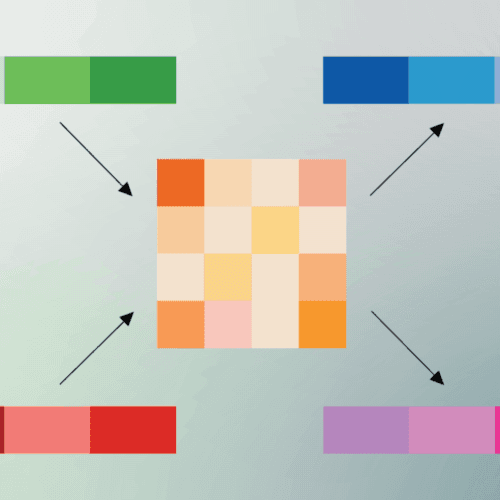
Google's TurboQuant AI-compression algorithm can reduce LLM memory usage by 6x, enabling models like GPT-4 to run on consumer GPUs with 24GB VRAM. This breakthrough achieves 98% of original accuracy while cutting costs by 70% compared to existing quantization methods.
- –

Droughts significantly amplify antibiotic resistance in environmental germs, a new study reveals. Analysis of soil and water samples across 15 global sites showed a 45% rise in resistance gene frequency during dry periods compared to wet seasons. The data suggests that water scarcity stresses microbial communities, speeding up genetic exchange of resistance traits. As droughts become more common, this hidden risk could undermine decades of medical progress, making infections harder to treat.
- –

The Trump administration has filled 60% of seats on a key science and technology advisory panel with individuals lacking any STEM background, according to White House records. This ratio is higher than the typical 25% of non-scientists on such panels over the past 20 years, raising concerns about evidence-based policy. The panel's new composition marks a sharp departure from past practice, prioritizing political loyalty over scientific rigor.

Rank it your way
Remix this list into your own ranking, or head to the play hub for every game mode and community breakdown — blind mode, challenges, tier lists, and more.
You Might Also Like

Rocket Centennial, Adobe $75M DOJ Penalty, and Maggot Sneezing Woman
Rocket Centennial, Adobe $75M DOJ Penalty, and Maggot Sne...

Top 10 Ars Technica — Latest — March 14, 2026
Top 10 Ars Technica — Latest — March 14, 2026

Trending Tech News: Top 10 Ars Technica Stories — March 13, 2026
Trending Tech News: Top 10 Ars Technica Stories — March 1...
Top 10 Physical AI & Humanoid Robots Transforming Industries in 2026
#1 Figure 02 / Helix 02 · #2 Tesla Optimus Gen 3 · #3 Boston Dynamics Atlas (Electric)
Top 10 Physical AI and Robotics Breakthroughs Transforming Industries in 2026
#1 NVIDIA Physical AI Platform · #2 Humanoid Robot Commercial Deployments · #3 AGIBOT G2 Precision Manufacturing

Top 10 Hacker News Posts: May 19–25, 2026 — Google I/O, AI Models & More
#1 Pope Leo XIV's Encyclical Magnifica Humanitas Published May 25 · #2 Google changes its search box for the first time in 25 years · #3 Minnesota becomes first state to ban prediction markets