










Hyundai Motor Group / Pexels
Compare
Top 10 Physical AI and Robotics Breakthroughs Transforming Industries in 2026
From surgical robots outperforming human surgeons to humanoid workers on real factory floors — these are the 10 biggest physical AI and robotics milestones of 2026, ranked by readers like you. Read each breakthrough below and cast your vote for the one that impresses you most!
529 views
Top10Grid rankings are decided by votes, not algorithms — use the buttons below to move this list.
Compare by Dimension
How widely deployed across real-world production environments, measured by unit count, facility count, or operational hours
| Rank | Item | Score | Notes |
|---|---|---|---|
| #1 | Warehouse AMR Billion-Pick Milestone | 10.0 | 1 billion cumulative picks across 40+ DHL sites; 5,000-unit deployment target; largest deployed physical AI fleet in any single enterprise application |
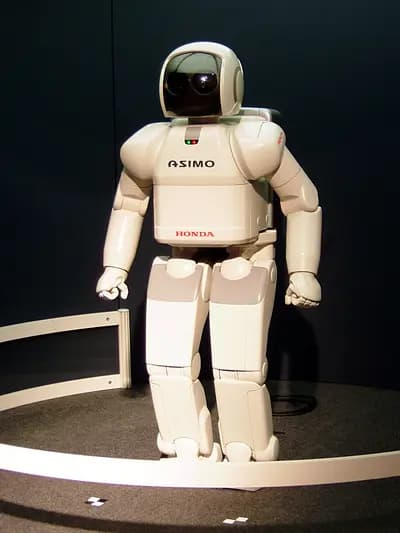
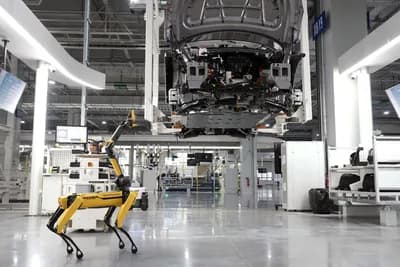
| #2 | Humanoid Robot Commercial Deployments | 9.0 | 15,000 units projected 2026 across BMW, Hyundai, Amazon, Japan Airlines, Tesla — highest absolute unit count of any humanoid category |
| #3 | NVIDIA Physical AI Platform | 8.0 | 2M+ partner robots, multiple live applications across agriculture, surgery, solar — broad reach through ecosystem, not direct deployment |
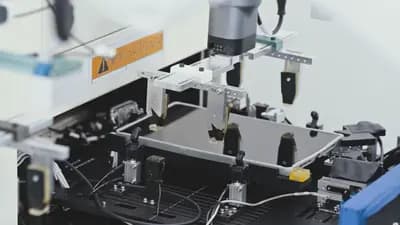
| #4 | AGIBOT G2 Precision Manufacturing | 7.0 | 310 units/hour at single Longcheer facility; 100-robot expansion Q3 2026; 10,000 total units shipped by March 2026 |
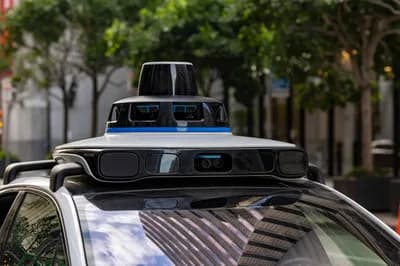
| #5 | Autonomous Robotaxi Commercialization | 7.0 | 100M+ Waymo miles logged; 12+ city commercial target; 20,000-vehicle Uber commitment — significant fleet scale with geographic expansion underway |
| #6 | Surgical AI Robot Precision Outcomes | 6.0 | Deployed across multiple hospitals and surgical specialties but total active units globally remains in hundreds, not thousands |
| #7 | Siemens-NVIDIA Industrial AI OS | 5.0 | Live at Siemens Erlangen reference factory; Foxconn, HD Hyundai, KION, PepsiCo in early adoption; commercial launch H2 2026 — broad deployment still ahead |
| #8 | Vision-Language-Action Foundation Models | 4.0 | VLA is the underlying architecture for multiple deployed systems (GR00T, pi0.7) but as a standalone technology category deployment is primarily through research and commercial model licensing |
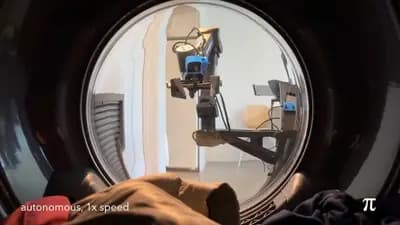
| #9 | Physical Intelligence Pi0.7 | 3.0 | Research and early commercial stage; limited real-world deployment outside demonstration environments; breadth of compositional generalization not yet documented at scale |
| #10 | Sony ACE Elite Sports Robot | 2.0 | Single research demonstration platform; not commercially deployed; sports robot with no current production application |
Current Rankings
Get the weekly technology rundown
Only lists published since the last email. Join the early readers.
- Only Top 10s published in the last 7 days
- One email a week — and none at all in a week with nothing new
- Unsubscribe in one click
No spam. One email per week. Unsubscribe anytime.
Frequently Asked Questions
What is Physical AI? Physical AI is artificial intelligence built into robots and machines that can sense, move through, and act on the real world — think robotic arms, self-driving cars, and surgical robots — as opposed to purely software-based AI that only processes text or images.
What does AMR stand for? AMR stands for Autonomous Mobile Robot — a warehouse or logistics robot that navigates on its own using cameras and onboard maps, without fixed tracks or a human driver.
What is a Vision-Language-Action (VLA) model? A VLA model is an AI brain that lets a robot see its environment, understand spoken or written instructions, and decide what physical action to take — all in one system, similar to how humans combine sight, language, and movement.
How were these 10 breakthroughs selected? Each entry was evaluated on real-world deployment scale, independently verified performance data, and coverage by authoritative sources including IEEE Spectrum, the NVIDIA newsroom, and peer-reviewed surgical outcomes studies published in 2026.
Which breakthrough matters most? That is exactly what this community vote decides! Scroll up and tap the vote button on whichever entry you think will have the biggest impact on daily life.
How to tell a real deployment from a research demo
Physical AI generates a lot of headlines that blur two very different things: a robot that performed a task once, on camera, under controlled conditions, and a robot that is doing that task every shift, in a facility that depends on it. The entries on this list that describe unit counts, uptime percentages, or a named production site (AGIBOT's G2 at Longcheer, the humanoid deployments at BMW, Hyundai, and Amazon, the DHL/Locus warehouse fleet) are past that line. The entries that describe a capability milestone — a single successful task sequence, a benchmark score, a competitive match — are demonstrating that something is now technically possible, which is a genuinely different and earlier stage than commercial deployment. Both are worth tracking, but they answer different questions: one tells you what will probably be available to buy soon, the other tells you what the technology can do at all.
What separates the entries running in production from the ones still proving a concept
Read across this list, the entries split roughly into two groups. One group is already running as a recurring operational system: AGIBOT's manufacturing line, the DHL/Locus warehouse robots, the humanoid units on assembly and fulfillment floors, and the surgical robots whose outcome data comes from real patient populations rather than lab trials. The other group — Physical Intelligence's pi0.7, Sony's table-tennis robot, the Siemens-NVIDIA operating system's Erlangen pilot — is demonstrating a new capability or a reference deployment that has not yet been repeated at scale elsewhere. Neither kind of breakthrough is lesser; a capability demonstration is often the precondition for the production deployments that follow it a year or two later. But it's worth knowing which kind you're looking at before judging how soon it will show up in a factory or hospital near you.
The gap between an announcement and an available product
A recurring pattern in physical AI coverage is treating a funding round, a partnership announcement, or a company's stated production target as equivalent to the technology being available today. On this list, several entries are explicit about that gap: Tesla's Optimus is in limited internal production rather than broad commercial sale, and the humanoid robotics companies' long-run unit and pricing targets are multi-year roadmaps, not current offerings. Reading a physical AI story well means separating what a company has shipped and is running continuously from what it has said it plans to ship.
Readers Also Ranked
More Lists Like This
Top 10 Hacker News — Top Stories — October 2, 2026
- #1Pi 1.0
- #2Shimano Bicycle Museum Review
- #3How Singapore's government-run dating service works

Top 10 Ars Technica — Latest — March 25, 2026
- #1How chemists turned bourbon waste into supercapacitors
- #2"The last straw"—RFK Jr.'s anti-vaccine ally angrily quits CDC panel after spat
- #3Final analysis of 2025 Iberian blackout: Policies left Spain at risk

Top 10 Ars Technica — Latest — April 24, 2026
- #1Rocket Report: Artemis III rocket getting ready; SpaceX is now an AI company
- #2Visitors to this private space station won't be wearing shorts and T-shirts
- #3US accuses China of “industrial-scale” AI theft. China says it’s “slander.”
Top 10 Hacker News — Top Stories — August 13, 2026
- #1DeepSeek V4 Pro 0813
- #2Mushroom behind 'tiny people' hallucinations identified
- #3We tracked down the 16-year-old WAL-reset SQLite bug
Frequently asked questions
What is physical AI and how does it differ from traditional AI?
Physical AI refers to artificial intelligence integrated into physical systems like robots and machines to interact with the real world, unlike traditional AI which operates purely in software or data analysis.
Which industries are most transformed by physical AI and robotics breakthroughs in 2026?
Key industries include manufacturing, healthcare, logistics, agriculture, and construction, where automation and intelligent robots improve efficiency, precision, and safety.
What are some notable robotics breakthroughs expected in 2026?
Breakthroughs include advanced humanoid robots for flexible manufacturing, autonomous delivery drones, surgical robots with AI-assisted precision, and self-adapting agricultural machines.
How will these breakthroughs affect the workforce in 2026?
While some routine jobs may be automated, new roles in robot supervision, maintenance, and AI system design will emerge, requiring upskilling and adaptation.
What ethical concerns surround physical AI and robotics in 2026?
Key concerns include job displacement, privacy implications of autonomous surveillance robots, and ensuring safety and accountability in AI-driven physical systems.
Discussion
Have a take on this ranking?
Comments are how the argument actually happens here. Posting one needs a free account — it takes about a minute.
No comments yet.
The first comment sets the terms of the argument.
Would your top 10 look different?
Publish your own ranking of this topic. Your list gets its own page, and readers vote on it the same way you just voted on this one.
Build your own Top 10More Technology Rankings
You might also want to rank…
 Top 10 Influencers in Taiwan's Gaming & Esports Scene (2026)
 Top 10 Tech Companies in Japan 2026
 Top 10 US No-Code/Low-Code Platforms
Explore more Technology rankings on Top10Grid
People Also Explore
Because you're viewing Technology
Top 10 Ars Technica — Latest — September 10, 2026
12 views · 0 votes

Top 10 Ars Technica — Latest — September 17, 2026
12 views · 0 votes
Top 10 Hacker News — Top Stories — September 6, 2026
13 views · 0 votes
Top 10 Hacker News — Top Stories — September 13, 2026
13 views · 0 votes
Top 10 Hacker News — Top Stories — September 17, 2026
13 views · 0 votes
Top 10 Hacker News — Top Stories — September 18, 2026
13 views · 0 votes
You might also like
TECHNOLOGYSame category
Top 10 AI Tools That Will Transform Your Workflow in 2026
10 items
TECHNOLOGYSame category
Top 10 AI Coding Tools for Developers in 2026
10 items

TECHNOLOGYSame category
Top 10 US Insurance Technology Platforms
10 items

TECHNOLOGYSame category
Top 10 Most Overhyped Tech Products That Flopped
10 items

TECHNOLOGYSame category
Top 10 Indian Startups of 2025
10 items
TECHNOLOGYSame category
Top 10 Worst Tech Predictions That Failed
10 items