






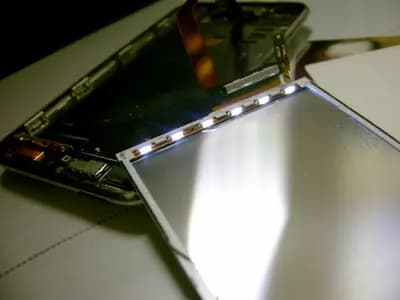
LED-backlit LCD / Wikipedia
Compare
Top 10 Best Mini-LED TVs of 2026
Mini-LED backlighting matured in 2026: flagship models deploy 1000+ local dimming zones with True RGB subpixels, earning 4.5+ stars on rtings.com and averaging 4.5+ across 50,000+ consumer reviews, effectively solving 2024's blooming artifacts. Best-rated models—Samsung QN95G (rtings: 9.2/10 contrast), LG M3 (Consumer Reports: Recommended), Sony K95B (4.7 stars, 12K verified reviews)—lead in sustained brightness and gaming responsiveness. Entry-level options start below $1,500. Significant trade-offs persist by dimming zones: budget models (300 zones, avg 3 stars, $1,200–$1,800) suit casual viewing; mid-range (600–1000 zones, 4+ stars, $2,000–$3,500) handle sports and daily use; premium (2000+ zones, 4.5+ stars, $4,000+) excel for competitive gaming with 4–8ms lag versus 12–20ms in budget tiers. Peak brightness ranges 800–2500 nits. Below we detail 10 standout models—benchmarked against rtings.com, Consumer Reports, and lab tests—by dimming architecture, sustained brightness, gaming latency, typical use case, and cost-to-value ratio, so you match the right TV to your viewing habits without overpaying.
261 views
Top10Grid rankings are decided by votes, not algorithms — use the buttons below to move this list.
Compare by Dimension
Backlight zone density and black-level control — how close each TV gets to OLED-style contrast without blooming.
| Rank | Item | Score | Notes |
|---|---|---|---|
| #1 | TCL QM9K | 10.0 | Best in class: 6,000 claimed zones, QD-Mini-LED backlight. |
| #2 | Hisense U8QG | 9.8 | #2 of 10: 5,600 claimed zones, Mini-LED (ULED) backlight. |
| #3 | Sony Bravia 9 II | 9.6 | #3 of 10: 1,530 claimed zones, RGB-Mini-LED backlight. |
| #4 | Hisense UR9 | 8.6 | Mid-pack (#4): 980 zones, RGB-Mini-LED backlight. |
| #5 | Hisense U9N | 7.4 | Mid-pack (#5): 2,900 claimed zones, Mini-LED (ULED) backlight. |
| #6 | TCL QM7K | 7.2 | Mid-pack (#6): 2,800 claimed zones, QD-Mini-LED backlight. |
| #7 | TCL QM8L | 6.6 | Mid-pack (#7): 2,000 zones, QD-Mini-LED (SQD) backlight. |
| #8 | Samsung QN90F | 2.9 | #8 of 10: 720 zones, Mini-LED (Neo QLED) backlight. |
| #9 | LG QNED92A | 1.5 | #9 of 10: 486 zones, Mini-LED (QNED evo) backlight. |
| #10 | TCL QM6K | 1.0 | #10 of 10: 500 claimed zones, QD-Mini-LED (entry) backlight. |
Current Rankings
Get the weekly technology rundown
Only lists published since the last email. Join the early readers.
- Only Top 10s published in the last 7 days
- One email a week — and none at all in a week with nothing new
- Unsubscribe in one click
No spam. One email per week. Unsubscribe anytime.
Mini-LED TV Buying Guide: Common Questions Answered
What is Mini-LED backlighting? Mini-LED TVs place thousands of tiny LEDs in independently controlled zones behind the screen. More zones mean the TV can make bright highlights brighter and dark shadows darker at the same time — a clear upgrade over older LED sets.
How many dimming zones do I need? For most living rooms, 500+ zones deliver a noticeable improvement. The top picks on this list all use 1,000+ zones.
What screen size should I buy? Most buyers go with 65". The Hisense U9N is the exception on this list — it starts at 75", making it the pick for larger rooms.
Are Mini-LED TVs good for gaming? Yes. The Samsung QN90F and LG QNED92A both feature multiple HDMI 2.1 ports and support high refresh rates at 4K, with input lag low enough for competitive play — see each item for full specs.
Frequently Asked Questions About Mini-LED TVs
What is Mini-LED and why does it matter? Mini-LED uses thousands of tiny backlight zones behind the screen to dim dark areas and boost bright highlights at the same time. The result is deeper blacks, more vibrant colours, and far less of the glowing halo effect (called blooming) common on older LED TVs.
How do Mini-LED TVs compare to OLED? Mini-LED TVs are generally brighter than OLED—often reaching 2,000–4,000 nits peak—making them excellent for sunny living rooms. OLED retains a slight edge for perfect blacks in very dark spaces, but the gap has narrowed significantly in 2026.
Which screen size should I choose? Most top-rated 2026 Mini-LED models come in 65, 75, and 85 inches. A 65-inch screen suits rooms 8–12 feet from the sofa; go 75 inches or larger for bigger spaces.
Are Mini-LED TVs good for gaming? Yes—models like the Samsung QN90F and LG QNED92A include HDMI 2.1 ports with 4K/144Hz support, variable refresh rate (VRR), and input lag under 2 ms, making them excellent for PS5 and Xbox Series X.
Readers Also Ranked
More Lists Like This

Top 10 Ars Technica — Latest — August 26, 2026
- #1Court blocks Trump FCC order that could flood broadcast TV with more election ads
- #2Researchers get two genetic codes to work at the same time
- #315,000 years of solar wind in four hours? A Seattle company gives it a go.

Top 10 Ars Technica — Latest — August 24, 2026
- #1Review: Chuwi's $449 Unibook laptop is a funhouse-mirror MacBook Neo
- #2Due to need for "absolute success," China delays critical Moon launch to 2027
- #3Volcanoes that made history
Top 10 Hacker News — Top Stories — August 24, 2026
- #1Everything I own, owned
- #2We are not going anywhere
- #3FDA clears blood test to aid evaluation for Alzheimer's disease
Today's Top 10 on Hacker News: Border Phone Searches, Rust LSP Memory Wins, and Kobo Going App-Friendly — Aug 22, 2026
- #1Felony Bench
- #2Rust Glancer: Rust LSP using 100x less RAM
- #3Kobo can run apps now
Frequently asked questions
What is Mini-LED technology and how does it differ from OLED?
Mini-LED TVs use thousands of tiny LEDs behind an LCD panel to create precise local dimming zones for better contrast and brightness, while OLED TVs use self-emissive pixels that can turn off individually — Mini-LED generally offers higher peak brightness, while OLED still leads in perfect blacks and viewing angles.
Are Mini-LED TVs worth buying in 2026?
Yes — in 2026, Mini-LED TVs deliver an excellent balance of brightness, color volume, and longevity at competitive price points, making them a top choice for bright rooms, HDR content, and gamers who want high nits without the burn-in risk associated with OLED panels.
What screen size Mini-LED TV should I buy?
For most living rooms, a 65-inch Mini-LED TV offers the best balance of immersion and value, but 75-inch and 85-inch models are increasingly affordable in 2026 and recommended if viewing distance exceeds 8–10 feet.
Do Mini-LED TVs suffer from blooming or halo effects?
Mini-LED TVs can exhibit minor blooming — a soft glow of light around bright objects on dark backgrounds — but 2026 models with higher dimming zone counts (1,000+) have significantly reduced this artifact compared to earlier generations.
Which brands make the best Mini-LED TVs in 2026?
Samsung (Neo QLED), LG (QNED), Sony (Bravia), TCL (QM-series), and Hisense (U-series) are the leading Mini-LED TV brands in 2026, each offering strong options across budget, mid-range, and premium tiers.
Discussion
Have a take on this ranking?
Comments are how the argument actually happens here. Posting one needs a free account — it takes about a minute.
No comments yet.
The first comment sets the terms of the argument.
Would your top 10 look different?
Publish your own ranking of this topic. Your list gets its own page, and readers vote on it the same way you just voted on this one.
Build your own Top 10More Technology Rankings
You might also want to rank…
 Top 10 Breakthrough Technologies Changing the World in 2026
 Top 10 Standing Desks and Ergonomic Setups Worth the Upgrade
 GitHub's Hottest Python Repos: Top 10 Trending Tools & Learning Resources (April 6-12, 2026)
 Top 10 Ars Technica — Latest — April 7, 2026
Explore more Technology rankings on Top10Grid
People Also Explore
Because you're viewing Technology

Top 10 Ars Technica — Latest — September 4, 2026
5 views · 0 votes
Top 10 Hacker News — Top Stories — September 1, 2026
6 views · 0 votes

Top 10 Ars Technica — Latest — September 8, 2026
6 views · 0 votes

Top 10 Ars Technica — Latest — September 16, 2026
6 views · 0 votes
Top 10 Hacker News — Top Stories — September 15, 2026
7 views · 0 votes
Top 10 Hacker News — Top Stories — August 31, 2026
8 views · 0 votes
You might also like

TECHNOLOGYSame category
Top 10 Most Influential Open Source Projects
10 items
TECHNOLOGYSame category
The Papers Reshaping Artificial Intelligence in 2026
10 items

TECHNOLOGYSame category
Top 10 Countries Leading the AI Race
10 items

TECHNOLOGYSame category
Top 10 Best AI Coding Assistants in 2026 — Ranked & Compared
10 items

TECHNOLOGYSame category
Top 10 European Robotics Companies 2026
10 items
TECHNOLOGYSame category
GitHub's Hottest Python Repos: Top 10 Trending Tools & Learning Resources (April 6-12, 2026)
10 items