









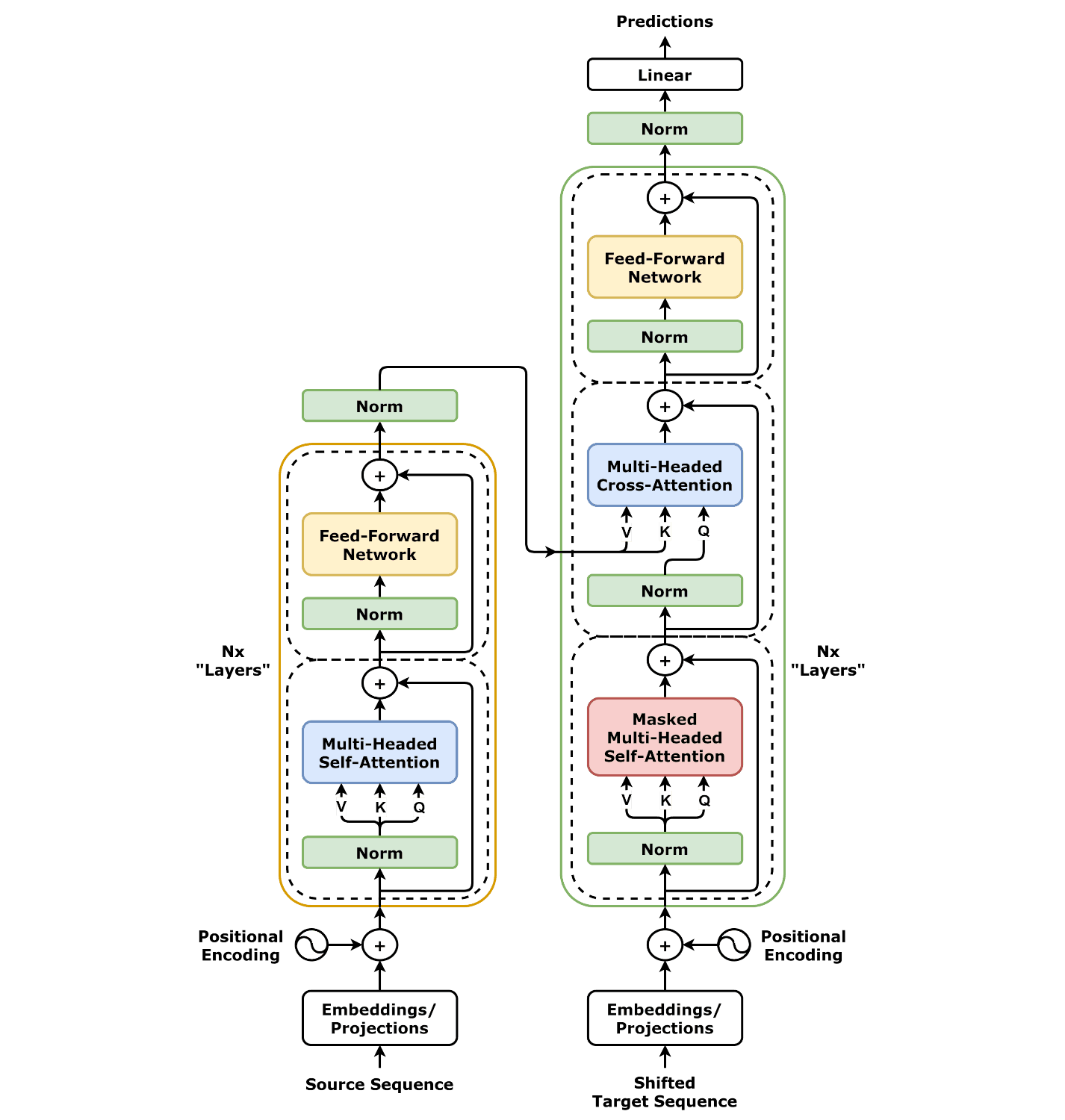
Wikimedia Commons
App / Software
The Papers Reshaping Artificial Intelligence in 2026
From novel agentic architectures tackling emergent security threats to self-correcting reasoning models influencing large language model (LLM) fine-tuning, the cs.AI preprint stream in early 2026 is buzzing with innovations. This month, we've curated ten groundbreaking papers that offer practical insights and potential roadmap shifts for AI practitioners. Expect to see discussions on how these advancements could impact frameworks like PyTorch and TensorFlow, or even inspire new features in libraries such as Hugging Face Transformers. These aren't just theoretical breakthroughs; they're the foundational ideas that will shape your next generation of AI applications.
2026535 views
Top10Grid rankings are decided by votes, not algorithms — use the buttons below to move this list.
Product
Community rankings for this product
Current Rankings
Vote items up or down — rankings update instantly
Get the weekly technology rundown
Only lists published since the last email. Join the early readers.
- Only Top 10s published in the last 7 days
- One email a week — and none at all in a week with nothing new
- Unsubscribe in one click
No spam. One email per week. Unsubscribe anytime.
How to Read a Weekly Research Digest
Every paper on this list reports its own benchmark numbers, in its own abstract, measured against baselines the authors chose. That's normal — it's how arXiv preprints work — but it means a claimed '22% improvement' or a '1.9x speedup' should be read as 'this is what the authors report in their own comparison,' not as an independently verified, peer-reviewed result. None of these papers had gone through peer review at the time this list was compiled. The honest way to use a digest like this is as a pointer to what to go read, not as a substitute for reading it: check what baseline a claimed improvement is measured against, and treat any number here as the authors' claim until you've looked at the paper yourself.
What This Week's Cluster of Papers Has in Common
Three threads run through this list rather than one. The first is agent and alignment safety — papers examining what happens when an AI agent's authority boundaries blur, or when a reasoning model trained as a judge learns to game the very metric it's supposed to enforce. The second is efficiency-through-cleverness — several entries here get meaningful gains not from bigger models but from smarter reuse (caching prior verification work, ensembling cheap perturbations instead of running full reinforcement learning). The third is unglamorous infrastructure — new benchmark domains and dataset tooling that rarely make headlines but that the flashier papers eventually depend on. A healthy way to read a list like this is to notice which of the three a given week is leaning toward, since that's a rough signal of where the field's attention is actually going.
Readers Also Ranked
More Lists Like This

Top 10 Ars Technica — Latest — March 25, 2026
- #1How chemists turned bourbon waste into supercapacitors
- #2"The last straw"—RFK Jr.'s anti-vaccine ally angrily quits CDC panel after spat
- #3Final analysis of 2025 Iberian blackout: Policies left Spain at risk

Top 10 Ars Technica — Latest — April 24, 2026
- #1Rocket Report: Artemis III rocket getting ready; SpaceX is now an AI company
- #2Visitors to this private space station won't be wearing shorts and T-shirts
- #3US accuses China of “industrial-scale” AI theft. China says it’s “slander.”
Top 10 Hacker News — Top Stories — August 13, 2026
- #1DeepSeek V4 Pro 0813
- #2Mushroom behind 'tiny people' hallucinations identified
- #3We tracked down the 16-year-old WAL-reset SQLite bug

Top 10 Ars Technica — Latest — May 5, 2026
- #1How do you design a $30,000 electric pickup? Inside Ford's skunkworks.
- #2Charlize Theron is a bewitching Circe in Odyssey trailer
- #3Musk's Europe gamble: Will others follow the Dutch and approve FSD?
Frequently asked questions
What criteria were used to select the papers for the 'Top 10 Papers Reshaping Artificial Intelligence in 2026' list?
The papers were selected based on their novelty, citation impact, practical applicability, and potential to redefine AI paradigms such as reasoning, efficiency, multimodal learning, and alignment.
Where can I access the full text of the papers featured in this 2026 AI list?
Most papers are available on open-access preprint servers like arXiv, or through conference proceedings such as NeurIPS, ICML, and ICLR. Links are typically provided in the article.
What are the main research themes driving the 2026 AI papers?
Key themes include efficient foundation models, neurosymbolic reasoning, self-supervised multimodal learning, AI safety and alignment, and energy-efficient hardware-software co-design.
How do these papers compare to influential AI papers from previous years like 2023–2025?
The 2026 papers shift focus from scaling alone to sustainable intelligence, emphasizing smaller but more capable models, interpretability, and robust reasoning over pure parameter scaling.
Will these papers directly impact commercial AI products in 2026?
Yes, several papers introduce methods that are already being integrated into production systems, particularly in areas like retrieval-augmented generation, efficient fine-tuning, and multi-agent orchestration.
Discussion
Have a take on this ranking?
Comments are how the argument actually happens here. Posting one needs a free account — it takes about a minute.
No comments yet.
The first comment sets the terms of the argument.
Would your top 10 look different?
Publish your own ranking of this topic. Your list gets its own page, and readers vote on it the same way you just voted on this one.
Build your own Top 10Related Videos
More Technology Rankings
More Apps & Software Rankings
6📱
Top 10 GitHub — Trending Python — Sep 28–Oct 4, 2026
16 views · @admin
Top 10 GitHub — Trending Python — Sep 7–Sep 13, 2026
16 views · @admin
📱
Top 10 Hacker News — Top Stories — September 12, 2026
16 views · @admin
Top 10 GitHub — Trending Python — Aug 31–Sep 6, 2026
17 views · @admin
📱
Top 10 Hacker News — Top Stories — September 16, 2026
17 views · @admin
Top 10 Hacker News — Top Stories — September 9, 2026
18 views · @admin
You might also want to rank…
 Top 10 Influencers in Taiwan's Gaming & Esports Scene (2026)
 Top 10 Tech Companies in Japan 2026
 Top 10 Hacker News — Top Stories — April 2, 2026
Explore more Technology rankings on Top10Grid
People Also Explore
Because you're viewing Technology

Top 10 Ars Technica — Latest — September 10, 2026
13 views · 0 votes

Top 10 Ars Technica — Latest — September 15, 2026
13 views · 0 votes

Top 10 Ars Technica — Latest — September 17, 2026
13 views · 0 votes
Top 10 Hacker News — Top Stories — September 6, 2026
14 views · 0 votes
Top 10 Hacker News — Top Stories — September 13, 2026
14 views · 0 votes
Top 10 Hacker News — Top Stories — September 17, 2026
14 views · 0 votes
You might also like

TECHNOLOGYSame type
Computer Vision Research Changing How Machines See the World
10 items
TECHNOLOGYSame type
Machine Learning Breakthroughs Worth Reading Right Now
10 items

TECHNOLOGYSame type
Top 10 AI-Powered Productivity Apps of 2026
10 items

TECHNOLOGYSame type
Top 10 Countries Leading the AI Race
10 items

TECHNOLOGYSame type
Top 10 AI Failures and Controversies
10 items
TECHNOLOGYSame type
Top 10 Best AI Coding Assistants in 2026 — Ranked & Compared
10 items