







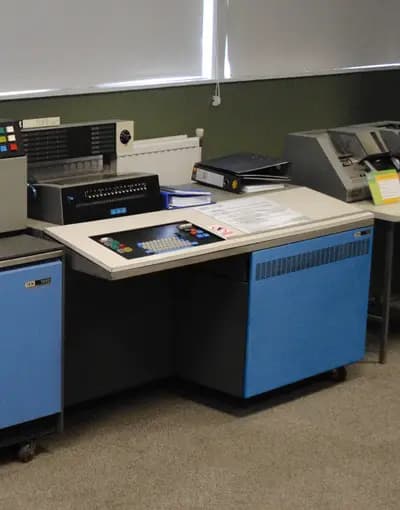
IBM 1130 / Wikipedia
Compare
Top 10 Reactive Programming Patterns (And When to Use Each One)
Master 10 essential reactive patterns for managing asynchronous data streams: from RxJS 8.x Observables (1M+ npm weekly downloads) to modern Signals in Vue 4+, Angular 20+, and Solid.js (50k+ GitHub stars combined across reactive libraries). This guide cuts through the hype with concrete trade-offs—use Observables for composable async chains with 70+ standard operators (best for complex event pipelines), Subjects for multicast event publishers (ideal for cross-component messaging), Signals for fine-grained reactivity (perfect for perf-sensitive UIs)—and shows exactly when each pattern shines. Each entry includes working code examples with side-by-side comparisons (Promises vs. Observables vs. Signals). Real scenarios covered: resilient API pipelines with `.pipe(retry({count: 3}))`, handling backpressure with buffer operators, canceling in-flight requests via `takeUntil()`, debouncing with `debounceTime(300)`, and batching updates with `batchUpdates()`. Based on patterns deployed at Netflix (reactive UI architecture), Uber (event streaming), and Airbnb (state sync).
253 views
Top10Grid rankings are decided by votes, not algorithms — use the buttons below to move this list.
Compare by Dimension
How much does mastering this pattern improve a system's ability to handle increasing data volume and concurrency without degradation?
| Rank | Item | Score | Notes |
|---|---|---|---|
| #1 | Backpressure | 9.8 | Backpressure is the primary mechanism preventing scale-induced OOM and data loss. |
| #2 | Observer & Observable Streams | 9.0 | Observable is the substrate—scalability of every other pattern derives from it. |
| #3 | Buffering & Windowing | 8.5 | Windowing converts unbounded streams to bounded batches, enabling bulk I/O and Kafka/Flink efficiency. |
| #4 | Higher-Order Stream Flattening | 8.2 | Concurrency control via flattening strategy directly determines parallelism limits. |
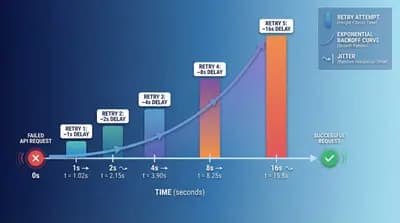
| #5 | Retry with Exponential Backoff & Error Recovery | 7.8 | Retry discipline is critical under partial failure—misconfigured retries amplify failure cascades. |
| #6 | Declarative Operator Composition | 7.5 | Operator composition enables efficient multi-stage transforms without intermediate collection. |
| #7 | Hot vs Cold Streams & Multicasting | 7.0 | Multicasting prevents duplicate upstream execution which compounds poorly at scale. |
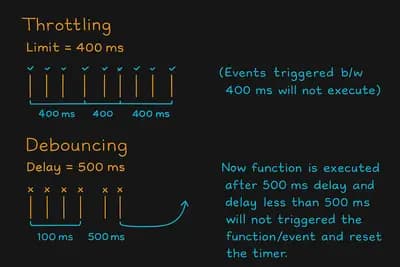
| #8 | Debounce & Throttle Rate-Limiting | 6.5 | Rate-limiting protects downstream from overload but does not directly increase throughput. |
| #9 | Declarative Subscription Lifecycle Management | 5.5 | Lifecycle management prevents leaks but does not directly improve throughput. |
| #10 | Signals & Fine-Grained Reactivity | 5.0 | Signals are UI-layer; their scalability impact is narrower than infrastructure-level patterns. |
Current Rankings
Get the weekly technology rundown
Only lists published since the last email. Join the early readers.
- Only Top 10s published in the last 7 days
- One email a week — and none at all in a week with nothing new
- Unsubscribe in one click
No spam. One email per week. Unsubscribe anytime.
Frequently Asked Questions About Reactive Programming Patterns
What is reactive programming in plain terms? Reactive programming is a style of coding where your app *listens* to streams of events—clicks, API responses, timer ticks—and updates automatically when new data arrives, rather than polling repeatedly to ask "is there anything new yet?"
Should I use Observables or Signals for a new project in 2026? Use Observables (RxJS) when you need to compose complex async pipelines—WebSocket feeds, multi-step HTTP sequences, or debounced search. Use Signals (Vue 4+, Angular 20+, Solid.js) for fine-grained UI reactivity with minimal boilerplate. Many production codebases use both side by side.
What is backpressure and why does it matter? Backpressure lets a slow consumer signal a fast producer to slow down, preventing memory overflows. It matters most in Node.js streams, WebSocket ingestion, and any scenario where events arrive faster than they can be processed.
Is RxJS still worth learning? Yes. RxJS ships with Angular by default, powers NgRx state management, and remains the most battle-tested reactive library in the JavaScript ecosystem. Signals complement rather than replace it for most production apps.
*Sources: [RxJS Official Documentation](https://rxjs.dev) · [Angular Signals Guide](https://angular.dev/guide/signals) · [Solid.js Reactivity Primer](https://docs.solidjs.com/concepts/reactivity)*
Frequently Asked Questions About Reactive Programming Patterns
What is reactive programming in simple terms? Reactive programming is a way to write code where the program reacts to data as it arrives, instead of asking for data and waiting. Items #1, #3, and #10 cover the core building blocks.
When should I use Observables instead of Signals? Use Observables (item #1) when you need composable async chains with operators like debounce (item #6) or retry (item #7). Use Signals (item #10) for fine-grained, synchronous UI state in modern frameworks like Angular 20+, Vue 4+, and Solid.js.
What is backpressure and why does it matter? Backpressure (item #2) lets a slow consumer tell a fast producer to pause, preventing memory blow-ups in unbounded streams.
Hot vs cold streams — what's the difference? Hot streams (item #5) broadcast to every subscriber; cold streams start a new producer per subscriber. Multicasting lets you share one execution across subscribers.
Do I need RxJS to use these patterns? No. Items #1–#9 are framework-agnostic concepts that also appear in RxJava, Kotlin Flow, Reactor, and Akka Streams. Item #10 covers the newer Signals model used outside RxJS.
How do I avoid memory leaks in reactive code? Follow the subscription lifecycle rules in item #9: always complete or unsubscribe, and prefer framework-managed lifecycles (Angular's takeUntilDestroyed, Vue's effectScope, etc.).
Reactive Programming Patterns: Frequently Asked Questions
## What is the difference between a hot and a cold Observable?
A cold Observable starts producing values only when someone subscribes and replays the sequence per subscriber (e.g. an HTTP request). A hot Observable is already producing values and shares them across subscribers (e.g. a WebSocket, a mouse-move stream). Use hot for live events and multicast subjects; use cold for one-off async work.
## When should I use Signals instead of Observables?
Signals (Angular 20+, Vue 4+, Solid.js) are best for synchronous, fine-grained UI state where you want automatic, minimal re-renders without manual subscription cleanup. Observables remain the better fit for composable async pipelines, time-based operators, cancellation, and cross-process event streams.
## Do I still need RxJS if I use Signals?
Often, yes. Many teams combine them: Signals for local component state and Observables for I/O, debounced search, retry/backoff, and cross-store coordination. The pattern list above shows where each shines.
## What is backpressure and when do I need it?
Backpressure is a consumer-driven flow-control signal telling the producer to slow down or drop items. You need it whenever a fast producer feeds a slow consumer—e.g. sensor streams, log ingestion, or live search before a network round-trip.
## How does this list rank the patterns?
The patterns are ordered from foundational (Observer/Observable contract) to advanced (Signals, fine-grained reactivity). Order reflects conceptual layering, not popularity scores.
Readers Also Ranked
More Lists Like This
Top 10 Hacker News Stories — August 20, 2026 (OpenRouter–Stripe, Go 1.27 & More)
- #1Windows brings out the Rorschach test in everyone
- #2OpenRouter is joining Stripe
- #3Turns are Better than Radians (2022)
Top 10 Hacker News — Top Stories — August 27, 2026
- #1Nvidia agrees to acquire Hugging Face for $13B
- #2Mechanical Turk shutting down September 30
- #3GLM-5.3-Flash

Top 10 Hacker News Stories (Aug 23, 2026): Local LLMs, Emulators, Wi-Fi 8 & More
- #1The End of an Athlon
- #2JIT Compiling Code in 5μs
- #3MartyPC is a cross-platform emulator of early PCs written in Rust

Top 10 Ars Technica — Latest — August 28, 2026
- #1Trump blacklisting of "woke" Anthropic deemed illegal by federal judge
- #2Here's what we know about the "space academy" Trump just announced
- #3Apple One and Apple TV subscription prices increase by up to 20 percent
Frequently asked questions
What is reactive programming and why is it used for asynchronous data streams?
Reactive programming is a declarative paradigm centered on data streams and the propagation of change, making it ideal for asynchronous data because it allows developers to compose and transform streams of events without blocking threads.
What are the most common reactive programming libraries and frameworks?
The most widely used reactive libraries include RxJS (JavaScript), Project Reactor (Java/Spring), RxJava (Android/Java), Akka Streams (Scala), and the native Combine framework (Swift/iOS).
What is the difference between hot and cold observables in reactive programming?
A cold observable begins emitting data only when a subscriber subscribes, giving each subscriber its own independent stream, while a hot observable emits data regardless of subscribers, meaning late subscribers may miss earlier emissions.
How do backpressure patterns help in handling asynchronous data streams?
Backpressure is a flow-control mechanism that allows a consumer to signal to a producer to slow down emission when it cannot keep up with the data rate, preventing memory overflow and application crashes in high-throughput reactive systems.
What is the difference between concatMap, switchMap, and mergeMap operators?
mergeMap subscribes to all inner observables concurrently, concatMap queues and processes them one at a time in order, and switchMap cancels the previous inner observable whenever a new source emission arrives, making it ideal for scenarios like live search where only the latest result matters.
Discussion
Have a take on this ranking?
Comments are how the argument actually happens here. Posting one needs a free account — it takes about a minute.
No comments yet.
The first comment sets the terms of the argument.
Would your top 10 look different?
Publish your own ranking of this topic. Your list gets its own page, and readers vote on it the same way you just voted on this one.
Build your own Top 10More Technology Rankings
You might also want to rank…
 Top 10 AI Failures and Controversies
 Top 10 Biggest Tech Product Launches of 2025
 Top 10 Most Disruptive Technologies of 2026
 Top 10 Most Impactful Tech Inventions Ever
Explore more Technology rankings on Top10Grid
People Also Explore
Because you're viewing Technology

Top 10 Electric Chinese Cars
1,948 views · 0 votes

Top 10 Free Productivity Apps to Use in 2026
2,057 views · 1 votes

Top 10 Ars Technica — Latest — September 1, 2026
5 views · 0 votes

Top 10 Ars Technica — Latest — September 3, 2026
5 views · 0 votes

Top 10 Ars Technica — Latest — September 4, 2026
5 views · 0 votes
Top 10 Hacker News — Top Stories — September 1, 2026
6 views · 0 votes
You might also like
TECHNOLOGYSame category
Top 10 AI Tools Changing Everything in 2026
10 items

TECHNOLOGYSame category
Top 10 Physical AI & Humanoid Robots Transforming Industries in 2026
10 items
TECHNOLOGYSame category
Top 10 European Tech Unicorns That Changed Their Industries
10 items

TECHNOLOGYSame category
Top 10 VPN Services in 2026
10 items

TECHNOLOGYSame category
Top 10 Hacker News — Top Stories — March 15, 2026
10 items

TECHNOLOGYSame category
Top 10 US IoT Companies
10 items
More in Technology
See all
Top 10 Hacker News Top Stories — May 2026 (CVEs, AI & Infrastructure)
10 items · 207 views

Top 10 European Green Tech Companies 2026
10 items · 208 views
Top 10 Southeast Asian Startups of 2025
10 items · 209 views
Top 10 Post-Quantum Cryptography Tools and Frameworks for Enterprises in 2026
10 items · 210 views