





Compare
Top 10 Post-Quantum Cryptography Tools and Frameworks for Enterprises in 2026
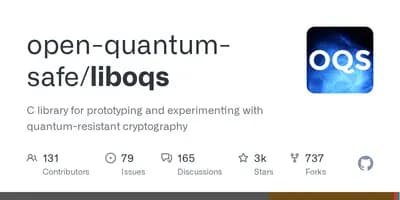
With NIST finalized standards CRYSTALS-Kyber (ML-KEM) for key establishment and CRYSTALS-Dilithium (ML-DSA) for signatures in 2024, enterprises must now integrate post-quantum cryptography to defend against harvest-now-decrypt-later attacks. The following tools and frameworks are actively maintained, have strong community adoption (e.g., liboqs 0.11.0 with 4.5k GitHub stars), and support hybrid TLS 1.3 handshakes via OpenSSL 3.4+. For example, to generate a Kyber key pair with liboqs in Python: `import oqs; kem = oqs.KeyEncapsulation('Kyber1024'); public_key = kem.generate_keypair()`. We evaluate each option on performance overhead, algorithm agility, and compliance readiness for 2026 production deployments.
209 views
Top10Grid rankings are decided by votes, not algorithms — use the buttons below to move this list.
Compare by Dimension
Supports FIPS 203/204/205 finalized algorithms
| Rank | Item | Score | Notes |
|---|---|---|---|
| #1 | Open Quantum Safe (liboqs + oqs-provider) | 9.8 | Reference implementation for all 30+ NIST PQC candidates and finalized FIPS 203/204/205 algorithms — the standard against which others are validated. |
| #2 | OpenSSL 3.5 (Native PQC) | 9.7 | All FIPS 203/204/205 parameter sets natively included in OpenSSL 3.5 without plugin; X25519MLKEM768 hybrid TLS group built-in. |
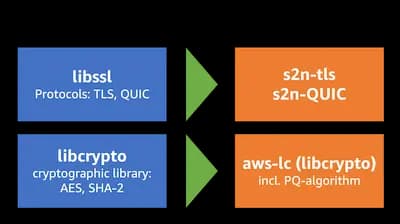
| #3 | AWS PQC (s2n-tls + AWS-LC) | 9.5 | ML-KEM-768 and ML-KEM-1024 deployed across KMS, S3, CloudFront, ACM with FIPS 140-3 validated AWS-LC; ML-DSA rollout in progress through 2026. |
| #4 | Microsoft SymCrypt + CNG PQC APIs | 9.5 | ML-KEM (all parameter sets), ML-DSA, and SLH-DSA all GA in SymCrypt; AD CS ML-DSA certificate issuance GA May 2026. |
| #5 | IBM Quantum Safe Suite | 9.5 | IBM Quantum Safe libraries implement all FIPS 203/204/205 parameter sets; z16 hardware acceleration validated against NIST specifications. |
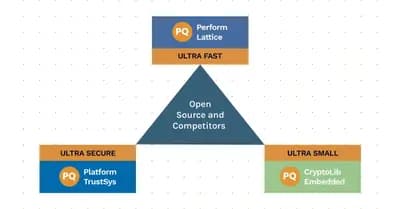
| #6 | PQShield UltraPQ Suite | 9.5 | FIPS 140-3 certified implementation (2025) for ML-KEM and ML-DSA; among the first dedicated PQC vendors to achieve CMVP validation. |
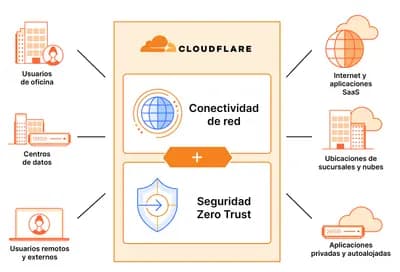
| #7 | Cloudflare PQC (Zero Trust / SASE / CDN) | 9.0 | X25519 + ML-KEM-768 hybrid deployed across CDN and Zero Trust; FIPS 203 compliant; ML-DSA for signatures in roadmap. |
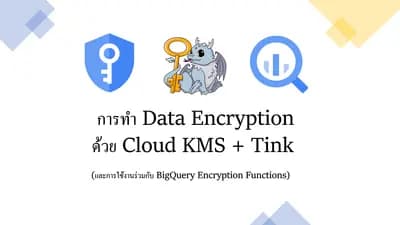
| #8 | Google Cloud KMS + BoringSSL / Tink | 9.0 | X-Wing (X25519+ML-KEM-768) in production; Tink supports ML-KEM and ML-DSA; Google Cloud KMS PQC key types available. |
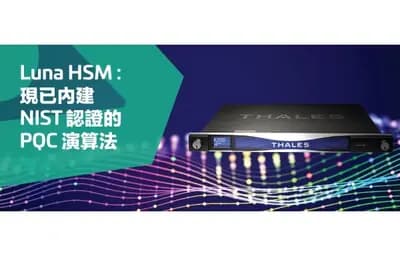
| #9 | Thales Luna HSM v7.9 | 9.0 | ML-KEM-768/1024 and ML-DSA-44/65/87 implemented in firmware; FIPS 140-3 Level 3 validation in progress with CMVP as of mid-2026. |
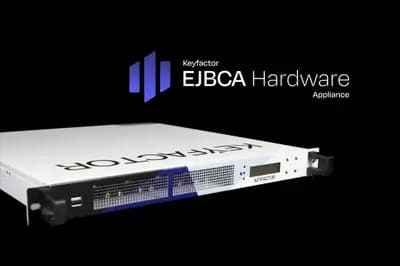
| #10 | Keyfactor EJBCA + Command | 8.5 | EJBCA 8.3+ issues hybrid ML-DSA certificates; FIPS 203/204 algorithms supported; full FIPS 205 SLH-DSA coverage in roadmap. |
Current Rankings
Get the weekly technology rundown
Only lists published since the last email. Join the early readers.
- Only Top 10s published in the last 7 days
- One email a week — and none at all in a week with nothing new
- Unsubscribe in one click
No spam. One email per week. Unsubscribe anytime.
Post-Quantum Cryptography for Enterprises — Common Questions
What is post-quantum cryptography, in plain English? It is a new generation of encryption algorithms that neither today's computers nor tomorrow's quantum computers can break. Current encryption (RSA, ECC) relies on maths that quantum computers will eventually solve in minutes; post-quantum algorithms — like ML-KEM and ML-DSA, finalized by NIST in 2024 — are based on different, quantum-resistant mathematical problems.
Why do enterprises need to act before quantum computers actually exist? Adversaries are running "harvest now, decrypt later" (HNDL) campaigns — collecting encrypted enterprise traffic today and storing it until quantum hardware matures. Any data that must stay confidential for 10 or more years (financial records, healthcare data, trade secrets) is already at risk. CISA and the NSA have both issued guidance urging organizations to begin their PQC migration immediately.
How do I pick the right post-quantum cryptography tool for my stack? Match the tool to your infrastructure. Cloud-native teams should start with provider-integrated solutions — AWS s2n-tls, Google BoringSSL/Tink, or Microsoft CNG PQC APIs — because they require the least operational lift. Hardware-regulated industries (finance, defence) should prioritize HSM-backed options like Thales Luna HSM v7.9. If you need to experiment with hybrid TLS before committing to production, the open-source Open Quantum Safe (liboqs + oqs-provider) stack is the community standard starting point.
Frequently Asked Questions About Post-Quantum Cryptography for Enterprises
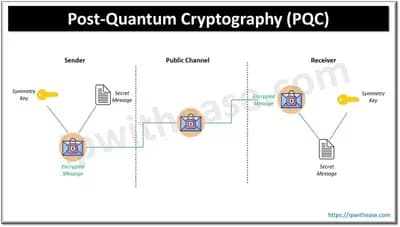
What is post-quantum cryptography? Post-quantum cryptography (PQC) refers to encryption algorithms designed to resist attacks from both today's classical computers and future quantum computers. Unlike widely used RSA or elliptic-curve cryptography, PQC algorithms rely on mathematical problems that quantum computers cannot easily solve.
Why should enterprises act now — before quantum computers are widely available? Adversaries can record encrypted network traffic today and store it until a sufficiently powerful quantum computer is available to decrypt it. This 'harvest-now, decrypt-later' strategy means data protected by current encryption standards is already at risk. Organizations handling long-lived sensitive records — in healthcare, finance, or government — should begin migrating now.
Which NIST standards should we prioritize first? NIST finalized ML-KEM (FIPS 203) for key encapsulation and ML-DSA (FIPS 204) for digital signatures in August 2024. Most tools on this list already support both. A recommended first step is a hybrid deployment — running PQC algorithms alongside classical ones — to maintain backward compatibility while you transition.
Post-Quantum Cryptography for Enterprises: Common Questions
What is post-quantum cryptography (PQC)? Post-quantum cryptography refers to encryption algorithms designed to resist attacks from both classical computers and future quantum computers. RSA and ECC — the algorithms securing most internet traffic today — can theoretically be broken by a large enough quantum computer. PQC replaces them with problems believed to be hard for quantum machines, such as lattice-based or hash-based mathematics.
Why do enterprises need to start migrating in 2026? Adversaries are already collecting encrypted traffic today intending to decrypt it once quantum hardware matures — a strategy called "harvest now, decrypt later." Regulated industries face compliance deadlines as early as 2027–2030 under emerging CNSA 2.0 and EU guidelines. Starting in 2026 is on-schedule, not early.
What are the NIST-finalized PQC standards? NIST published three final standards in August 2024: ML-KEM (FIPS 203) for key encapsulation, ML-DSA (FIPS 204) for digital signatures, and SLH-DSA (FIPS 205) for hash-based signatures. All tools ranked in this list implement at least one of these standards.
What is hybrid key exchange and why does it matter? Hybrid key exchange combines a classical algorithm (e.g., X25519) with a PQC algorithm (e.g., ML-KEM-768) in a single handshake. If either is ever broken, the session stays secure. Major cloud providers and browsers already deploy hybrid TLS by default, making it the safest migration starting point.
Readers Also Ranked
More Lists Like This

Top 10 Ars Technica — Latest — September 15, 2026
- #1Boston dumps Flock, says it shared data nationwide in violation of contract
- #2Demand for EV chargers is outstripping supply, says ChargePoint report
- #3Trump EPA moves to wipe out climate rules for power plants

Top 10 Ars Technica — Latest — September 17, 2026
- #1Apple reportedly building server packed with M-series Ultra chips for AI
- #2Epstein had huge cache of child sex pics; victims sue to find out who's in them
- #3Nonprofit that tracks meteors taken down by "critical blow" from a cyberattack
Top 10 Hacker News — Top Stories — September 6, 2026
- #1Cloud in a Bottle: making self-hosting accessible to everyone
- #2The revolt of the reader
- #3Music Theory for Programmers
Top 10 Hacker News — Top Stories — September 13, 2026
- #1JetKVM Mini
- #2Why are AI agents lying, cheating and coordinating?
- #3The Interim Computer Museum
Frequently asked questions
What is post-quantum cryptography and why do enterprises need it?
Post-quantum cryptography (PQC) refers to cryptographic algorithms designed to be secure against attacks from quantum computers, which can break widely used encryption like RSA and ECC. Enterprises need it to protect sensitive data now and future-proof their security infrastructure before large-scale quantum computers become viable.
Has NIST finalized its post-quantum cryptography standards?
Yes, NIST officially published its first set of finalized PQC standards in August 2024, including ML-KEM (CRYSTALS-Kyber), ML-DSA (CRYSTALS-Dilithium), and SLH-DSA (SPHINCS+), which serve as the benchmark for enterprise-grade PQC tool adoption in 2025 and 2026.
What should enterprises prioritize when adopting post-quantum cryptography tools?
Enterprises should prioritize crypto-agility — the ability to swap cryptographic algorithms without overhauling entire systems — along with compatibility with NIST-standardized algorithms and seamless integration into existing PKI and TLS infrastructures.
Are post-quantum cryptography frameworks compatible with existing enterprise systems?
Most leading PQC frameworks, such as Open Quantum Safe (liboqs) and IBM's Quantum Safe Cryptography toolkit, offer hybrid modes that combine classical and post-quantum algorithms, ensuring backward compatibility with existing enterprise systems during the transition period.
When should enterprises start migrating to post-quantum cryptography?
Enterprises should begin their PQC migration immediately, as security experts warn of "harvest now, decrypt later" attacks where adversaries collect encrypted data today to decrypt it once quantum computers are available; organizations handling long-lived sensitive data face the most urgent risk.
Discussion
Have a take on this ranking?
Comments are how the argument actually happens here. Posting one needs a free account — it takes about a minute.
No comments yet.
The first comment sets the terms of the argument.
Would your top 10 look different?
Publish your own ranking of this topic. Your list gets its own page, and readers vote on it the same way you just voted on this one.
Build your own Top 10More Technology Rankings
You might also want to rank…
 Hacker News Top Stories: April 8, 2026 – Project Glasswing, AI Safety & Lunar Flyby
 Trending Tech News: Top 10 Ars Technica Stories — March 13, 2026
 Top 10 Best AI Image and Art Generation Tools
 Top 10 Best Laptops in the UK 2025
Explore more Technology rankings on Top10Grid
People Also Explore
Because you're viewing Technology

Top 10 Quantum Computing Platforms and Applications Transforming Enterprise in 2026
287 views · 0 votes
10 Best AI Companion Platforms in 2026 (Ranked by LLM, Privacy & UX)
299 views · 0 votes

10 Cutting-Edge Robotics Research Breakthroughs of 2026 (AI & Humanoid Robots)
304 views · 1 votes

Best AI Health Wearables & Smart Rings for Developers (2026) — Ranked by API & Data Access
308 views · 0 votes

Top 10 European Cybersecurity Companies 2026
314 views · 0 votes

Top 10 Hacker News Posts: May 19–25, 2026 — Google I/O, AI Models & More
315 views · 0 votes
You might also like
TECHNOLOGYSame category
Top 10 Most Important Open Source Projects
10 items
TECHNOLOGYSame category
Top 10 Quantum Computing Platforms and Applications Transforming Enterprise in 2026
10 items
TECHNOLOGYSame category
Top 10 AI Productivity Tools of 2026 — Ranked & Reviewed
10 items

TECHNOLOGYSame category
Top 10 Password Managers in 2026
10 items

TECHNOLOGYSame category
Top 10 GitHub Trending Repositories - Week 20, 2026
10 items

TECHNOLOGYSame category
Top 10 Car Mods That Actually Improve Performance (Not Just Looks)
10 items