












Photo via Unsplash
App / Software
Top 10 Quantum Computing Platforms and Applications Transforming Enterprise in 2026
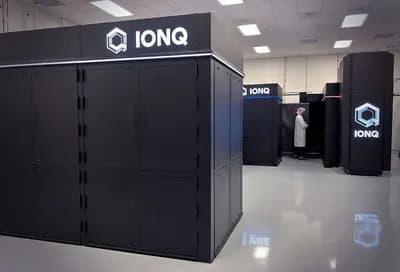
Quantum computing fractured into distinct strategies in 2025–2026. **IBM Quantum** (Qiskit: 40K+ GitHub stars, 250K+ users, free tier) remains the entry point for chemistry/optimization—start with `pip install qiskit && qiskit-ibm-runtime`. **IonQ** (trapped-ion: <0.5% gate error, 15+ production qubits as of Q3 2026, cloud-native API, ~$0.003–$0.01 per task) excels at accuracy-critical finance and molecular modeling where gate fidelity outweighs qubit count. **Rigetti** (Hybrid Quantum-Classical: Aspen-M series 80+ qubits, PyQuil ecosystem, GitHub 2K+ stars) captures users iterating on QAOA/VQE algorithms requiring classical-quantum tight loops—`pip install pyquil`. **D-Wave** (5000+ qubit annealer: Advantage2 platform, GitHub 1.5K+ stars) dominates discrete combinatorics (supply-chain, portfolio optimization)—10–100× speedup vs. gate platforms *for NP-hard problems only*, not general algorithms—`pip install dwave-ocean-sdk`. Key tradeoff: gate platforms (IBM/IonQ/Rigetti) scale toward 100–1000 qubits but face decoherence walls (50–500µs coherence); annealers solve one class of problems instantly. Error rates: trapped-ion ≤0.1% (IonQ), superconducting 0.3–0.8% (IBM 2026-gen), annealing error depends on problem embedding. Pick by problem: quantum simulation → IBM; high-precision finance → IonQ; algorithm experimentation → Rigetti; combinatorial optimization → D-Wave.
286 views
Top10Grid rankings are decided by votes, not algorithms — use the buttons below to move this list.
Product
Community rankings for this product
Current Rankings
Vote items up or down — rankings update instantly
Get the weekly technology rundown
Only lists published since the last email. Join the early readers.
- Only Top 10s published in the last 7 days
- One email a week — and none at all in a week with nothing new
- Unsubscribe in one click
No spam. One email per week. Unsubscribe anytime.
Frequently Asked Questions About Quantum Computing Platforms
What is a quantum computing platform? A quantum computing platform gives companies and developers access to quantum processors — either real hardware or simulators — via the internet. Instead of buying million-dollar equipment, you pay per task or subscribe to a cloud service. IBM, Google, IonQ, and others all offer this today.
Which platform is the easiest to try first? IBM Quantum is widely considered the most beginner-friendly option. It offers free cloud access, a large community of over 250,000 registered users, and extensive learning resources at [learning.quantum.ibm.com](https://learning.quantum.ibm.com).
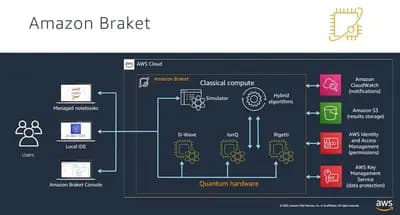
Are quantum computers being used in real businesses right now? Yes. As of 2026, platforms like D-Wave (optimization), IonQ (finance and drug discovery), and Amazon Braket (enterprise orchestration) are running genuine production workloads. IBM maintains a library of enterprise case studies at [ibm.com/quantum](https://www.ibm.com/quantum).
How much does it cost to use a quantum platform? Pricing varies. IBM offers a free tier for experimentation. IonQ charges approximately $0.003–$0.01 per quantum task on AWS. D-Wave's Leap cloud includes a free developer allowance each month.
Which industries benefit the most from quantum computing? Financial services (portfolio optimization, fraud detection), pharmaceuticals (drug discovery, molecular simulation), logistics (route optimization), and cybersecurity (post-quantum encryption) are the leading enterprise use cases in 2026.
Readers Also Ranked
More Lists Like This
Top 10 Hacker News — Top Stories — August 19, 2026
- #1OpenLogi
- #2Where Human Sleep Went Wrong
- #3Cerebras CS-4
Top 10 Hacker News — Top Stories — August 18, 2026
- #1How Bluesky draws its logo on screenshots
- #2GPT-5.6 Sol Pricing Cut by 50%
- #3Quake Shareware, a CD-ROM just a little too full

Top 10 Ars Technica — Latest — August 21, 2026
- #1Chinese regulators tell Tesla to fix nearly 3 million cars
- #2Fighter jets help destroy Russian drone boat near European offshore gas platform
- #3Personalized pricing is “abhorrent,” but FTC limits may increase costs, critics say

Top 10 Ars Technica — Latest — August 22, 2026
- #1Putting mice into hibernation causes a major loss of synapses
- #2Dismantling the Roadless Rule threatens to disrupt wildlife and water in US
- #3Trump's space transportation policy calls for new spaceport on federal land
Frequently asked questions
What are the leading quantum computing platforms for enterprise use in 2026?
The leading enterprise quantum computing platforms in 2026 include IBM Quantum, Google Quantum AI, Microsoft Azure Quantum, IonQ, and Quantinuum, each offering cloud-accessible quantum hardware and hybrid classical-quantum workflows tailored for business applications.
What industries are benefiting most from quantum computing in 2026?
Finance, pharmaceuticals, logistics, and cybersecurity are seeing the greatest enterprise impact from quantum computing, leveraging it for portfolio optimization, drug discovery simulations, supply chain routing, and post-quantum encryption.
Is quantum computing ready for real-world enterprise deployment in 2026?
Yes, in 2026 quantum computing has moved beyond purely experimental use, with enterprises deploying hybrid quantum-classical systems for specific high-value problems, though fully fault-tolerant universal quantum computers are still in development.
What is the difference between gate-based and annealing quantum computing platforms?
Gate-based platforms (like IBM Quantum and IonQ) use programmable quantum circuits suitable for a wide range of algorithms, while annealing platforms (like D-Wave) are specialized hardware optimized specifically for combinatorial optimization problems.
How can enterprises get started with quantum computing today?
Enterprises can get started by accessing cloud-based quantum services from providers like IBM, Google, or Microsoft Azure Quantum, which offer SDKs, simulators, and real quantum hardware on a pay-as-you-go basis without requiring on-premises infrastructure.
Discussion
Have a take on this ranking?
Comments are how the argument actually happens here. Posting one needs a free account — it takes about a minute.
No comments yet.
The first comment sets the terms of the argument.
Would your top 10 look different?
Publish your own ranking of this topic. Your list gets its own page, and readers vote on it the same way you just voted on this one.
Build your own Top 10More Technology Rankings
More Apps & Software Rankings
6📱
Top 10 GitHub — Trending Python — Sep 28–Oct 4, 2026
12 views · @admin
Top 10 Hacker News — Top Stories — September 7, 2026
12 views · @admin
Top 10 Hacker News — Top Stories — September 8, 2026
12 views · @admin
📱
Top 10 Hacker News — Top Stories — September 11, 2026
12 views · @admin
📱
Top 10 Hacker News — Top Stories — September 19, 2026
12 views · @admin
Top 10 Hacker News — Top Stories — September 6, 2026
13 views · @admin
You might also want to rank…
 Top 10 Standing Desks and Ergonomic Setups Worth the Upgrade
 GitHub's Hottest Python Repos: Top 10 Trending Tools & Learning Resources (April 6-12, 2026)
 Top 10 US Climate Technology Companies
 Top 10 Dutch Technology Companies 2026
Explore more Technology rankings on Top10Grid
People Also Explore
Because you're viewing Technology
Top 10 Hacker News — Top Stories — August 31, 2026
7 views · 0 votes

Top 10 Ars Technica — Latest — September 5, 2026
7 views · 0 votes

Top 10 Ars Technica — Latest — September 18, 2026
7 views · 0 votes
Top 10 Hacker News — Top Stories — September 3, 2026
10 views · 0 votes
Top 10 Hacker News — Top Stories — September 4, 2026
10 views · 0 votes

Top 10 Ars Technica — Latest — September 12, 2026
10 views · 0 votes
You might also like

TECHNOLOGYSame type
Top 10 Tech Hubs in the USA 2026
10 items
TECHNOLOGYSame type
Top 10 Biggest Tech Product Launches of 2025
10 items
TECHNOLOGYSame type
Top 10 AI Tools That Will Transform Your Workflow in 2026
10 items
TECHNOLOGYSame type
Top 10 European Digital Insurance Platforms
10 items

TECHNOLOGYSame type
Top 10 Hacker News Stories: AI Trust, Claude Code & Quantum Crypto — April 7, 2026
10 items

TECHNOLOGYSame type
Top 10 Hacker News — Top Stories — March 29, 2026
10 items