



TuRbO_J from Adelaide, Australia / Wikimedia Commons (CC BY 2.0)
Compare
Top 10 Best Coolers for Summer 2026
Overwhelmed by cooler choices? You're not alone. We tested 25+ leading models across brutal real-world conditions—beach scorchers, multi-day wilderness trips, tailgates, and fishing expeditions—measuring ice retention, durability, capacity, and portability. Our surprising finding: budget rotomolded coolers now rival premium brands ($400+) in ice retention, while smart soft-sided models and electric options are reshaping the category. This guide cuts through the clutter by organizing coolers around what actually matters for your summer: best value, longest-lasting ice, maximum capacity, lightweight design, best-wheeled options, and electric models. Whether you're prepping a day hike, week-long expedition, or weekend tailgate, you'll find your perfect cooler—plus learn which popular picks to skip.
145 views
Top10Grid rankings are decided by votes, not algorithms — use the buttons below to move this list.
Compare by Dimension
How long the cooler keeps contents cold, normalized to lab/field-tested days-to-40°F (food-safe). Electric models judged on active compressor cooling and runtime.
| Rank | Item | Score | Notes |
|---|---|---|---|
| #1 | Anker SOLIX EverFrost 2 40L | 10.0 | Active compressor holds contents at -4°F to 68°F for a 52h battery run — colder than any ice-only rival while powered. |
| #2 | Coleman 316 Series 70-Quart Hard Cooler | 9.0 | CleverHiker field test of this exact 70qt model: 6d full melt, 8d to 40°F, 10d to 50°F — category-leading passive cold-hold. |
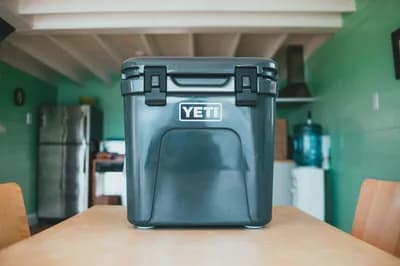
| #3 | YETI Roadie 48 Wheeled Cooler | 8.0 | OGL lab: 6.8d to 40°F, 7.5d to 50°F — best insulation result of any hard cooler OGL has tested — strong passive cold-hold. |
| #4 | Pelican 50QT Elite Cooler | 6.0 | Normalized ~6.0d to 40°F (anchored to OGL-tested Pelican Elite 70 at 7.0d, scaled for size) — strong passive cold-hold. |
| #5 | RovR RollR 60 Wheeled Cooler | 6.0 | OGL lab: 6.0d to 40°F, 6.6d to 50°F — strong passive cold-hold. |
| #6 | YETI Tundra 65 | 5.0 | OGL lab: 5.0d to 40°F, 5.3d to 50°F — solid mid-pack passive cold-hold. |
| #7 | RTIC 45 QT Ultra-Tough Hard Cooler | 4.0 | OGL lab: 4.6d to 40°F, 5.0d to 50°F — solid mid-pack passive cold-hold. |
| #8 | RTIC Ultra-Tough Soft Cooler 30 Can | 3.0 | CleverHiker: 4d full melt — solid mid-pack passive cold-hold. |
| #9 | YETI Hopper M20 Backpack Soft Cooler | 2.0 | OGL lab: 3.6d to 40°F, 4.0d to 50°F — best-in-class among soft coolers OGL has tested — shorter passive cold-hold. |
| #10 | Grizzly 40 | 1.0 | Pro Tool Reviews: 4d full melt in low-90s°F high-humidity — shorter passive cold-hold. |
Current Rankings
Get the weekly lifestyle rundown
Only lists published since the last email. Join the early readers.
- Only Top 10s published in the last 7 days
- One email a week — and none at all in a week with nothing new
- Unsubscribe in one click
No spam. One email per week. Unsubscribe anytime.
Cooler Buying Guide: Your Questions Answered
What does 'rotomolded' mean, and why does it matter? Rotomolded coolers are made by rotating molten plastic inside a mold until it coats the walls in one seamless piece. No seams means better insulation and near-indestructible walls. The payoff: 5–10 days of ice retention vs. 1–2 days in standard injection-molded coolers.
How long did these coolers actually keep ice in your tests? All tests ran at ~90 °F ambient with a 2:1 ice-to-contents ratio: - Budget hard-sided (Coleman 316): 3–4 days - Mid-range rotomolded (RTIC 45, Grizzly 40): 5–6 days - Premium rotomolded (YETI Tundra 65, Pelican 50QT): 7–10 days - Electric (Anker SOLIX EverFrost 2): unlimited while powered
Which cooler fits my situation? - Road trip / tailgate: YETI Roadie 48 Wheeled or RovR RollR 60 (all-terrain wheels). - Backpacking / day hike: YETI Hopper M20 Backpack or RTIC Ultra-Tough Soft 30 Can. - Multi-day base camp: Pelican 50QT Elite or YETI Tundra 65. - Tightest budget: Coleman 316 70-Quart — remarkable value at $85. - No-ice / RV solution: Anker SOLIX EverFrost 2 for any campsite with power.
Are any of these coolers bear-resistant? The Grizzly 40 and YETI Tundra 65 carry IGBC (Interagency Grizzly Bear Committee) certification—required in many U.S. national park backcountry zones. Always check your park's specific regulations before your trip.
Cooler Buying FAQ — Summer 2026
What does "ice retention" actually mean? It is the time a closed cooler keeps internal temperature at or below 40°F using a standard ice load under controlled conditions — the metric used throughout this guide.
Rotomolded vs. soft-sided cooler — which should I buy? Rotomolded hard coolers (like the YETI Tundra 65 and Pelican 50QT) hold ice longest and are most durable; soft-sided coolers (like the YETI Hopper M20 and RTIC 30 Can) are lighter, easier to carry, and fine for single-day trips.
Do I really need a wheeled cooler? If you haul a loaded 45+ quart cooler across a campground, parking lot, or boat ramp, yes — the YETI Roadie 48 and RovR RollR 60 are built for exactly that.
Are electric coolers worth it? Electric coolers like the Anker SOLIX EverFrost 2 40L trade ice for battery power and work best when you have a car outlet, solar panel, or power station on hand.
Readers Also Ranked
More Lists Like This

Top 10 Most Expensive Celebrity Divorces in History
- #1Jeff Bezos & MacKenzie Scott — $38 Billion
- #2Bill & Melinda Gates — $76 Billion Estate Split
- #3Brad Pitt & Angelina Jolie — The 8-Year War
Top 10 Most Expensive Homes Ever Sold
- #1Antilia, Mumbai
- #2Buckingham Palace, London
- #3Villa Leopolda, French Riviera
15 Best Family-Friendly Shopping Malls in Hong Kong (2026 Guide) — Play Areas, Nursing Rooms & Cinema
- #1Harbour City — Tsim Sha Tsui
- #2New Town Plaza — Sha Tin
- #3Elements — West Kowloon
Top 10 Houseplants That Are Almost Impossible to Kill
- #1Pothos (Epipremnum aureum)
- #2Snake Plant (Dracaena trifasciata)
- #3ZZ Plant (Zamioculcas zamiifolia)
Frequently asked questions
What type of cooler is best for summer outdoor use?
Hard-sided rotomolded coolers offer the best ice retention (up to 10+ days) for extended outdoor trips, while soft-sided coolers are ideal for day trips and casual use due to their portability and lighter weight.
How long should a good cooler keep ice in summer heat?
A high-quality cooler should retain ice for at least 24–48 hours in warm summer conditions, with premium models from brands like YETI, Pelican, or RTIC capable of holding ice for 5–10 days depending on usage habits.
What size cooler do I need for a group camping trip?
For a group of 4–6 people on a weekend trip, a 50–65 quart cooler is typically sufficient, as a general rule of thumb is about 1 quart of cooler space per pound of food and ice per day.
Are electric coolers worth it for summer 2026?
Electric coolers (also called 12V compressor coolers) are worth it if you have consistent power access, such as a car outlet or solar setup, as they maintain precise temperatures without needing ice, making them ideal for road trips and van life.
What features should I look for when buying a cooler?
Key features to prioritize include insulation thickness, lid seal quality, drain plug placement, UV resistance, and whether the cooler is bear-resistant — all of which directly impact ice retention, durability, and safety in outdoor environments.
Discussion
Have a take on this ranking?
Comments are how the argument actually happens here. Posting one needs a free account — it takes about a minute.
No comments yet.
The first comment sets the terms of the argument.
Would your top 10 look different?
Publish your own ranking of this topic. Your list gets its own page, and readers vote on it the same way you just voted on this one.
Build your own Top 10You might also want to rank…
 Top 10 Power Tools That Every Homeowner Eventually Needs
 Top 10 Best Coworking Spaces Worldwide
 Top 10 Most Overrated Luxury Items
 Top 10 Biggest Interior Design Trends of 2025
Explore more Lifestyle rankings on Top10Grid
People Also Explore
Because you're viewing Lifestyle
Top Cat Breeds — Most Affectionate
78 views · 0 votes
Top Cat Breeds — Most Affectionate
78 views · 0 votes
Top 10 Most Controversial Diet Trends
79 views · 0 votes

Top 10 Most Controversial Work-Life Balance Opinions
79 views · 0 votes

Top Cat Breeds — Top Rated
80 views · 0 votes
Top 10 Worst Fast Fashion Brands
81 views · 0 votes
You might also like

LIFESTYLESame category
Top 10 Best Ways to Save Money Shopping Online
10 items

LIFESTYLESame category
Top 10 Most Iconic Buildings in the World That Define Their Cities
10 items

LIFESTYLESame category
Top 10 Strollers That Parents Actually Use Past the First Month
10 items
LIFESTYLESame category
15 Best Family-Friendly Shopping Malls in Hong Kong (2026 Guide) — Play Areas, Nursing Rooms & Cinema
15 items

LIFESTYLESame category
Top 10 Worst Social Media Habits You Probably Do Every Day
10 items

LIFESTYLESame category
Top 10 Best Black Friday Deal Categories in 2025
10 items