Hong Kong Tramways ("Ding Ding")
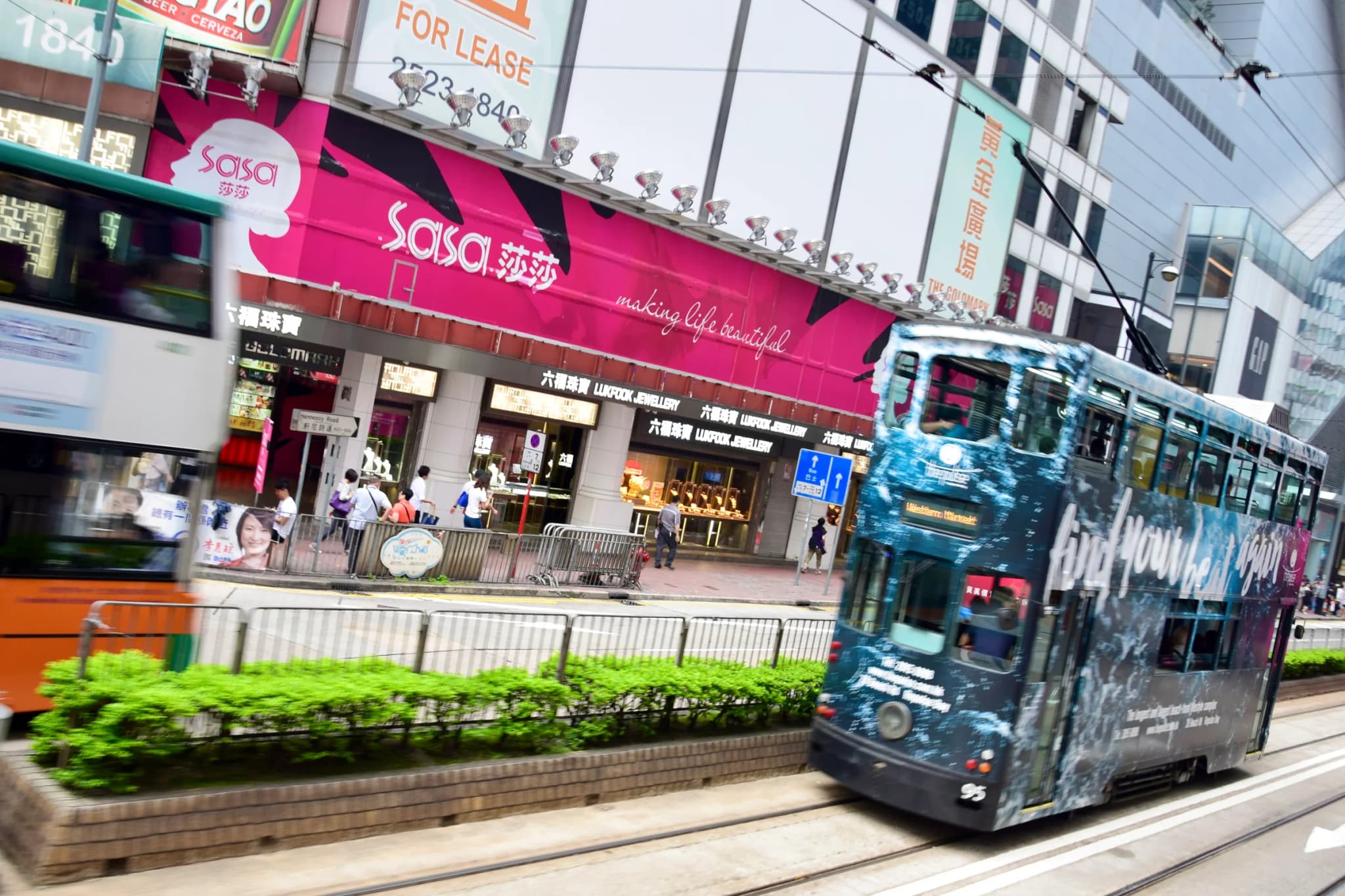
Hong Kong Tramways, universally nicknamed "Ding Ding" for the bell drivers ring, is a flat-fare double-decker tram network that has run along the north shore of Hong Kong Island since 1904, making it one of the cheapest ways to cover a long distance in the city. As of the operator's current published fares (hktramways.com), the flat fare is HK$3.30 for adults, HK$1.60 for children aged 3 to under 12, and HK$1.50 for senior citizens 65 and over, with a monthly ticket priced at HK$260.00 — figures current as of September 2026; the fare is identical whether you tap an Octopus card, pay cash into the coin box at the front exit (no change given), or use a supported mobile/QR/card payment (Visa, Mastercard, UnionPay, JCB, Amex, Apple Pay, Google Pay, Samsung Pay, Huawei Pay, AlipayHK, Alipay, UnionPay QR, BoC Pay or WeChat Pay). Crucially, the fare does not change with distance travelled - board at the rear, ride as far as you like, and pay the same flat rate on exit at the front - which is what makes the tram the best cost-per-kilometre option in the city for a long point-to-point trip along the corridor it serves. The network runs six main routes between Kennedy Town in the west and Shau Kei Wan in the east, plus a loop branch through Happy Valley, via around 120 stops spaced roughly 250 metres apart on average (per the operator's own network description). Independent route-length figures put the mainline at about 13 km with a further 2.6 km Happy Valley loop, for roughly 30 km of track carrying a fleet of 165 double-decker trams, reportedly the largest double-decker tram fleet still in service anywhere. First and last services vary by route segment but the network broadly operates from around 05:00 to just after midnight daily. The tram is at its best for longer hauls along its own corridor - Causeway Bay to Sheung Wan, or Wan Chai to Kennedy Town, for example - where the flat fare undercuts both the MTR and buses for the same distance, and the open upper-deck front seats give unmatched street-level sightseeing of Hong Kong Island's older neighbourhoods. It is a poor choice when speed matters: trams share the road with traffic and stop roughly every 250 metres, so a trip that takes eight minutes on the MTR can easily take 25-30 on the tram. The network only covers the north shore of Hong Kong Island - it does not reach the south side (Aberdeen, Stanley, Repulse Bay) or cross to Kowloon at all, so it is only useful when your journey actually sits on its corridor. Standing room only at rush hour is common, boarding is at the rear and exit (with payment) at the front, which catches out first-time riders, and services can be disrupted by road traffic incidents or severe weather like any street-running mode.
Photos (1)
Comments on "Hong Kong Tramways ("Ding Ding")"
Have a take on this ranking?
Comments are how the argument actually happens here. Posting one needs a free account — it takes about a minute.
No comments yet.
The first comment sets the terms of the argument.