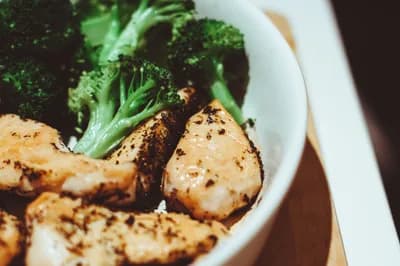
Pixabay / Pexels
Top 10 High-Protein Foods by Protein Per 100 Calories 2026
Ranked by protein grams per 100 calories using USDA FoodData Central data, not per 100 grams. Shrimp, tuna, and cod beat chicken breast once calories count.
Top10Grid lets the community re-rank anything — this order is our editors' pick for now; use the buttons below to vote it up or down.

Current Rankings
- –
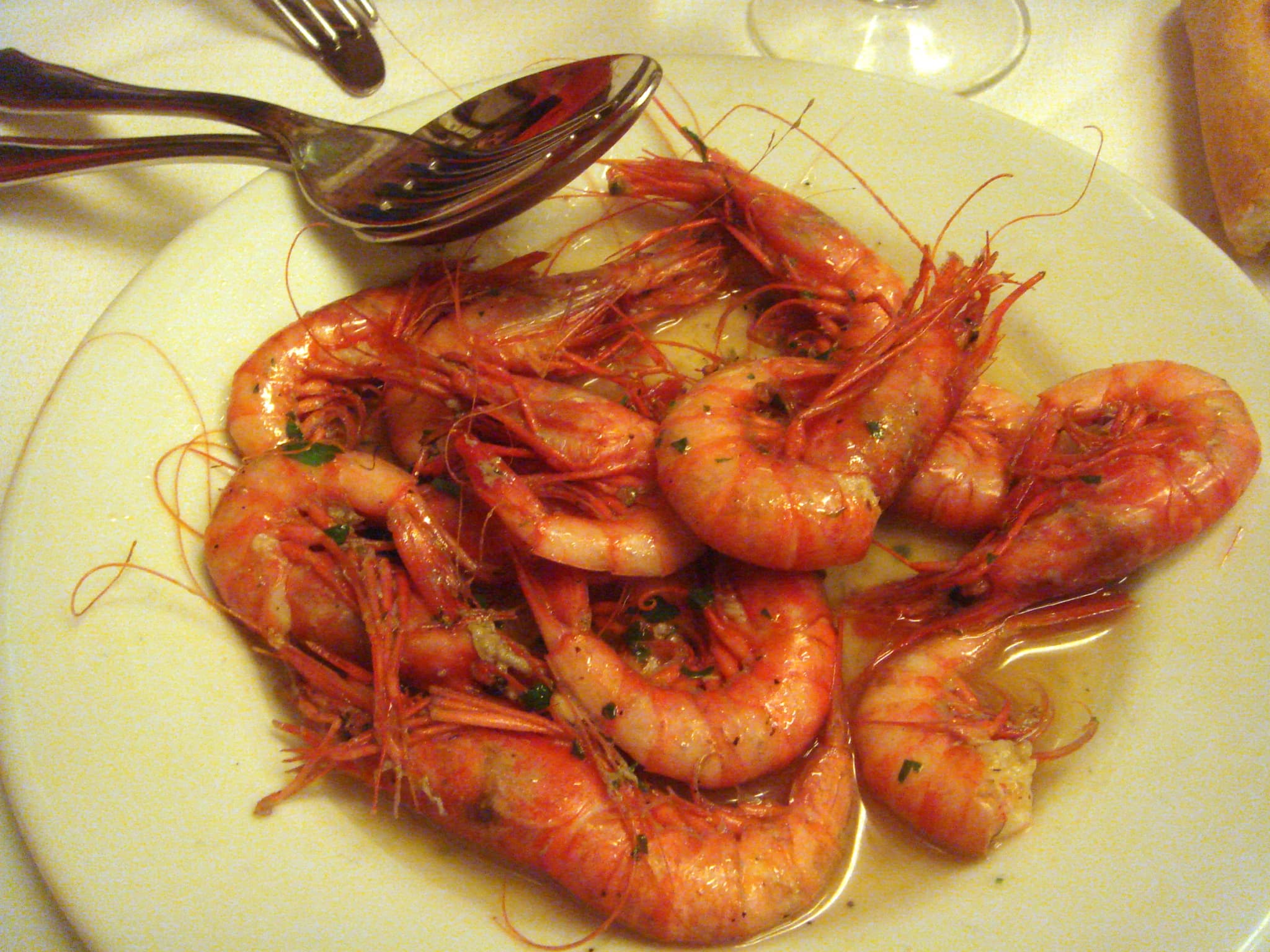
Shrimp tops this ranking because it delivers the most protein for the fewest calories of any food checked: USDA FoodData Central's SR Legacy entry "Crustaceans, shrimp, cooked" (FDC ID 175180) lists 24.0 g protein and 99 kcal per 100 g, for 24.24 g of protein per 100 kcal — (24.0 / 99) x 100. A practical serving is 3 oz (85 g) cooked, roughly 12 large shrimp, which is also the portion the FDA uses in its fish-consumption guidance: 85 g x 0.24 = 20.4 g protein for 85 g x 0.99 = 84.2 kcal, the same 24-per-100 ratio at any portion size. A 1-cup serving of chopped cooked shrimp (about 145 g) provides roughly 34.8 g protein for 143.6 kcal. Beyond protein, shrimp is essentially fat-free (0.28 g total fat, 0.056 g saturated fat per 100 g per FDC) and supplies 111 mg sodium and notably 189 mg cholesterol per 100 g — naturally higher in dietary cholesterol than any other item on this list, since shellfish concentrate cholesterol in their flesh; the 2020-2025 Dietary Guidelines for Americans no longer set a specific daily cholesterol limit, but people managing cholesterol-sensitive conditions should factor this in. The bigger caution is allergy: crustacean shellfish allergy (shrimp, crab, lobster) is one of the most common adult-onset food allergies — FARE (Food Allergy Research & Education) notes about 60% of people with shellfish allergy have their first reaction as adults, and reactions to crustacea tend to be severe. The FDA/EPA fish advisory places shrimp in its "Best Choices" (lowest mercury) category, recommending 2-3 servings a week for most adults, including pregnant and breastfeeding people, with smaller portions for young children. Shrimp is also one of the most widely available proteins in the US, sold fresh, frozen, or pre-cooked in virtually every supermarket seafood case year-round, and it is inexpensive relative to many other seafood items on this list.
- –
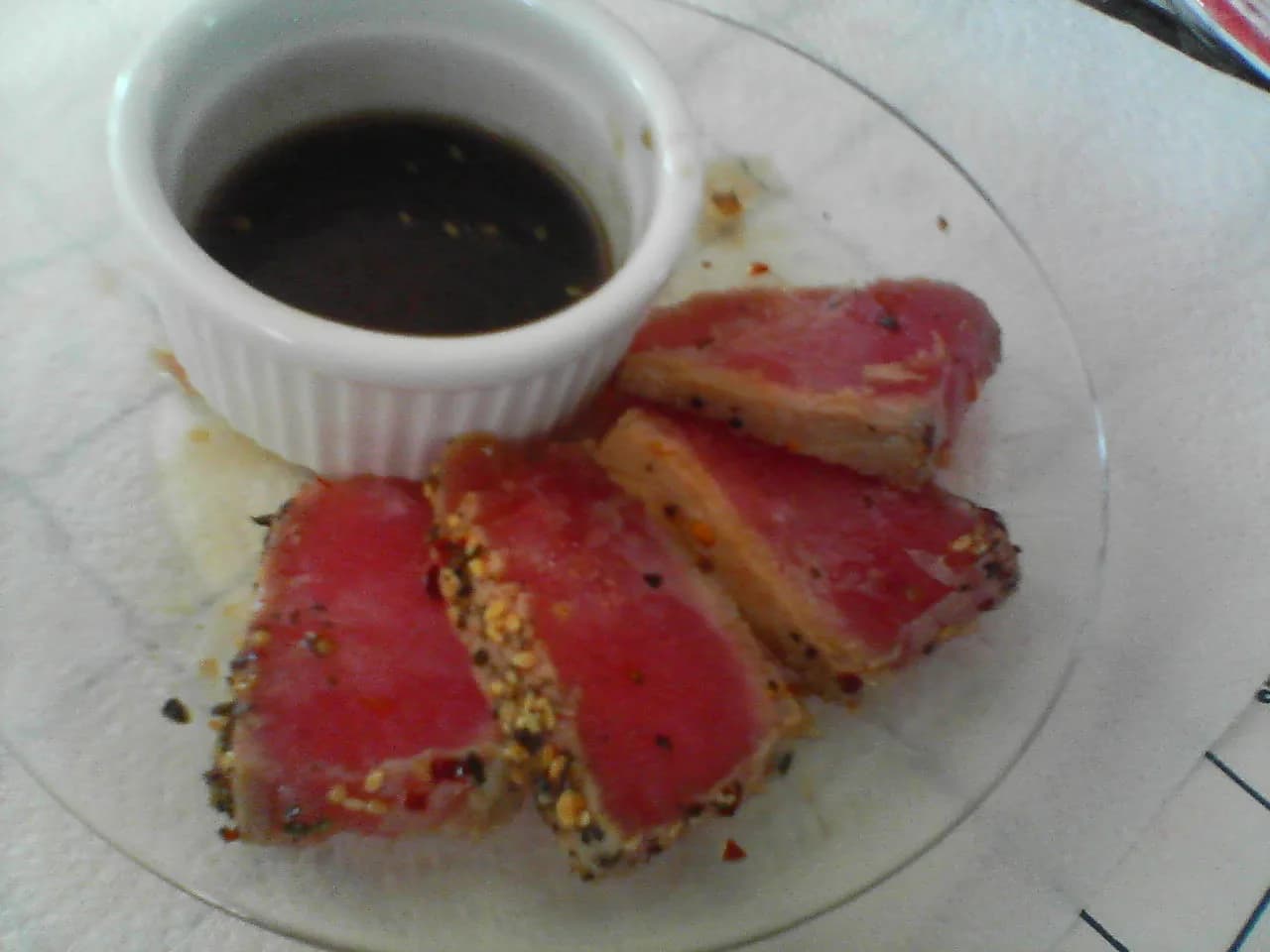
Fresh yellowfin tuna, cooked by dry heat (grilled, broiled, or seared), is USDA FoodData Central's FDC ID 172006 (SR Legacy): 29.2 g protein and 130 kcal per 100 g, or 22.46 g protein per 100 kcal — (29.2 / 130) x 100. A 3 oz (85 g) cooked tuna steak, a standard restaurant/dietary-reference portion, supplies about 24.8 g protein for 110.5 kcal. Tuna is notably rich in vitamin B12 (2.35 mcg per 100 g, near the full 2.4 mcg/day adult requirement cited by MedlinePlus in one serving) and selenium (108 mcg per 100 g), alongside 47 mg cholesterol, 54 mg sodium, and only 0.205 g saturated fat per 100 g (all per FDC). The most important caution for tuna is mercury, and it depends on which tuna: the FDA/EPA fish-consumption advisory places "Tuna, yellowfin" specifically in its middle "Good Choice" tier (moderate mercury) — a different, more cautious category than canned light/skipjack tuna, which the same FDA chart lists as a lower-mercury "Best Choice." That distinction matters in practice: pregnant people, those who may become pregnant, and young children are advised by the FDA to limit "Good Choice" fish like fresh yellowfin/ahi tuna to about one serving a week, whereas canned light tuna can be eaten more often. General adult guidance from Harvard's Nutrition Source notes evidence for mercury harm at typical adult consumption levels is "limited and conflicting," and weighs that against fish's documented cardiovascular benefits, but does not blanket-clear high-mercury species. Fresh or frozen yellowfin (often labeled "ahi") tuna steaks are sold at most supermarket seafood counters and specialty fish markets in the US, typically priced higher than canned tuna or whitefish like cod or tilapia. Because of the mercury tier difference, shoppers substituting canned tuna for a fresh yellowfin steak should not assume identical mercury exposure even though the protein density is comparable.
- –
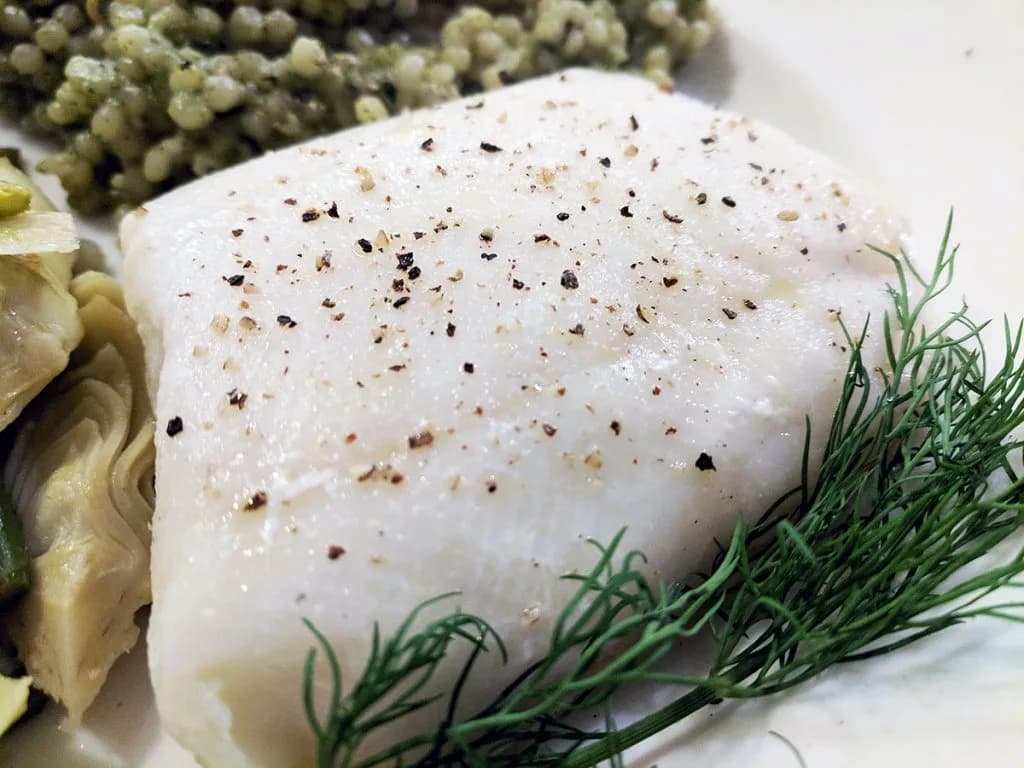
Atlantic cod, cooked by dry heat (baked, broiled, or pan-seared), is USDA FDC ID 171956 (SR Legacy): 22.8 g protein and 105 kcal per 100 g, i.e. 21.71 g protein per 100 kcal — (22.8 / 105) x 100. A 3 oz (85 g) cooked fillet, the standard dietary-reference serving, provides about 19.4 g protein for 89 kcal. Cod is very lean (0.86 g total fat, 0.168 g saturated fat per 100 g) with 55 mg cholesterol and 78 mg sodium per 100 g, plus meaningful selenium (37.6 mcg per 100 g) and vitamin B12 (1.05 mcg per 100 g, per FDC). The FDA/EPA fish consumption advisory places cod in its "Best Choices" (lowest mercury) category, alongside shrimp, crab, and tilapia, meaning it carries the FDA's least restrictive guidance among the fish on this list — 2-3 servings a week is considered appropriate for most adults, including pregnant and breastfeeding people, per that same FDA chart. Cod carries no major documented allergen concerns beyond the general fish-allergy category (distinct biologically from shellfish allergy, though some people react to both). Because it is so mild-flavored and lean, cod has long been one of the most heavily fished and commercially available whitefish in North America and Europe; historic overfishing of Atlantic cod stocks (notably the collapse of the Grand Banks fishery in the 1990s) has made some regional cod fisheries subject to quotas, so sustainability-conscious buyers may want to check for Pacific cod or MSC-certified sourcing, though this does not change the nutrition profile. Fresh and frozen cod fillets are sold in virtually every US supermarket seafood section year-round and are typically less expensive than tuna or halibut, making cod one of the more accessible entries in this ranking for a household on a budget.
- –
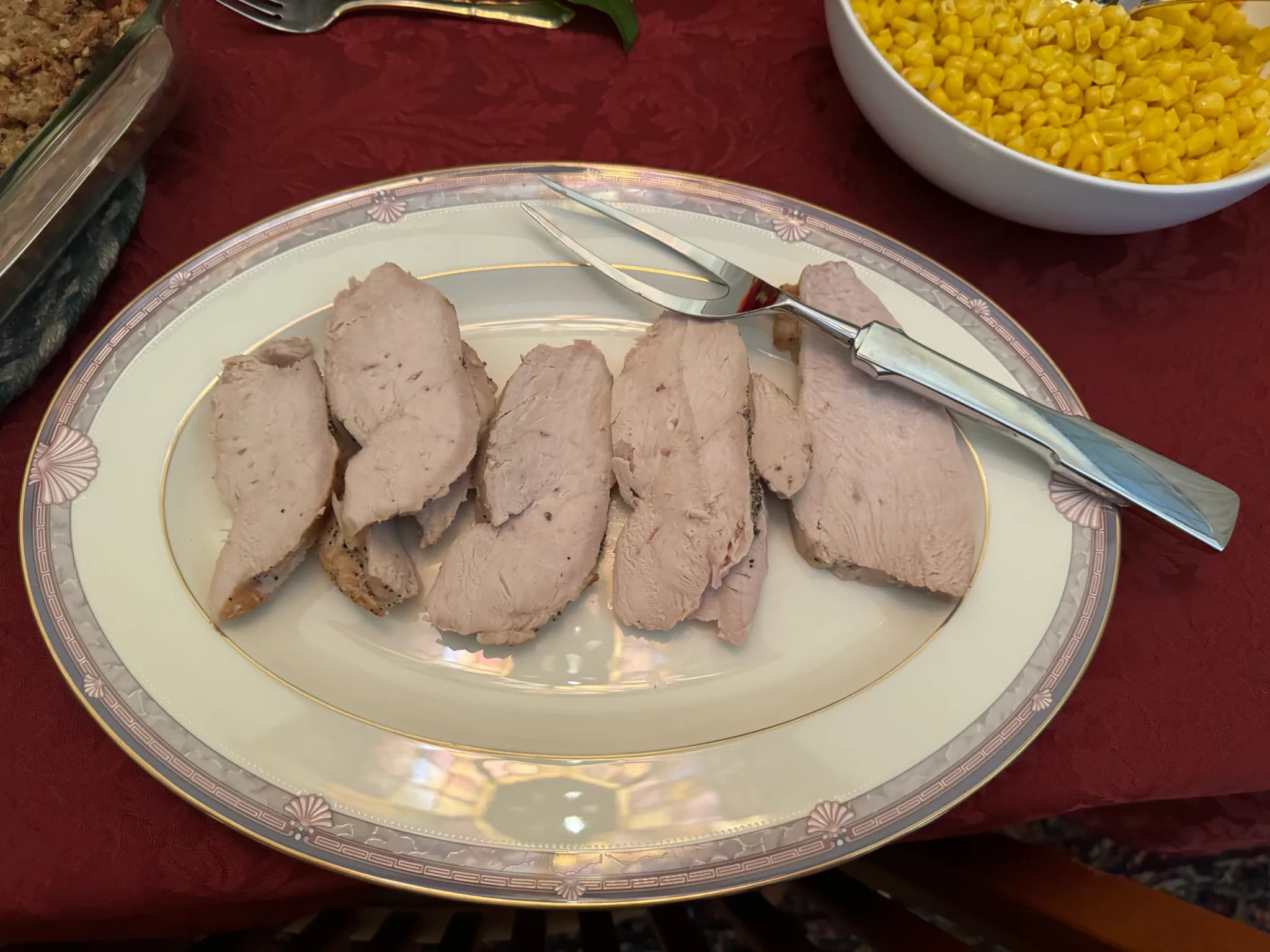
Roasted turkey breast, skin removed, is USDA FDC ID 174516 (SR Legacy, "Turkey, retail parts, breast, meat only, cooked, roasted"): 29.5 g protein and 136 kcal per 100 g, i.e. 21.69 g protein per 100 kcal — (29.5 / 136) x 100. A 3 oz (85 g) serving, the classic post-Thanksgiving-leftovers portion, provides about 25.1 g protein for 115.6 kcal; a thinner 2 oz deli-style slice (56 g) gives roughly 16.5 g protein for 76 kcal. Per 100 g, FDC lists 70 mg cholesterol, 114 mg sodium, and only 1.97 g total fat (0.66 g saturated), plus 1.76 mcg vitamin B12 and 30.7 mcg selenium. Harvard's T.H. Chan School of Public Health Nutrition Source names poultry — chicken, turkey, and duck — as one of the "best bet" animal protein choices for regular eating, in contrast to red meat, which it recommends limiting. Turkey breast carries no major FDA mercury advisory (it applies to seafood, not poultry) and no widely documented major allergen risk beyond the general and uncommon poultry-meat allergy. The main practical caution concerns sodium and additives rather than the meat itself: many supermarket deli and pre-sliced turkey breast products are injected with a sodium solution or brined, which can push sodium well above the plain roasted value used here (FDC's separate "with added solution" entry for prepackaged turkey breast lists roughly 900 mg sodium per 100 g), so shoppers watching sodium should check the label on sliced or pre-basted turkey rather than assume the plain roasted-breast numbers used in this ranking. Turkey breast — whole, half, or pre-sliced — is sold year-round in essentially every US supermarket, not just around the holidays, and is generally one of the less-expensive poultry cuts per pound relative to other proteins on this list, making it an accessible everyday option rather than an occasional splurge.
- –
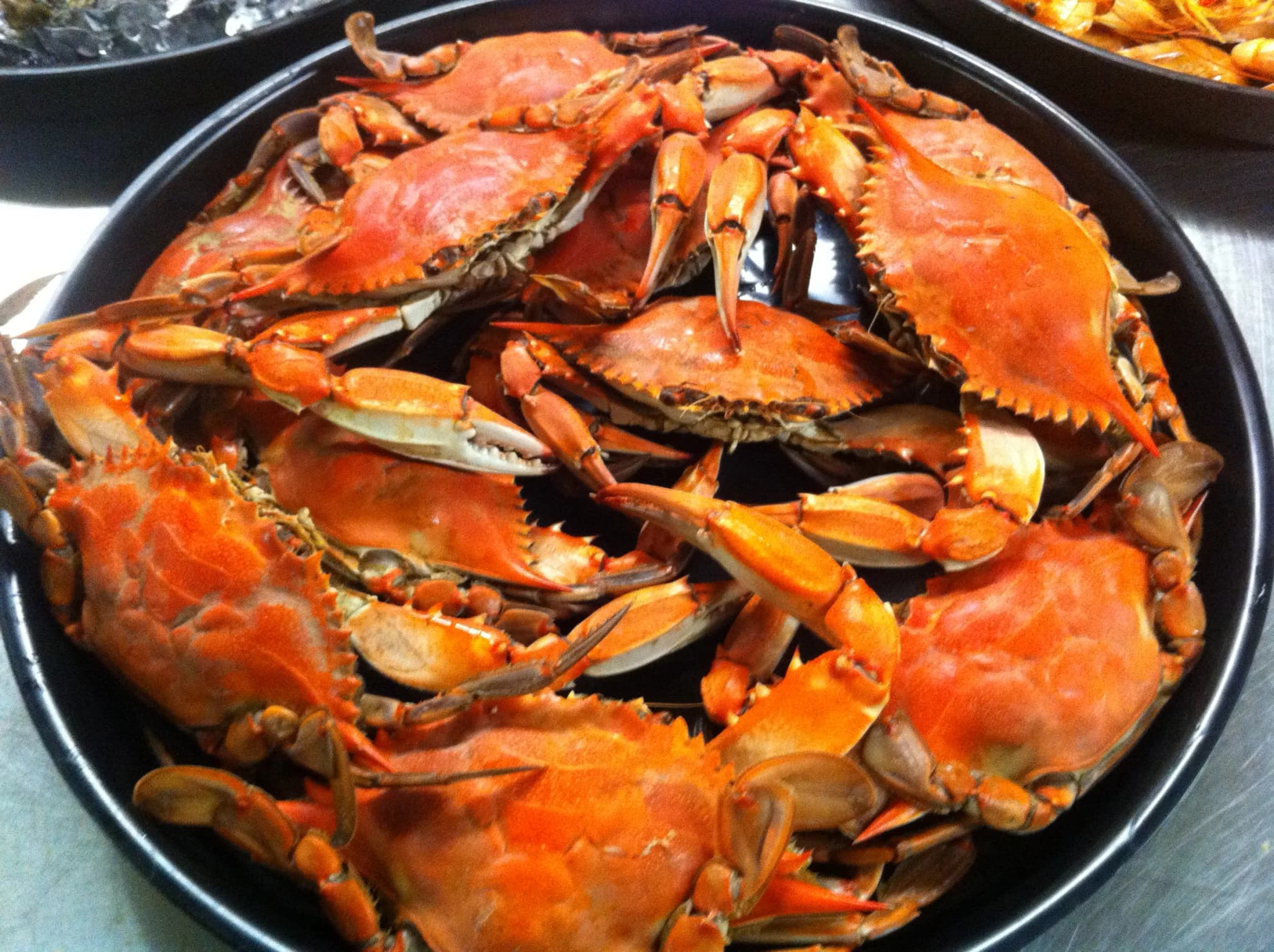
Cooked blue crab meat is a USDA SR Legacy record for "Crustaceans, crab, blue, cooked, moist heat": 17.9 g protein and 83 kcal per 100 g, i.e. 21.57 g protein per 100 kcal — (17.9 / 83) x 100, ranking it fifth among the ten most protein-dense foods per calorie in this list. The figures come from the USDA Standard Reference record for cooked blue crab (FoodData Central ID 174205): 83 kcal and 17.9 g protein per 100 g. A practical 3 oz (85 g) serving of crab meat supplies about 15.2 g protein for 70.6 kcal. Crab is a strong source of vitamin B12 (3.3 mcg per 100 g, well above the 2.4 mcg/day adult requirement) and selenium (42.9 mcg per 100 g), and is nearly fat-free (0.74 g total fat per 100 g), but at 395 mg sodium per 100 g it is meaningfully saltier than every other item in this top 10 — relevant for anyone on a sodium-restricted diet, and canned or pre-picked crab meat can run higher still. Crab also carries 97 mg cholesterol per 100 g. As with shrimp, crab is a crustacean shellfish, and FARE notes crustacean allergies (shrimp, crab, lobster) tend to be severe and are frequently adult-onset. The FDA/EPA fish advisory lists crab as a "Best Choice" (low mercury). Fresh blue crab is regionally seasonal in the US — most associated with the Chesapeake Bay and Gulf Coast — while pasteurized and frozen crab meat is sold nationwide in most supermarkets, typically at a higher price per pound than white fish, shrimp, or poultry.
- –
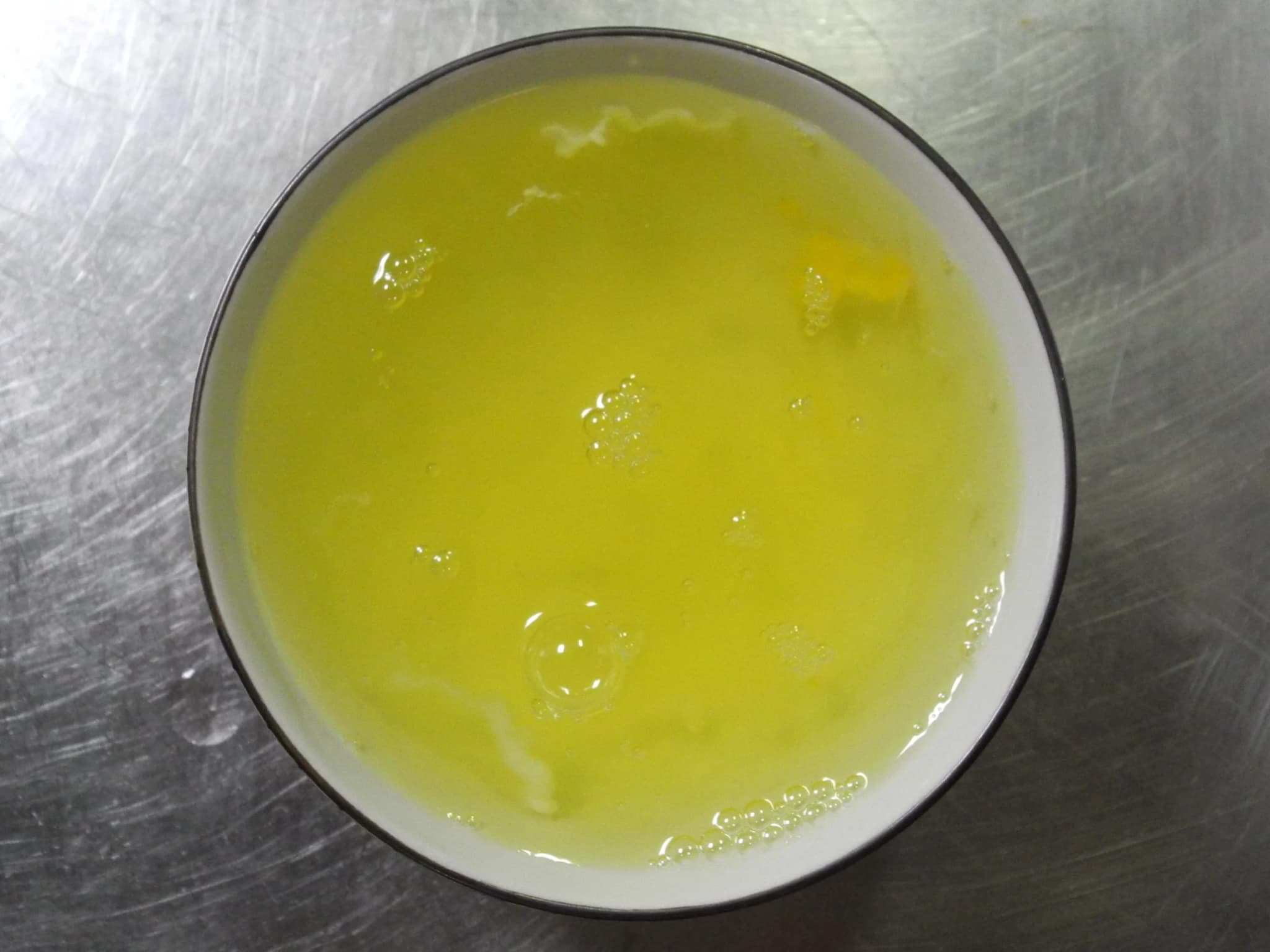
Raw egg white (the clear part of an egg, separated from the yolk) is USDA FDC ID 172183 (SR Legacy, "Egg, white, raw, fresh"): 10.9 g protein and 52 kcal per 100 g, i.e. 20.96 g protein per 100 kcal — (10.9 / 52) x 100. One large egg white weighs about 33 g, providing roughly 3.6 g protein for 17.2 kcal; a common practical serving is 1 cup of liquid egg whites (about 243 g, roughly 7-8 egg whites' worth), which supplies about 26.5 g protein for 126 kcal. Per 100 g, egg white contains 0 mg cholesterol and only 0.17 g total fat — all of an egg's fat and cholesterol are concentrated in the yolk, which is why egg white is popular with people managing cholesterol or trying to cut calories while keeping protein high. FDC also lists 166 mg sodium per 100 g and small amounts of selenium (20 mcg) and riboflavin, but essentially no vitamin B12, vitamin A, or fat-soluble vitamins, again because those concentrate in the yolk — meaning an egg-white-only diet forgoes several nutrients whole eggs provide. The clearest caution is allergy: egg allergy is, per FARE, "among the most common food allergies in children," and the organization notes most of the allergenic proteins are concentrated in the white (though both white and yolk should be avoided by diagnosed individuals). The encouraging counterpoint is that most children who are allergic to egg eventually outgrow it. Separately, raw or undercooked egg white carries a small Salmonella risk like any raw egg product, which is why pasteurized liquid egg whites (sold in cartons in the refrigerated dairy case) are widely used for recipes or drinks that won't be cooked, and why the values here are for raw product intended to be cooked before eating. Egg whites — fresh-separated or pasteurized liquid-carton — are sold in virtually every US supermarket and are among the least expensive protein sources on this list per gram of protein.
- –
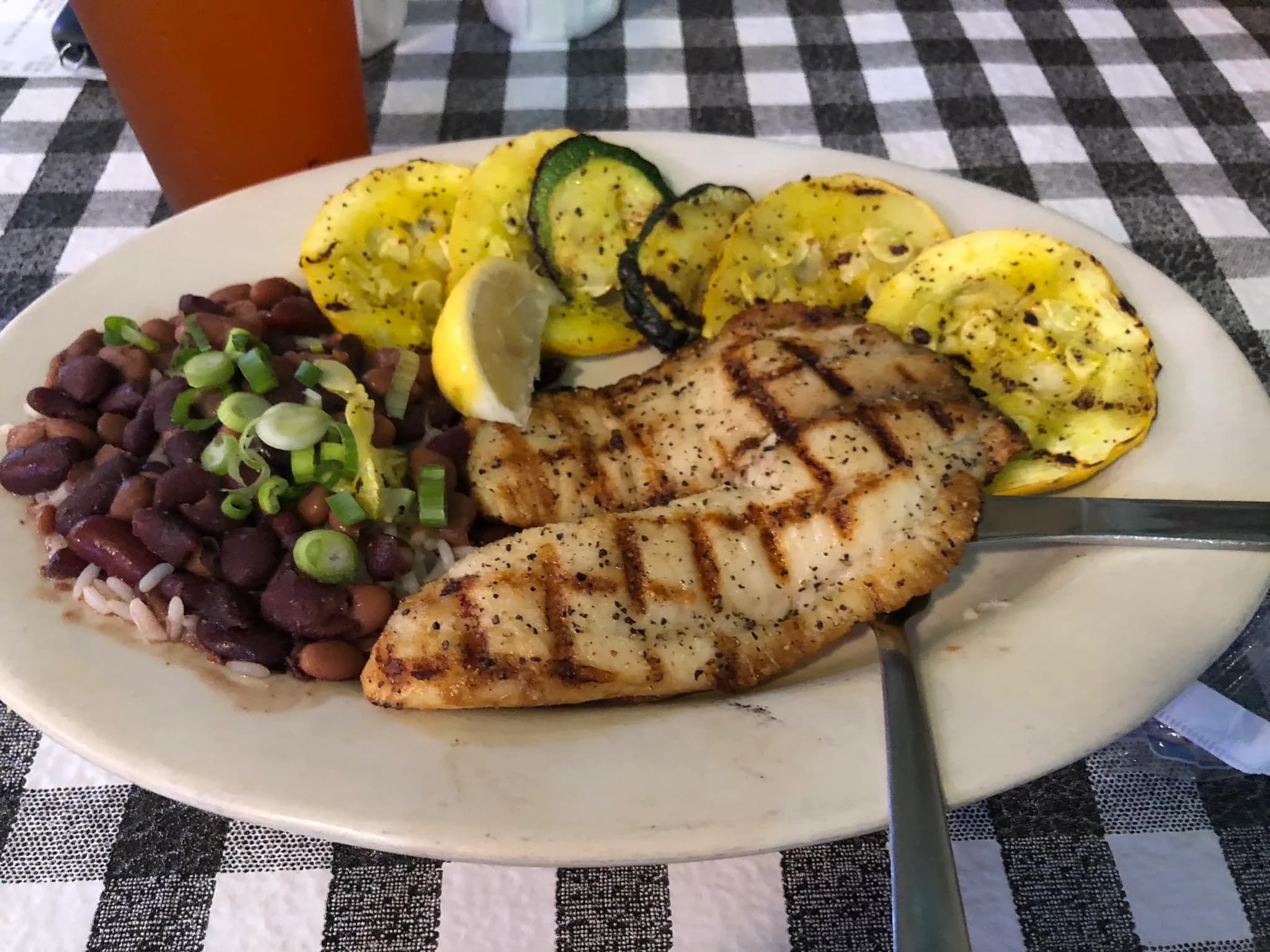
Cooked tilapia (baked, broiled, or pan-seared) is USDA FDC ID 175177 (SR Legacy): 26.2 g protein and 128 kcal per 100 g, i.e. 20.47 g protein per 100 kcal — (26.2 / 128) x 100. A 3 oz (85 g) fillet provides about 22.3 g protein for 108.8 kcal. Per FDC, tilapia has 57 mg cholesterol, 56 mg sodium, and 2.65 g total fat (0.94 g saturated) per 100 g — leaner than salmon but slightly fattier than cod or halibut — plus 1.86 mcg vitamin B12 and 54.4 mcg selenium. Tilapia is the fourth-most-consumed fish in the US since 2002, per Wikipedia, favored for its low cost and mild flavor; nearly all commercially farmed tilapia are male (grown faster than females), reflecting how thoroughly farmed the US supply is (China alone produces about 1.3 million tonnes a year against roughly 10,000 tonnes of domestic US production for a market that consumes 2.5 million tonnes). The one nutrition caveat worth flagging, sourced from the same overview, is that tilapia's omega-3 fatty acid content is "often far lower than that of other commonly eaten fish species," with an unusually high omega-6 share — relevant to people specifically seeking fish for omega-3 intake rather than protein, since tilapia is not a strong choice for that particular goal even though its protein density is excellent. On the safety side, the FDA/EPA fish advisory places tilapia in its "Best Choices" (lowest mercury) category, the same tier as cod, shrimp, and crab, so it carries the least restrictive mercury guidance among the fish and shellfish in this ranking. There is no major shellfish- or finfish-specific allergen distinction beyond the general fish-allergy category. Farmed tilapia fillets, fresh or frozen, are among the least expensive fish sold in US supermarkets, which combined with its mild flavor and easy preparation explains its popularity as an everyday, budget-friendly high-protein option.
- –
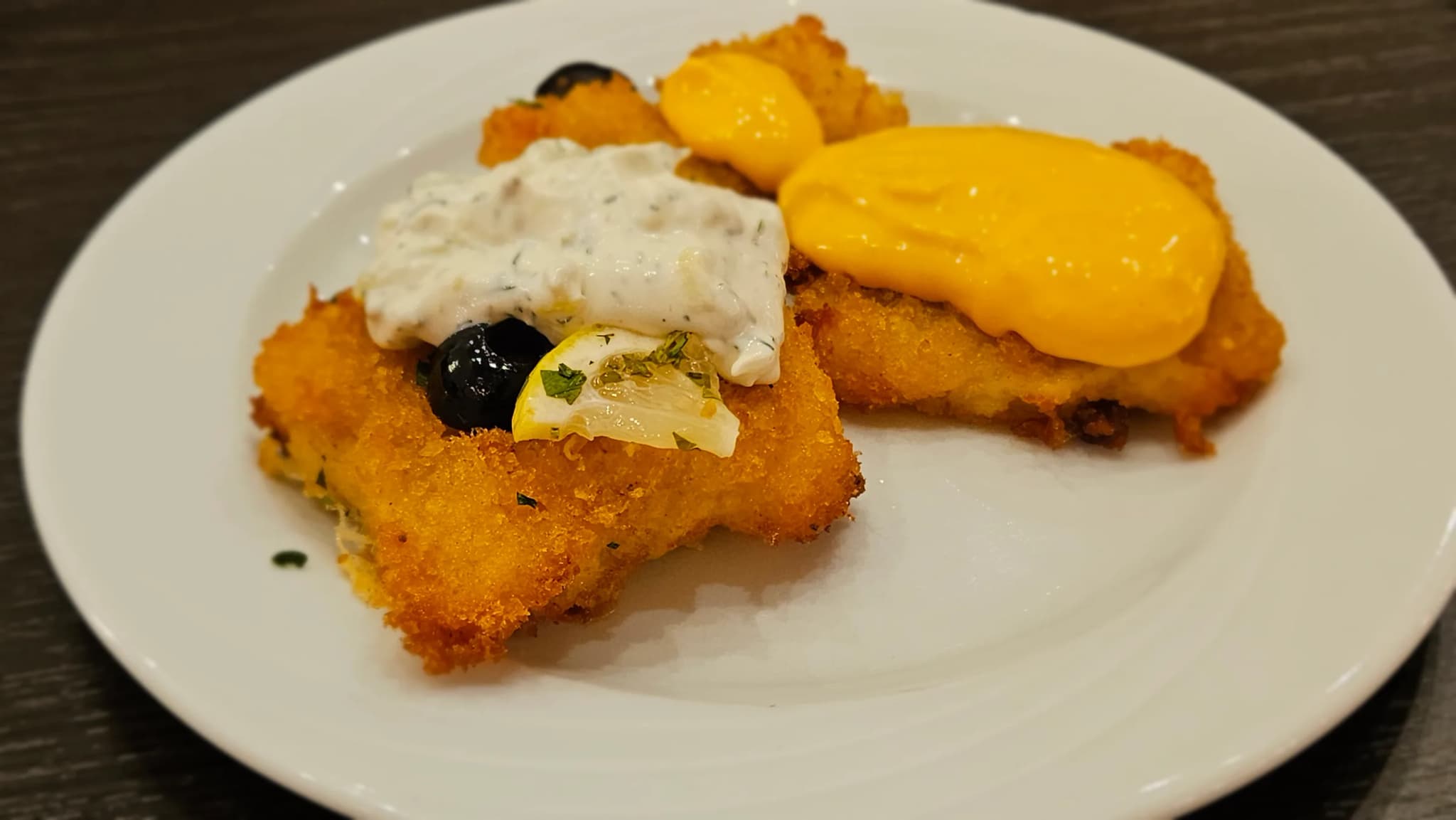
Cooked halibut (Atlantic and Pacific combined SR Legacy record) is USDA FDC ID 174201: 22.5 g protein and 111 kcal per 100 g, i.e. 20.27 g protein per 100 kcal — (22.5 / 111) x 100. A 3 oz (85 g) fillet provides about 19.1 g protein for 94.4 kcal. Per FDC, halibut has 60 mg cholesterol, 82 mg sodium, and 1.61 g total fat (0.354 g saturated) per 100 g, and stands out among the fish on this list for vitamin D — 231 IU per 100 g, well above cod, tilapia, or tuna in the same dataset — plus 55.4 mcg selenium and 0.632 mg vitamin B6. The key caution is mercury: unlike cod, tilapia, shrimp, and crab, all of which the FDA/EPA fish advisory places in its lowest-mercury "Best Choices" tier, halibut sits one tier up, in "Good Choices" (moderate mercury) — the same middle tier as fresh yellowfin tuna. That means the FDA's guidance for pregnant people, those who may become pregnant, and young children is to eat halibut somewhat less frequently than the Best Choices fish on this list (roughly one serving a week rather than 2-3), even though its protein density is comparable. There is no major distinct allergen concern for halibut beyond the general finfish-allergy category, which is biologically separate from shellfish allergy. Practically, halibut is one of the pricier whitefish on this list: it is a larger, slower-growing flatfish primarily wild-caught (Pacific halibut fisheries off Alaska run on a regulated seasonal quota system, roughly spring through fall) rather than farmed like tilapia, which keeps supply and price less stable year-round than cod or tilapia. Fresh and frozen halibut fillets and steaks are sold at most well-stocked supermarket seafood counters and fishmongers, generally at a higher per-pound price than cod, tilapia, or chicken breast.
- –
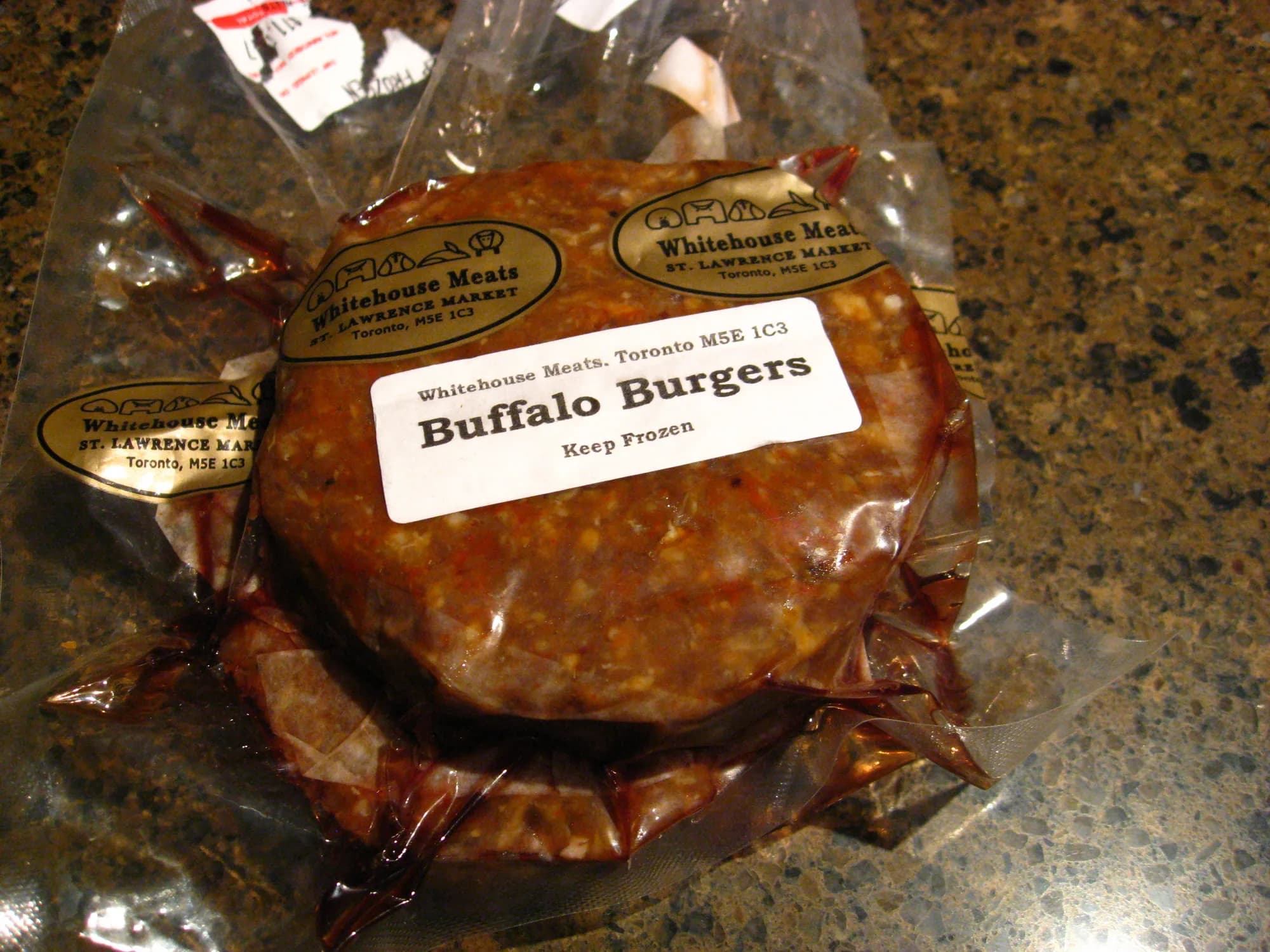
Roasted bison, lean cut only (fat trimmed), is USDA FDC ID 173852 (SR Legacy, "Game meat, bison, separable lean only, cooked, roasted"): 28.4 g protein and 143 kcal per 100 g, i.e. 19.86 g protein per 100 kcal — (28.4 / 143) x 100 — the only red meat to make this top 10. A 3 oz (85 g) serving provides about 24.1 g protein for 121.6 kcal. Per FDC, lean bison has 82 mg cholesterol, only 57 mg sodium, and 2.42 g total fat (0.91 g saturated) per 100 g, plus notably high iron (3.42 mg per 100 g — meaningfully more than the poultry, fish, or shellfish on this list) and vitamin B12 (2.86 mcg per 100 g) and choline (115 mg per 100 g). Wikipedia's overview of the American bison states plainly that bison meat "is lower in fat and cholesterol, yet higher in protein than beef," while tasting "very similar to beef" — a useful frame for why it appears on high-protein lists as a leaner red-meat alternative rather than a wholly different food. As a red meat, bison falls into the category Harvard's Nutrition Source recommends eating "on a more limited basis" compared with poultry and fish, though the same guidance is aimed at red meat generally (and especially processed red meat) rather than citing bison specifically, and bison's lower fat/cholesterol profile than conventional beef is a meaningful distinction within that category. There is no major allergen concern specific to bison beyond the general (rare) mammalian-meat allergy. Availability is the main practical limitation: bison is raised commercially in the US (roughly 6,400 commercial herds as of a 2010 estimate, per Wikipedia) but in far smaller volume than cattle, so it is typically found at specialty butchers, natural-foods grocers, and a growing number of conventional supermarkets rather than universally stocked, and it is usually priced higher per pound than chicken, turkey, or pork.
- –
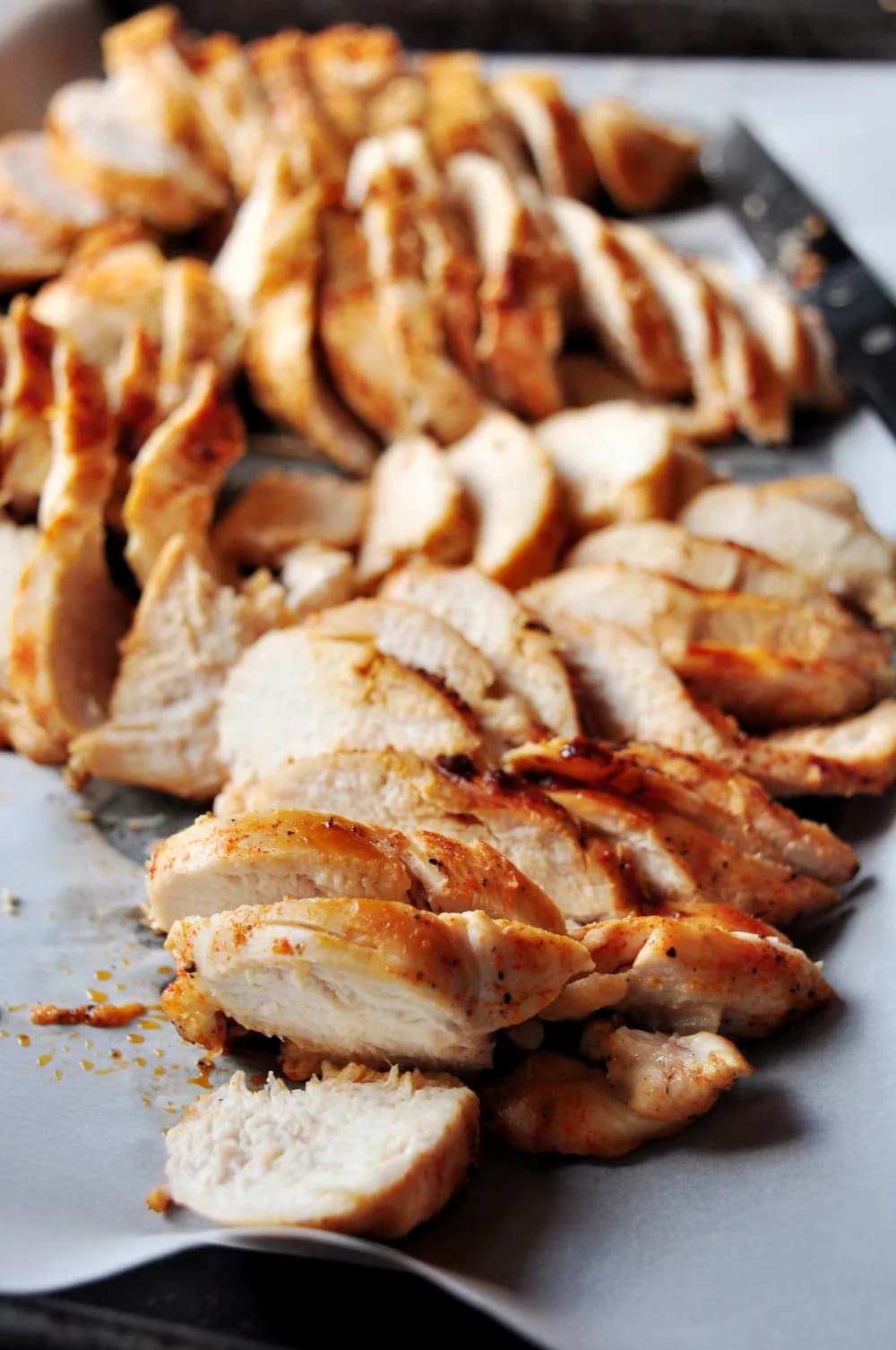
Skinless, boneless chicken breast is the most familiar entry on this list, and USDA's most complete modern record for it is Foundation Foods FDC ID 331960, "Chicken, broiler or fryers, breast, skinless, boneless, meat only, cooked, braised": 32.1 g protein and 166 kcal per 100 g, i.e. 19.34 g protein per 100 kcal — (32.1 / 166) x 100. A note on methodology: FDC's search for this cut did not surface a plain "roasted" Foundation/SR Legacy entry for skinless, boneless breast meat alone among its top results; the closest confirmed entries were this braised Foundation Foods record and a comparable SR Legacy grilled record (FDC 171534: 30.5 g protein / 151 kcal per 100 g, 20.20 g protein per 100 kcal) — both dry/moist-heat cooking methods, and both close enough to each other that the ranking position would not change meaningfully whether a household actually roasts, grills, or braises the breast at home. A whole cooked skinless breast weighs roughly 172 g, providing about 55.2 g protein for 285.5 kcal; the standard 3 oz (85 g) dietary-reference serving provides about 27.3 g protein for 141.1 kcal. Per FDC, this cut has 116 mg cholesterol per 100 g — the highest cholesterol figure among this list's poultry and fish entries, though still moderate — plus 47 mg sodium and 1.01 g saturated fat. Harvard's Nutrition Source explicitly names "poultry (chicken, turkey, duck)" as a "best bet" protein choice, in contrast with red meat. There is no major allergen or mercury concern specific to chicken breast; the primary food-safety consideration with any raw poultry is proper cooking and handling to avoid Salmonella or Campylobacter, standard USDA guidance for all raw chicken regardless of cut. Skinless chicken breast is the most widely stocked and typically least expensive animal protein by weight in US supermarkets outside of eggs, sold fresh or frozen in essentially every grocery store nationwide.
| Item | USDA FDC ID | Protein per 100g | Calories per 100g | Protein per 100 kcal |
|---|---|---|---|---|
| #1Shrimp, cooked | 175180 | 24.0 g | 99.0 kcal | 24.24 g |
| #2Tuna, yellowfin, cooked (dry heat) | 172006 | 29.2 g | 130.0 kcal | 22.46 g |
| #3Cod, Atlantic, cooked (dry heat) | 171956 | 22.8 g | 105.0 kcal | 21.71 g |
| #4Turkey breast, roasted (meat only) | 174516 | 29.5 g | 136.0 kcal | 21.69 g |
| #5Crab, blue, cooked (moist heat) | 174205 | 17.9 g | 83.0 kcal | 21.57 g |
| #6Egg whites, raw | 172183 | 10.9 g | 52.0 kcal | 20.96 g |
| #7Tilapia, cooked (dry heat) | 175177 | 26.2 g | 128.0 kcal | 20.47 g |
| #8Halibut, cooked (dry heat) | 174201 | 22.5 g | 111.0 kcal | 20.27 g |
| #9Bison, lean, roasted | 173852 | 28.4 g | 143.0 kcal | 19.86 g |
| #10Chicken breast, skinless, cooked | 331960 | 32.1 g | 166.0 kcal | 19.34 g |
Image credits
- Shrimp, cooked: Photo by Leon Brocard, CC BY 2.0, via Wikimedia Commons
- Tuna, yellowfin, cooked (dry heat): Photo by Eric Molina (San Francisco, United States), CC BY 2.0, via Wikimedia Commons
- Cod, Atlantic, cooked (dry heat): Photo by sousvideguy, CC BY 2.0, via Wikimedia Commons
- Turkey breast, roasted (meat only): Photo by Sarah Stierch (Missvain), CC BY 4.0, via Wikimedia Commons
- Crab, blue, cooked (moist heat): Photo by Food Group (Flickr user 54449565@N08), CC BY-SA 2.0, via Wikimedia Commons
- Egg whites, raw: Photo by Douglas P Perkins, CC BY-SA 3.0, via Wikimedia Commons
- Tilapia, cooked (dry heat): Photo by Rberchie, CC BY-SA 4.0, via Wikimedia Commons
- Halibut, cooked (dry heat): Photo by Sergey A. Demidov (SergeyA-Russia), CC BY 4.0, via Wikimedia Commons
- Bison, lean, roasted: Photo by Glen MacLarty (Toronto, Canada), CC BY 2.0, via Wikimedia Commons
- Chicken breast, skinless, cooked: Photo by Sharon Chen, CC BY 2.0, via Wikimedia Commons
Rank it your way
Remix this list into your own ranking, or head to the play hub for every game mode and community breakdown — blind mode, challenges, tier lists, and more.
You Might Also Like

Top 10 Best Running Shoes for Health 2026
Top 10 Best Running Shoes for Health 2026
Top 10 Foods That Are Aging You Faster — What to Cut to Look and Feel Younger
Top 10 Foods That Are Aging You Faster — What to Cut to L...

Top 10 Functional Mushrooms for Brain Health and Energy in 2026
Top 10 Functional Mushrooms for Brain Health and Energy i...
Top 10 Healthiest Foods in the World
#1 Blueberries · #2 Salmon · #3 Kale

Top 10 Nervous System Regulation Techniques Dominating Wellness in 2026
#1 Physiological Sigh (Double Inhale Breathwork) · #2 Cold Plunge / Cold Water Immersion · #3 NSDR (Non-Sleep Deep Rest) / Yoga Nidra

Top 10 Leading Causes of Death Worldwide (WHO 2025)
#1 Ischaemic Heart Disease · #2 Stroke (Cerebrovascular Disease) · #3 Chronic Obstructive Pulmonary Disease (COPD)