Peru — Manu Biosphere Reserve & Indigenous-Led Amazon Tourism
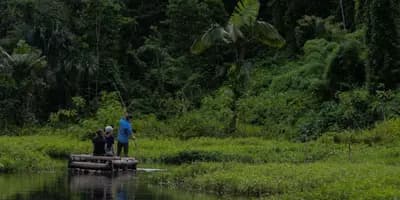
Manu Biosphere Reserve is a superlative that resists easy description: roughly 1.7 million hectares of intact Amazonian rainforest and montane cloud forest, declared a UNESCO World Heritage Site in 1987, housing more than 4,000 identified plant species, over 1,000 bird species, and around 160 mammal species within its boundaries — among the highest biodiversity densities ever recorded on earth. The reserve spans several ecological zones from high Andean grasslands down to lowland Amazon, creating a vertical wilderness corridor that few other protected areas in South America match. The regenerative tourism model in Manu is built on a fundamental principle: the communities who have lived within and adjacent to the reserve for generations are its most effective guardians. Organizations like the Crees Foundation have spent decades building a conservation model rooted in community partnership — employing local guides and researchers, running long-term biodiversity monitoring, and directing tourism revenue into community development funds in villages along the reserve boundary. Tour operators owned and run by people who grew up in the reserve zone offer expeditions that combine ecological immersion with genuine cultural exchange — including stays with indigenous Matsigenka communities where tourism participation is defined by community agreement rather than operator convenience. Community-governed tourism plans in villages like Shipetiari model the kind of self-determined cultural tourism that regenerative travel theory argues for but rarely sees at scale. Peru has secured international climate financing to invest in locally-led climate adaptation across indigenous communities adjacent to protected areas, with plans to scale the effort more broadly. For travelers, this means that visiting Manu contributes to an active, funded conservation system, not a legacy one.
Photos (1)
Comments on "Peru — Manu Biosphere Reserve & Indigenous-Led Amazon Tourism"
Have a take on this ranking?
Comments are how the argument actually happens here. Posting one needs a free account — it takes about a minute.
No comments yet.
The first comment sets the terms of the argument.