Rajon ki Baoli
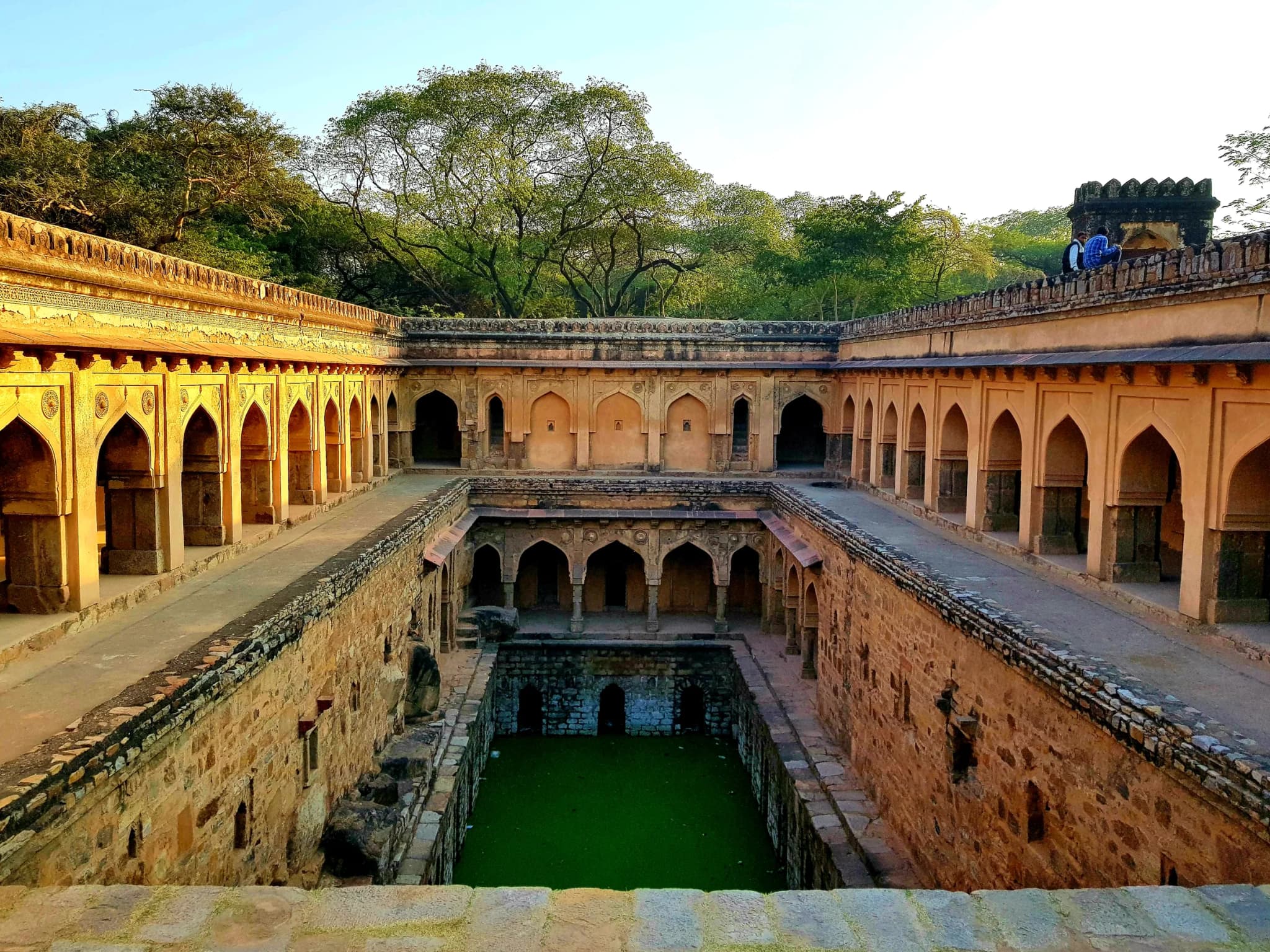
Rajon ki Baoli stands inside the Mehrauli Archaeological Park in South Delhi, a short walk from Adham Khan's Tomb and another stepwell, Gandhak ki Baoli, in one of the densest concentrations of medieval monuments anywhere in the capital. It was commissioned in 1506 CE by Daulat Khan Lodi, an administrator under the Lodi dynasty, toward the end of the Delhi Sultanate period, and is generally considered one of the best-preserved stepwells from that era anywhere in Delhi. The name Rajon ki Baoli comes not from royalty but from labour: it derives from Rajbirs, or Mistris, the historical term for stonemasons, suggesting the well may have served or been associated with the city's masons' community rather than a single ruling family. Steps descend from the northern side of the well down to the water, while high walls run along the eastern and western sides, each set with twelve pillars framing arched niches in the Indo-Islamic style typical of late Sultanate-period Delhi. A columned verandah surrounds part of the courtyard above, giving the whole complex the feel of a small enclosed compound rather than an open pit. Unusually for a stepwell, the surrounding enclosure also includes a mosque and a tomb, built as part of the same complex rather than added later, which underlines how thoroughly stepwells in Delhi's Sultanate period doubled as religious and memorial architecture alongside their practical role supplying water. The Archaeological Survey of India lists Rajon ki Baoli as a Monument of National Importance and carried out a restoration of the site completed in 2025. Because it sits inside Mehrauli Archaeological Park rather than a fenced single-monument site, it is usually visited alongside the park's dozen-plus other medieval structures rather than as a solo destination.
Photos (1)
Comments on "Rajon ki Baoli"
Have a take on this ranking?
Comments are how the argument actually happens here. Posting one needs a free account — it takes about a minute.
No comments yet.
The first comment sets the terms of the argument.