Rani ki Vav
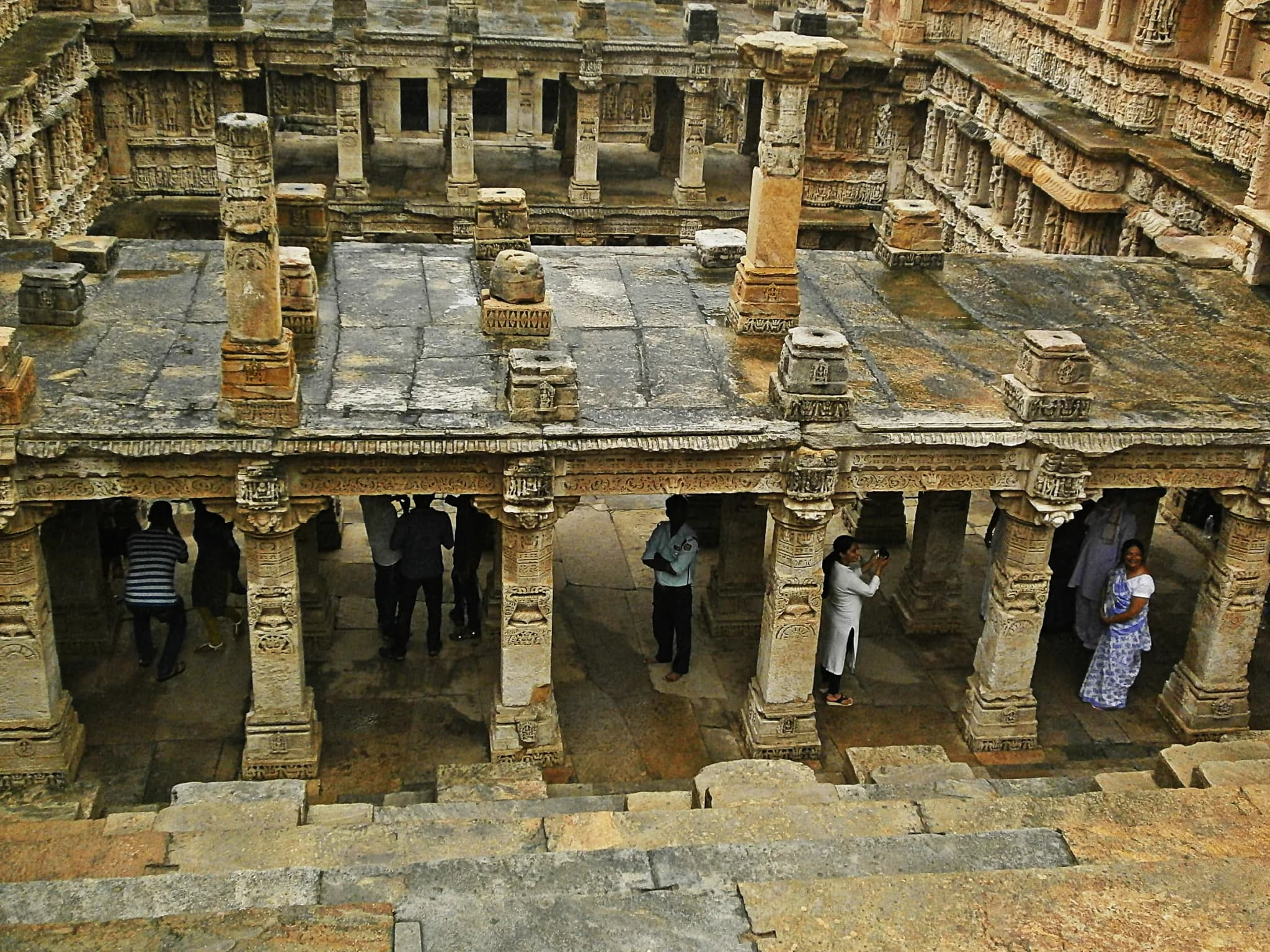
Rani ki Vav, the Queen's Stepwell, is widely regarded as the finest surviving example of the form anywhere in India, and it is the only stepwell on this list inscribed as a UNESCO World Heritage Site, added to the list on 22 June 2014. It stands on the banks of the Saraswati River in Patan, Gujarat, and was commissioned by Queen Udayamati in memory of her husband, King Bhima I of the Chaulukya dynasty, who ruled from around 1022 to 1064. According to the medieval chronicle Prabandha-Chintamani, construction began in 1063 and took twenty years to complete, though some art historians date the well earlier, to around 1032, based on similarities with other Chaulukya-era temples. The scale sets it apart from smaller regional stepwells: the structure runs about 65 metres long, 20 metres wide and 28 metres deep, descending through seven distinct stair levels rather than the four or five typical elsewhere. Every level is carved with sculpture rather than left plain, and researchers count more than 500 principal figures and over a thousand minor ones across the well, depicting Hindu deities, celestial apsaras, and scenes of daily life, making it as much a gallery of 11th-century sculpture as a piece of water infrastructure. The Saraswati River eventually silted the well over completely, burying it for centuries until excavation began in the 1940s; the Archaeological Survey of India carried out a major restoration between 1981 and 1987 that uncovered the sculpture in something close to its original condition. In 2016 it was named India's Cleanest Iconic Place at the Indian Sanitation Conference, and since July 2018 its image has appeared on the reverse of the 100-rupee note, cementing its status as the best-known stepwell in the country.
Photos (1)
Comments on "Rani ki Vav"
Have a take on this ranking?
Comments are how the argument actually happens here. Posting one needs a free account — it takes about a minute.
No comments yet.
The first comment sets the terms of the argument.