Toorji Ka Jhalra
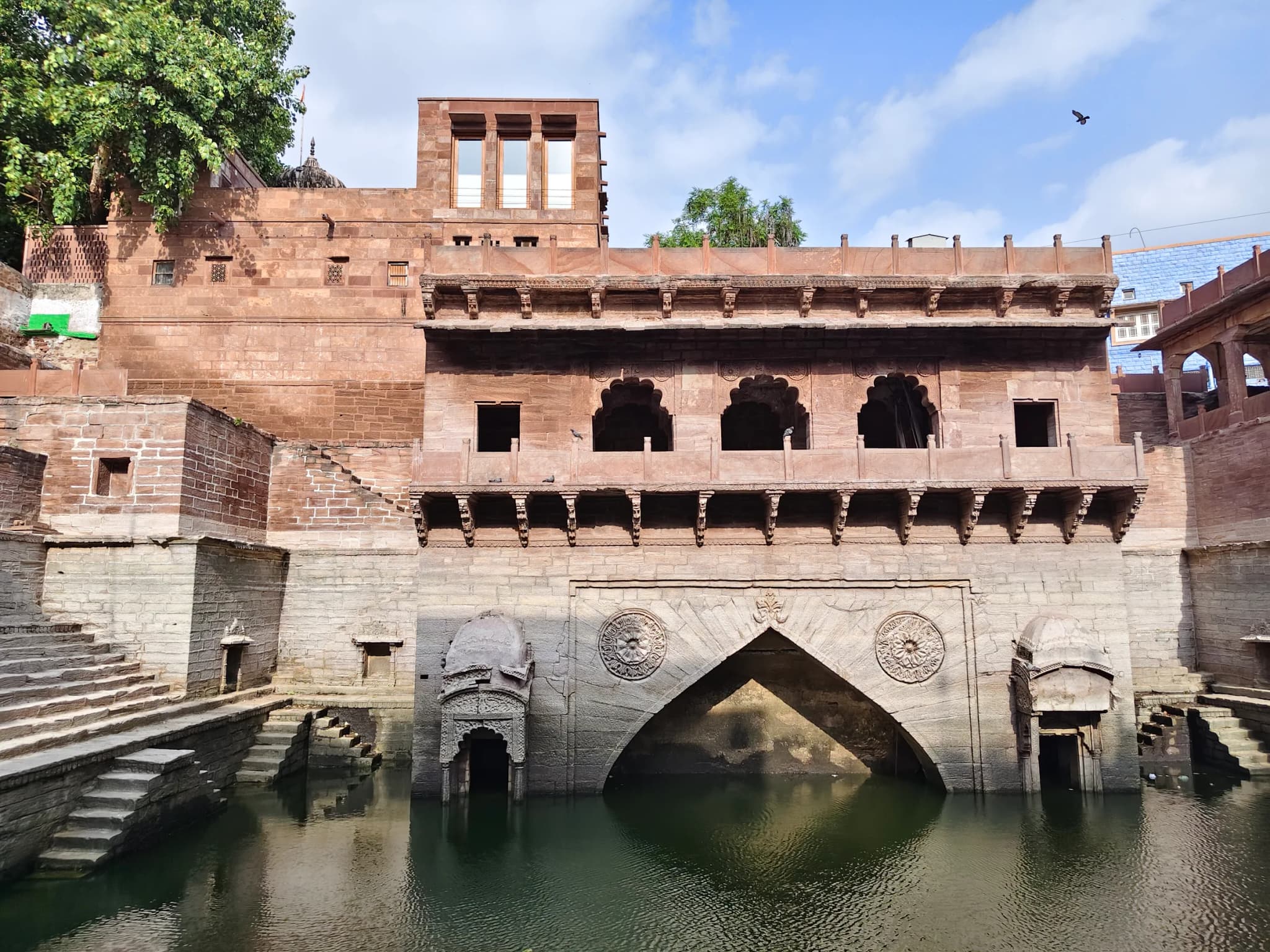
Toorji Ka Jhalra sits tucked among the narrow lanes of Jodhpur's old city, close enough to Mehrangarh Fort, about 300 metres away, that many visitors to the fort walk straight past it without realising it is there. The well's construction date is disputed: some accounts point to origins as early as the 6th century, but the structure standing today is generally dated to 1740, and is traditionally attributed to Maharani Tanwarji, wife of Maharaja Abhai Singh of Jodhpur, although no contemporary document confirms her patronage directly. What is not in dispute is the material and craftsmanship: the well is carved from the same red sandstone used across Jodhpur's old city and Mehrangarh Fort itself, cut into deep tiers of steps in the ornamented Rajasthani style typical of Marwar-region stepwells, with carved niches set into the surrounding walls. Unlike some of the larger Rajasthani stepwells built to guarantee a year-round water supply, Toorji Ka Jhalra fills mainly during the monsoon months of June to September and is often dry, or close to it, by the following spring, making the timing of a visit matter for anyone hoping to see it holding water rather than bare stone. The well's local prominence was formally recognised in 2017, when India Post issued a commemorative postage stamp featuring Toorji Ka Jhalra as part of a series on the country's historic stepwells. Despite that recognition, it remains relatively unfamiliar even to many residents of Jodhpur, a contrast with Mehrangarh Fort's fame just a few hundred metres away. Reaching it means navigating the same tangle of narrow, blue-painted lanes that make Jodhpur's old city a destination in its own right, with the well itself serving as a quiet, shaded break from that walk.
Photos (1)
Comments on "Toorji Ka Jhalra"
Have a take on this ranking?
Comments are how the argument actually happens here. Posting one needs a free account — it takes about a minute.
No comments yet.
The first comment sets the terms of the argument.