Rail transport / Wikipedia
Top 10 Regenerative Travel Destinations Making a Positive Impact in 2026
Regenerative travel goes further than avoiding harm — it means a trip actively funds the ecosystem it visits. In Rwanda, a $1,500 gorilla trekking permit channels 10% of its fee into conservation that has helped the mountain gorilla population climb past 1,063 animals from under 300 in the 1980s. Bhutan's constitution locks in a minimum 60% forest cover (currently 71%) and keeps the country carbon negative, while Costa Rica has rebuilt its own tree cover from 21% in 1987 to more than 59% today through a national payments-for-ecosystem-services scheme. These ten destinations, from the Faroe Islands' 'Closed for Maintenance' program to Kenya's community-run Maasai Mara conservancies, show what travel with a measurable return looks like.
Top10Grid lets the community re-rank anything — this order is our editors' pick for now; use the buttons below to vote it up or down.

Compare by Dimension
Measurable ecological outcomes directly attributable to tourism — species recovery, habitat restoration, carbon sequestration, rewilding progress
| Rank | Item | Score | Notes |
|---|---|---|---|
| #1 | Rwanda — Volcanoes National Park & Gorilla Conservation | 10.0 | 73% gorilla population recovery since 1989 — most documented species comeback directly tied to tourism revenue globally |
| #2 | Patagonia, Chile & Argentina — The Route of Parks Rewilding Corridor | 10.0 | Jaguar reintroduction (14 wild cubs), condor release (25 birds), huemul corridor — multiple simultaneous rewilding successes |
| #3 | Bhutan — The Kingdom That Made Carbon-Negativity Constitutional | 9.0 | Constitutional forest cover guarantee, carbon-negative status, and 95% hydropower are legally enforced ecological outcomes |
| #4 | Costa Rica — Osa Peninsula & the Regenerative Rainforest Economy | 9.0 | Deforestation reversed from 21% to 59% forest cover — most dramatic tropical forest recovery documented globally |
| #5 | Peru — Manu Biosphere Reserve & Indigenous-Led Amazon Tourism | 9.0 | 1.5M-hectare UNESCO reserve with 20-year biodiversity baseline and GCF-funded indigenous conservation programs |
| #6 | Kenya — Maasai Mara Community Conservancies | 8.0 | Wildlife densities in conservancies now rival national reserve — documented reversal of land degradation across 180,000 hectares |
| #7 | Faroe Islands — 'Closed for Maintenance' and the Preservolution Model | 8.0 | Closed for Maintenance 2026 establishes Koltur Island as 80% grazing-free reserve — measurable habitat restoration by design |
| #8 | Portugal — Alentejo Cork Forests & the Montado Agritourism Renaissance | 8.0 | 4M+ tonnes CO2 sequestered annually; Iberian lynx recovery from near-zero to growing population is a genuine conservation success |
| #9 | Slovenia — Europe's Greenest Nation Raises the Bar | 7.0 | 60% forest cover, marble trout protection, Triglav NP permit systems demonstrating active conservation management |
| #10 | Iceland — Geothermal Civilization & the Rewilding of a Denuded Land | 7.0 | 99% renewable electricity and active soil/land restoration program, though deforestation reversal is early-stage |
Current Rankings
- –
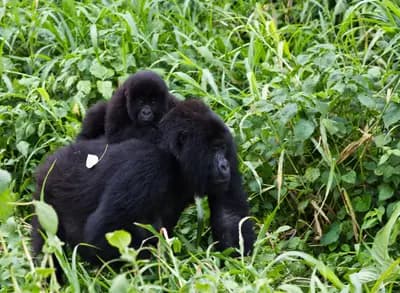
Rwanda's Volcanoes National Park is one of the most compelling proof points in the history of conservation tourism: the mountain gorilla, down to roughly 250 individuals by the early 1980s, has rebounded to just over 1,000 as of the most recent range-wide census — and the mechanism driving that recovery is tourism revenue. A gorilla trekking permit costs around $1,500 per person, and a share of that fee flows directly into community development projects in the villages adjacent to the park. Since the fee-sharing program began in the mid-2000s, it has funded hundreds of community projects including clean water systems, health clinics, classrooms, and small business grants — creating an economic argument for conservation so powerful that former subsistence farmers now work as park rangers, trackers, and guide trainers. The trekking experience itself is extraordinary. A limited number of habituated gorilla families receive a capped number of visitors per day, ensuring that encounters — typically an hour spent within meters of a family group that includes infants, juveniles, and a dominant silverback — feel intimate, unhurried, and utterly unlike anything in conventional wildlife tourism. The landscape surrounding the park is itself a conservation achievement: the Albertine Rift ecosystem supports hundreds of bird species and dozens of mammal species in a country smaller than Maryland. Rwanda's community-based tourism programs around Kinigi offer village circuits where revenue is managed by local cooperatives — a model conservation groups have pointed to as an example of equitable benefit-sharing. Conservation organizations and the Rwanda Development Board continue to negotiate additional buffer-zone land through community agreements, expanding the park's effective footprint without displacement. Bisate Lodge by Wilderness Safaris, the leading luxury option, has planted tens of thousands of indigenous trees on degraded hillsides surrounding the park — a visible contribution to forest connectivity that guests can participate in during their stay.
Sourcesen.wikipedia.org - –
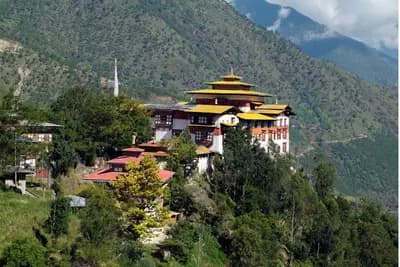
Bhutan is not merely carbon neutral — it is carbon negative, absorbing significantly more carbon dioxide than it emits. This is not an accident. Bhutan's constitution mandates that a minimum of 60% of the country's land area must remain under forest cover at all times; the current figure stands at 71%, legally locked in perpetuity. The vast majority of the country's electricity is generated from hydropower. These are not aspirational targets — they are enforceable constitutional provisions in a country that has explicitly chosen Gross National Happiness over Gross Domestic Product as its development metric. The High Value, Low Volume tourism model is the policy mechanism that translates these principles into a viable economy. Every international visitor (outside India) pays a Sustainable Development Fee of $100 per person per night, which funds free universal healthcare, free education, and the very conservation programs that maintain forest cover and biodiversity. The fee is deliberate and anti-mass-tourism by design: Bhutan has no interest in competing with Thailand on visitor volume. It competes on meaning. The visitor experience reflects this philosophy. Access to sacred dzongs (fortress-monasteries), the chance to trek to the iconic Tiger's Nest Monastery (Paro Taktsang) perched at roughly 3,120 meters, walking through high-altitude rhododendron forests that shelter snow leopards and black-necked cranes — these are experiences that carry the weight of a culture that has resisted full-scale modernization as a matter of national policy. Tour operators must be licensed; trekkers must use guided itineraries; all accommodation must meet national standards. The resulting experience is one of rare, enforced quality. Bhutan has also introduced additional tourism-related taxes in recent years as it builds fiscal resilience through diverse revenue streams rather than tourism volume dependency. Luxury lodges such as Six Senses Bhutan and Uma by COMO offer the highest-end experience, with heritage guesthouses providing a more affordable alternative above the SDF.
- –
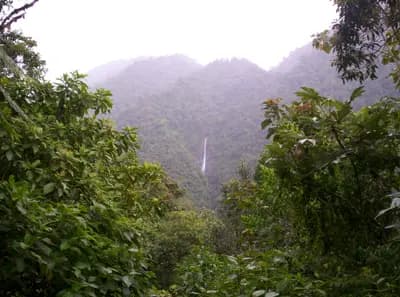
Costa Rica's achievement is singular in the tropics: it reversed deforestation. In 1987, forest cover had fallen to roughly a third of the country's territory — the result of decades of cattle ranching expansion and logging concessions. Today forest cover stands at more than half the country, driven by the world's first national payments-for-ecosystem-services program (FONAFIFO's PSA scheme), which pays private landowners cash to maintain forest on their properties and has disbursed hundreds of millions of dollars to participating farmers since 1996. Costa Rica's Certification for Sustainable Tourism (CST) — recognized by the Global Sustainable Tourism Council — rates tourism businesses on a one-to-five leaf scale, with hundreds of hotels and operators now certified. But the Osa Peninsula, home to Corcovado National Park, represents a step beyond certification into genuine regeneration. The peninsula has drawn international recognition as one of the world's premier destinations, and the reason is the living ecosystem: Corcovado has been described by National Geographic as 'the most biologically intense place on earth,' protecting scarlet macaws, tapirs, sea turtles, American crocodiles, and all six of Costa Rica's wild cat species in a contiguous tropical rainforest and marine park. Private reserves on the Osa Peninsula — including the reserve maintained by Lapa Rios Eco-Lodge — have merged so effectively with the government-protected Corcovado that satellite imagery shows seamless forest canopy across the boundary. Lapa Rios draws most of its staff from local communities, runs a permaculture food program, and directly funds a conservation monitoring program that surveys jaguar, tapir, and peccary populations using camera traps. Visitors can participate in sea turtle nesting patrols on Playa Matapalo (October–March), reforestation planting days, and mangrove restoration kayaking. The regenerative economy here is measurable: conservation tourism now generates more revenue per hectare than cattle ranching ever did on the same land — the economic argument for forest that shifted national policy decades ago continues to compound.
Sourcesen.wikipedia.org - –
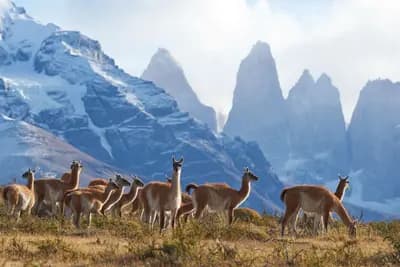
The story of Patagonia's conservation transformation begins with a radical act of private philanthropy: Douglas and Kris Tompkins spent decades purchasing degraded agricultural land throughout Chilean and Argentine Patagonia, restoring it to native ecosystems, and donating the finished parks to their respective governments. The result is extraordinary: Tompkins Conservation's legacy organizations (Rewilding Argentina and Rewilding Chile, now independent nonprofits) have helped create or expand a network of national parks spanning millions of acres of land and ocean — among the largest private-to-public conservation land transfers in history. The Route of Parks — a long corridor of protected land linking national parks from Puerto Montt to Cape Horn — is both a wilderness experience and a functioning rewilding laboratory. Species returning to landscapes where they had been locally extirpated include the Andean condor, released and tracked through dedicated reintroduction projects, the jaguar (born through Rewilding Argentina's reintroduction program in Iberá and El Impenetrable Parks, among the first wild jaguar births in the region in generations), and the huemul deer, with new corridors established to reconnect isolated populations genetically. Puma densities in Torres del Paine and Patagonia National Park now rank among the highest recorded anywhere on earth. Visitors who book guided wildlife photography expeditions with operators like Swoop Patagonia or Journeys with Purpose can expect high-probability sightings of puma, guanaco, condor, and rhea against a backdrop of jagged granite spires and glacial lakes of impossible blue. The tourism model here is deliberately low-volume: lodges are small, guides are local, and a meaningful portion of revenue flows into park maintenance and rewilding program costs. The Route of Parks also functions as a rural economic catalyst: local communities from Cochrane to Puerto Natales have built park-centric businesses — guide services, artisan cooperatives, horse-trek operations — that did not exist before the conservation corridor was established. This is regenerative economics at landscape scale.
- –
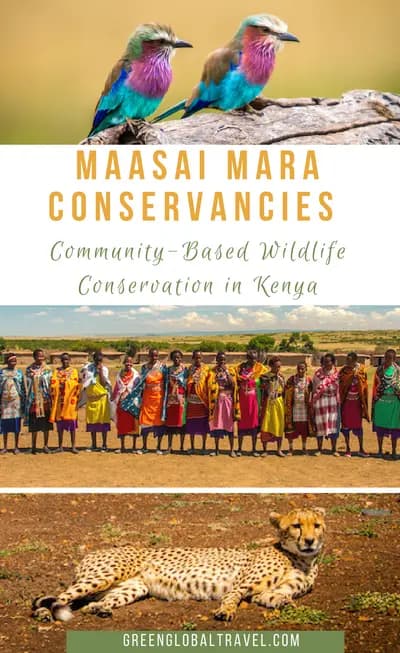
Kenya's Maasai Mara region contains one of the most sophisticated examples of community-led conservation economics operating at scale anywhere in Africa. The Maasai Mara Wildlife Conservancies Association (MMWCA) coordinates a network of conservancies in the Greater Maasai Mara, collectively protecting roughly 150,000 hectares (about 370,000 acres) of wildlife habitat — land that was rapidly being converted to agriculture and fenced off for intensive livestock before the conservancy model emerged. The mechanism is elegantly simple: lodges within conservancies pay per-acre lease fees directly to Maasai landowners, creating a steady income stream that makes conservation land use economically competitive with agricultural conversion. Conservancies like Olare Motorogi support hundreds of Maasai landowners through these lease agreements. The tourism economy generates substantial revenue across the Maasai Mara region, with much of it flowing through lease payments, staff employment (conservancies employ almost exclusively local Maasai staff), and community development funds. The wildlife outcomes are notable. In conservancy areas, wildlife densities have rebounded from a period of overgrazing and depletion as recently as the early 2000s. Lion prides, cheetah coalitions, and leopard have all expanded their ranges into the newly protected corridors. An estimated 65% of Kenya's wildlife lives outside government protected areas — across more than 160 community conservancies nationwide — because the conservancy model has made wildlife economically valuable to the people who live alongside it. The guest experience in conservancies like Naboisho, Olare Motorogi, or Ol Kinyei is categorically different from a standard reserve safari. Guest-to-guide ratios are low, vehicle numbers are restricted by conservancy rules, and guides are typically from the Maasai communities that own the land — providing access to ecological knowledge and cultural context that no resort operation can replicate. andBeyond and Wilderness Safaris both operate conservancy-based camps across the Mara with strong community revenue-sharing records.
Sourcesen.wikipedia.org - –
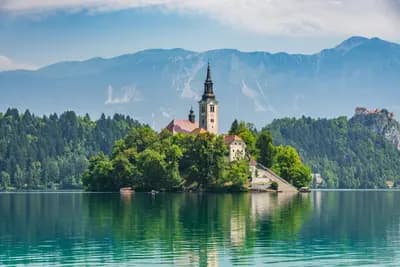
Slovenia is one of the most densely forested countries in Europe, and it is leveraging that distinction into a regenerative tourism model that continues to draw strong visitor numbers without abandoning the carrying-capacity discipline that made its reputation. Ljubljana won the European Green Capital Award in 2016, and its credentials are physical, not aspirational: a large share of the city's surface area is green space, offering an unusually high ratio of parkland per resident compared with most European capitals. The city's historic center has been pedestrianized for over a decade. An extensive cycling network connects Ljubljana to the wider country, and Slovenia's Green Routes initiative links regenerative cycling circuits through the Julian Alps, Karst plateau, and wine country — each route designed to minimize environmental impact and maximize local economic benefit. New hotels increasingly meet EU environmental certification standards, and the country's growing network of Slovenia Green-certified accommodations spans everything from Alpine huts to boutique design hotels. Beyond the capital, Slovenia's ecological narrative deepens. Triglav National Park — the country's only national park — has introduced visitor management measures in sensitive zones to prevent degradation from overtourism. The Soča River valley, with its extraordinary turquoise glacial waters, hosts fly-fishing operators committed to catch-and-release conservation of the endemic marble trout (Salmo marmoratus). Some tourism revenue is now partially redistributed to support local village development in designated areas. Slovenia's tourism sector has grown steadily as a share of GDP in recent years, with significant public investment committed to infrastructure upgrades — cycling networks, mountain trails, and low-carbon transit are at the center of that push. Ljubljana pairs cultural richness with the kind of urban ecological infrastructure most cities only plan on paper.
Sourcesen.wikipedia.org - –
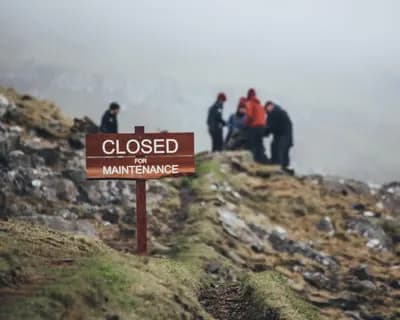
The Faroe Islands' approach to tourism management is among the most philosophically coherent in the world: if a destination is being degraded by visitors, close it to visitors and fix it before letting more in. The 'Closed for Maintenance' program, launched in 2019 as part of the broader 'Preservolution' strategy (a portmanteau of preserve, evolve, and solution), closes popular destinations to general visitors for a weekend and replaces them with a small crew of accepted 'voluntourist' maintenance volunteers who work alongside local conservation teams. The program has drawn strong interest since launch, with far more applicants than available spots each round. Past editions have focused on projects like fencing off grazing-free nature reserves to let landscapes regenerate without sheep pressure, restoring old stone walking paths where original medieval stonework lies beneath overgrown turf, and planting new tree groves — meaningful acts given that the Faroe Islands have almost no native tree cover, having been deforested centuries ago, so each new grove is both a biodiversity milestone and a cultural act of restoration. Beyond the maintenance program, the Faroe Islands have committed to a longer-term tourism strategy built around regenerative principles, with residents formally surveyed as primary stakeholders whose vision of what the islands should be is meant to override commercial growth targets. Annual visitor numbers, in a country of roughly 53,000 residents, are already approaching the practical limit of what the landscape and communities can absorb without degradation. The visitor experience that results from this discipline is extraordinary. The islands' dramatic sea cliffs, Atlantic puffin colonies, traditional grass-roofed villages, and Viking-era landscape feel genuinely untouched — because they are genuinely managed to remain so. Accommodation ranges from farm stays and traditional guesthouses to a small number of boutique hotels in Tórshavn.
Sourcesen.wikipedia.org - –
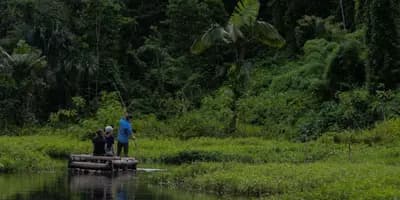
Manu Biosphere Reserve is a superlative that resists easy description: roughly 1.7 million hectares of intact Amazonian rainforest and montane cloud forest, declared a UNESCO World Heritage Site in 1987, housing more than 4,000 identified plant species, over 1,000 bird species, and around 160 mammal species within its boundaries — among the highest biodiversity densities ever recorded on earth. The reserve spans several ecological zones from high Andean grasslands down to lowland Amazon, creating a vertical wilderness corridor that few other protected areas in South America match. The regenerative tourism model in Manu is built on a fundamental principle: the communities who have lived within and adjacent to the reserve for generations are its most effective guardians. Organizations like the Crees Foundation have spent decades building a conservation model rooted in community partnership — employing local guides and researchers, running long-term biodiversity monitoring, and directing tourism revenue into community development funds in villages along the reserve boundary. Tour operators owned and run by people who grew up in the reserve zone offer expeditions that combine ecological immersion with genuine cultural exchange — including stays with indigenous Matsigenka communities where tourism participation is defined by community agreement rather than operator convenience. Community-governed tourism plans in villages like Shipetiari model the kind of self-determined cultural tourism that regenerative travel theory argues for but rarely sees at scale. Peru has secured international climate financing to invest in locally-led climate adaptation across indigenous communities adjacent to protected areas, with plans to scale the effort more broadly. For travelers, this means that visiting Manu contributes to an active, funded conservation system, not a legacy one.
Sourcesen.wikipedia.org - –
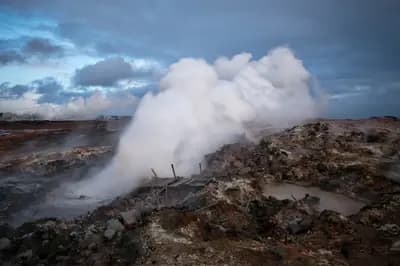
Iceland's environmental credentials begin with energy: virtually all of the country's electricity comes from renewable sources (a mix of hydropower and geothermal), and roughly 90% of its homes and buildings are heated by direct geothermal piping — making Iceland's carbon footprint per unit of comfort among the lowest of any cold-climate nation on earth. Newer tourism infrastructure follows this logic: geothermal spa developments in areas like Laugarás have been designed with advanced water management systems, smart energy monitoring, and architectural integration into the geothermal landscape rather than over it. But Iceland's most interesting regenerative story is its land: when Norse settlers arrived in the 9th century, Iceland was substantially forested. By the 20th century, centuries of sheep grazing and peat cutting had reduced forest cover to a small fraction of that and created some of the most severe soil erosion in Europe — in a country with no conventional agricultural pressure. The Icelandic Soil Conservation Service has been fighting this erosion since 1907, and citizen and tourist participation through programs like Landvernd's CARE (Caring and Restoring Ecosystems) initiative has accelerated the effort. CARE runs volunteer soil restoration and land revegetation sessions open to international visitors throughout the season — giving travelers the opportunity to physically rebuild Iceland's degraded lava field soils and plant native birch and willow seedlings. Groups from universities and environmental organizations worldwide participate, with sessions structured to combine restoration work with ecological education about the soil systems being repaired. It is arguably one of the most tangible hands-on restoration experiences available anywhere in Europe. For standard visitors, Iceland's geothermal infrastructure makes it possible to travel with a remarkably low energy footprint: geothermal spas, heated swimming pools in every town, and an expanding EV charging network combine to create a travel experience where sustainability is ambient, not performative.
Sourcesen.wikipedia.org - –
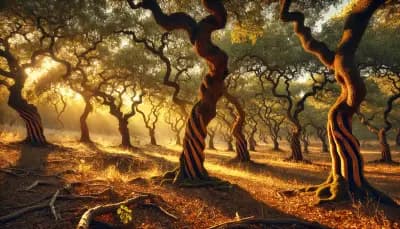
The Alentejo's cork oak forests (montado in Portuguese) are one of the great overlooked conservation success stories of Western Europe. Portugal accounts for roughly half of global cork production, and its cork oak forests — concentrated in the Alentejo and Algarve and spanning some 750,000 hectares — represent a cultivated agroforestry system that has been maintained for centuries. The result is extraordinary: the montado is recognized alongside the Amazon basin and African savannahs as one of the largest reservoirs of biodiversity on the planet, supporting the endangered Iberian lynx, the black stork, the Spanish imperial eagle, and thousands of endemic insect species. The lynx in particular has staged a remarkable recovery across its range after coming close to extinction in the early 2000s. The carbon economics of cork forests are exceptional. Cork oak trees can live for centuries and are harvested — never cut — roughly every nine to twelve years, with each harvest stimulating the tree to absorb more carbon as it regenerates its bark. Conservation groups including WWF have highlighted cork oak forests as an important tool for climate adaptation, working directly in the Alentejo to compensate landowners who maintain regenerative forest management practices. The agritourism experience here is richly layered: visitors stay on cork estates (herdades), observe the ancient art of cork stripping during harvest season (June–August), take guided walks with certified naturalists, and often participate in organic olive oil and wine production. Herdade do Esporão, one of the region's most celebrated wine estates, operates an integrated agritourism program combining accommodation, organic farming participation, birdwatching with specialist guides, and on-estate ecological monitoring that guests can observe. Corktrekking specializes in walking tours designed specifically to minimize ecological footprint while supporting cork forest conservation landowners directly.
Sourcesen.wikipedia.org
Two Different Ways to Pay for Conservation: Scarcity vs. Sweat Equity
The destinations on this list fund conservation through two fundamentally different mechanisms, and it's worth knowing which one you're signing up for. Rwanda and Bhutan use a high-price, capped-access model: a $1,500 gorilla permit or a $100-a-night development fee deliberately limits volume while maximizing revenue per visitor, and that money is the conservation budget. The Faroe Islands' 'Closed for Maintenance' program works the opposite way — it asks for a few days of physical labor instead of money, trading conservation work for accommodation. Neither model is more '‘authentic'’ than the other, but they demand completely different things from a traveler: a bigger budget in one case, a plane ticket and a willingness to dig fence posts in the rain in the other.
Most of This Predates the Marketing Term
'Regenerative travel' is a relatively recent label, but almost none of what's on this list was built for tourists first. Costa Rica's FONAFIFO payments-for-ecosystem-services scheme and Kenya's conservancy leases are land-use policy that happens to also work as tourism infrastructure. Portugal's montado cork forests have been managed the same way for centuries for cork, not for visitors. The common thread across this list isn't a certification badge — it's that tourism revenue arrived after a conservation or land-use system already existed, and made that system more financially durable rather than inventing it from scratch.
Image credits
- Rwanda — Volcanoes National Park & Gorilla Conservation: International Gorilla Conservation Programme / Wikipedia
- Bhutan — The Kingdom That Made Carbon-Negativity Constitutional: Bing Images / earth.org
- Costa Rica — Osa Peninsula & the Regenerative Rainforest Economy: Conservation in Costa Rica / Wikipedia
- Patagonia, Chile & Argentina — The Route of Parks Rewilding Corridor: Bing Images / www.muchbetteradventures.com
- Kenya — Maasai Mara Community Conservancies: Bing Images / i.pinimg.com
- Slovenia — Europe's Greenest Nation Raises the Bar: Bing Images / media.cntraveller.com
- Faroe Islands — 'Closed for Maintenance' and the Preservolution Model: Bing Images / visitfaroeislands.com
- Peru — Manu Biosphere Reserve & Indigenous-Led Amazon Tourism: Bing Images / www.nomadnaturetravel.com
- Iceland — Geothermal Civilization & the Rewilding of a Denuded Land: Bing Images / guidetoiceland.is
- Portugal — Alentejo Cork Forests & the Montado Agritourism Renaissance: Bing Images / immolusitania.com
Related Videos
Frequently asked questions
What is regenerative travel and how is it different from sustainable tourism?
Regenerative travel goes beyond sustainability by actively restoring ecosystems, strengthening local communities, and leaving destinations better than before — whereas sustainable tourism simply aims to minimize negative impact.
Which regions are leading in regenerative travel destinations in 2026?
In 2026, Central America (Costa Rica, Belize), Southeast Asia (Palau, Indonesia), and parts of Southern Europe and East Africa are recognized as top regions for regenerative travel due to their community-led conservation programs and eco-restoration initiatives.
How can I verify that a travel destination or operator is truly regenerative?
Look for certifications such as B Corp, Global Sustainable Tourism Council (GSTC), or Travelife, and check whether operators reinvest revenue into local conservation projects, employ local communities, and measure ecological impact.
Is regenerative travel more expensive than conventional tourism?
Regenerative travel experiences can cost 15–40% more than conventional options, as prices reflect fair wages, conservation funding, and small-group or low-impact logistics, but many travelers find the deeper cultural and environmental value well worth the premium.
What activities are typically involved in regenerative travel?
Common regenerative travel activities include coral reef restoration, reforestation projects, wildlife monitoring, farm-to-table agritourism with local farmers, and cultural immersion programs that directly fund indigenous community initiatives.
Rank it your way
Remix this list into your own ranking, or head to the play hub for every game mode and community breakdown — blind mode, challenges, tier lists, and more.
You Might Also Like

Top 10 Solo Travel Countries for First-Timers
Top 10 Solo Travel Countries for First-Timers

Top 10 Solo Travel Destinations for Women in 2026
Top 10 Solo Travel Destinations for Women in 2026
Top 10 Cool-Climate Destinations for Summer Heat Escape (Coolcations) 2026
Top 10 Cool-Climate Destinations for Summer Heat Escape (...
Top 10 Things to Do in Prague
#1 Charles Bridge · #2 Old Town Square · #3 Prague Castle
Top 10 Beaches in Cape Town 2026
#1 Camps Bay Beach · #2 Clifton Fourth Beach · #3 Muizenberg Beach
Top 10 Best Honeymoon Destinations 2026
#1 Maldives · #2 Santorini, Greece · #3 Bora Bora, French Polynesia