









Business performance management / Wikipedia
App / Software Compare
Top 10 Next-Generation Processors Defining Performance in 2026
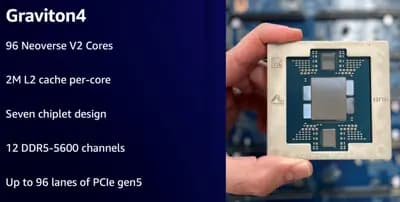
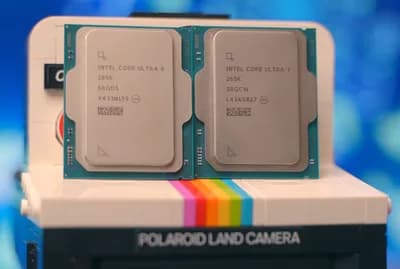
From AI powerhouses to speed-demons for gamers, these 2026 processors shatter benchmarks and redefine what modern computers can do. The list spans every segment that defines performance this year — high-core-count AMD EPYC and AWS Graviton4 server silicon, ARM-based Snapdragon X2 Elite and Apple M4 Max laptops, the first NVIDIA Vera CPU on Olympus cores, and the gaming flagships AMD Ryzen 7 9800X3D and Intel Core Ultra 9 285K. Whether you care about single-thread IPC, multi-thread throughput, AI TOPS, or watts per frame, this is the 2026 snapshot. Vote for the chip you think sets the bar, then tell us what we missed in the comments.
807 views
Top10Grid rankings are decided by votes, not algorithms — use the buttons below to move this list.
Product
Community rankings for this product
Compare by Dimension
Performance in gaming workloads: FPS benchmarks, 3D V-Cache advantage, 1% lows, and cache-sensitive title performance.
| Rank | Item | Score | Notes |
|---|---|---|---|
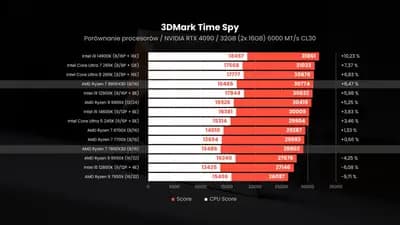
| #1 | AMD Ryzen 7 9800X3D | 10.0 | 96MB 3D V-Cache delivers 20-30% FPS uplift, PassMark Gaming 15,597 — undisputed gaming champion of 2026. |
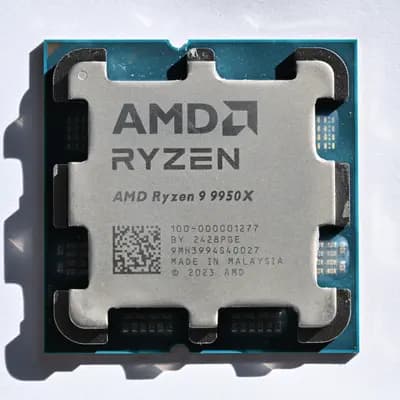
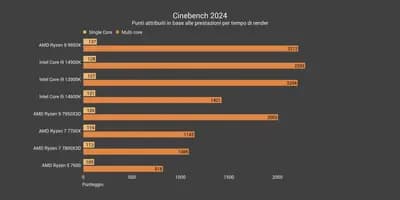
| #2 | AMD Ryzen 9 9950X | 8.0 | 16 Zen 5 cores with Cinebench R24 multi 2,340 provide strong gaming; lacks X3D cache stacking. |
| #3 | Intel Core Ultra 9 285K (Arrow Lake) | 7.5 | Geekbench 6 multi 24,610; competitive gaming performance but trails AMD X3D in cache-sensitive titles. |
| #4 | Apple M4 Max | 6.0 | 16-core Apple Silicon with 32-40 core GPU strong for macOS gaming; limited game catalog vs Windows. |
| #5 | Intel Core Ultra X9 388H (Panther Lake) | 5.5 | 25W laptop chip with Arc B390 GPU; competitive for ultrabook gaming but not desktop-class performance. |
| #6 | Qualcomm Snapdragon X2 Elite Extreme | 5.0 | ARM architecture with improved x86 emulation; gaming performance still trails native x86 in demanding titles. |
| #7 | Arm AGI CPU | 2.5 | Agentic AI infrastructure chip targeting 2027; no gaming application or gaming-relevant benchmarks. |
| #8 | AMD EPYC 9965 (Turin Dense) | 2.0 | 192-core 500W server chip; single-thread latency optimized for throughput density, not gaming response time. |
| #9 | NVIDIA Vera CPU | 1.5 | AI inference CPU in DGX Vera Rubin systems; no gaming workload application. |
| #10 | AWS Graviton4 | 1.0 | Cloud-only ARM datacenter chip with no consumer gaming application or relevant benchmark context. |
Current Rankings
Get the weekly technology rundown
Only lists published since the last email. Join the early readers.
- Only Top 10s published in the last 7 days
- One email a week — and none at all in a week with nothing new
- Unsubscribe in one click
No spam. One email per week. Unsubscribe anytime.
Frequently Asked Questions About 2026 Processors
### Which 2026 processor is best for gaming? The AMD Ryzen 7 9800X3D tops this list as the gaming pick thanks to its 3D V-Cache, while the Intel Core Ultra 9 285K (Arrow Lake) is the strong x86 alternative shown here.
### What is the fastest ARM-based processor in 2026? Among the chips on this list, the Qualcomm Snapdragon X2 Elite Extreme is the fastest ARM chip available in a Windows laptop, with the Apple M4 Max leading for fanless workstation laptops.
### Which chip leads in AI and server workloads? The AMD EPYC 9965 (Turin Dense) and AWS Graviton4 lead the server/AI entries on this list, while the NVIDIA Vera CPU is NVIDIA's first CPU built on its own Olympus microarchitecture.
### Are all processors on this list x86? No — the list mixes x86 (AMD Ryzen, AMD EPYC, Intel Core Ultra) with ARM-based designs (Snapdragon X2 Elite, Apple M4 Max, AWS Graviton4) and the new NVIDIA Vera CPU on Olympus cores.
Frequently Asked Questions About 2026's Top Processors
Which processor is best for gaming in 2026? The AMD Ryzen 7 9800X3D tops our list for gaming thanks to its stacked 3D V-Cache, which delivers the highest frame rates in modern titles at both 1080p and 1440p.
What is the fastest ARM-based laptop chip? The Qualcomm Snapdragon X2 Elite Extreme leads ARM laptops, pairing a 12-core Oryon V3 CPU with a Hexagon NPU that pushes well past 80 TOPS for on-device AI.
Which chip wins for workstation and content creation? The Apple M4 Max delivers workstation-class multi-thread performance inside a fanless MacBook Pro chassis, making it the top pick for creators who value silence and battery life.
What is the most powerful server CPU available now? The AMD EPYC 9965 (Turin Dense) crams 192 Zen 5c cores into a single socket, giving it the highest core density of any shipping x86 server processor.
Is NVIDIA making CPUs now? Yes — NVIDIA's Vera CPU is the company's first chip built on its own Olympus microarchitecture, debuting in the Grace-Vera platform for accelerated computing.
How did we rank these processors? Entries are ordered to span every segment that defines performance in 2026 — gaming, mobile, workstation, server, and custom accelerator silicon — so the list covers the full landscape rather than one category.
Picking by Workload, Not by Benchmark Chart
None of these ten processors is 'best' outside a specific job. A gaming rig wants AMD's 3D V-Cache silicon, which trades some multi-core throughput for the large on-chip cache that keeps frame-rate-critical data close to the CPU. A laptop bought for battery life and on-device AI features wants one of the ARM or Panther-Lake-class chips built around performance-per-watt rather than peak clock speed. A server buyer working within a fixed power budget in a datacenter cares about performance-per-watt and per-socket core density above almost everything else, which is why ARM designs have gained so much ground in cloud infrastructure even though they rarely top a raw single-thread benchmark. Match the category to the job before comparing numbers across categories — a laptop chip and a server chip are not competing for the same buyer.
What the ARM Shift Actually Means for Buyers
For most of the last two decades, 'processor' meant x86 — Intel or AMD, full stop. That's no longer true at any tier: Apple's laptop chips, Qualcomm's Windows-on-ARM silicon, and the custom ARM designs cloud providers now build for their own datacenters are all credible alternatives, not niche experiments. The practical effect for buyers is more choice and, in the cloud, generally lower cost per unit of compute for workloads that don't depend on legacy x86-only software. The trade-off is compatibility: some specialized enterprise and gaming software still assumes x86, so the right processor for a given buyer still depends on what has to run on it, not just which architecture benchmarks best in the abstract.
Readers Also Ranked
More Lists Like This

Top 10 Ars Technica — Latest — April 24, 2026
- #1Rocket Report: Artemis III rocket getting ready; SpaceX is now an AI company
- #2Visitors to this private space station won't be wearing shorts and T-shirts
- #3US accuses China of “industrial-scale” AI theft. China says it’s “slander.”

Top 10 Ars Technica — Latest — May 5, 2026
- #1How do you design a $30,000 electric pickup? Inside Ford's skunkworks.
- #2Charlize Theron is a bewitching Circe in Odyssey trailer
- #3Musk's Europe gamble: Will others follow the Dutch and approve FSD?
Top 10 Hacker News — Top Stories — August 12, 2026
- #1The hardest working font in Manhattan (2025)
- #2LinkedIn CringeBot 3000
- #3Compression is prediction

Top 10 Ars Technica — Latest — August 4, 2026
- #1China is Tesla's cash cow, but for how much longer?
- #2The Pixel 11's "glow" feature is actually called HiLight—here's what it does
- #3Tom DeLay helped create TV ownership cap—he says Trump FCC has no authority to repeal it
Frequently asked questions
What are the key architectural improvements in next-generation processors for 2026?
Next-generation processors in 2026 feature enhanced chiplet designs, improved 2nm or 1.8nm process nodes, and dedicated AI accelerators that boost machine learning performance by up to 3x over previous generations.
Which 2026 processor is best for high-end gaming?
The top gaming performance in 2026 comes from AMD's Zen 6-based Ryzen 9000X series, which offers up to 16 high-frequency cores and a 20% IPC gain over Zen 5, often paired with a dedicated graphics chiplet.
How do 2026 processors compare to 2025 models in terms of power efficiency?
Due to advanced fabrication nodes and new voltage regulation technologies, 2026 processors deliver roughly 40% better performance per watt than their 2025 counterparts, allowing for higher clock speeds without increased thermal output.
Will 2026 processors require a new motherboard or socket?
Most 2026 processors from AMD and Intel introduce new sockets (e.g., AM6 and LGA-2851) to support updated memory standards like DDR6 and PCIe 6.0, so a new motherboard is generally required for full compatibility.
What is the expected pricing range for next-generation processors in 2026?
Entry-level 2026 processors start around $200, while high-end models with 16 cores or more and integrated AI accelerators range from $600 to $1,200, similar to 2025 pricing but with significantly higher performance.
Discussion
Have a take on this ranking?
Comments are how the argument actually happens here. Posting one needs a free account — it takes about a minute.
No comments yet.
The first comment sets the terms of the argument.
Would your top 10 look different?
Publish your own ranking of this topic. Your list gets its own page, and readers vote on it the same way you just voted on this one.
Build your own Top 10More Technology Rankings
More Apps & Software Rankings
6📱
Top 10 GitHub — Trending Python — Sep 28–Oct 4, 2026
16 views · @admin
Top 10 GitHub — Trending Python — Sep 7–Sep 13, 2026
16 views · @admin
Top 10 GitHub — Trending Python — Aug 31–Sep 6, 2026
17 views · @admin
📱
Top 10 Hacker News — Top Stories — September 10, 2026
17 views · @admin
📱
Top 10 Hacker News — Top Stories — September 16, 2026
17 views · @admin
Top 10 Hacker News — Top Stories — September 9, 2026
18 views · @admin
You might also want to rank…
 Top 10 Hacker News — Top Stories — April 2, 2026
 11 Best Dev Tools 2025: IDEs, Git, & VS Code Picks
 Top 10 Tech CEOs Who Became More Famous Than Their Companies
Explore more Technology rankings on Top10Grid
People Also Explore
Because you're viewing Technology
Top 10 Hacker News — Top Stories — September 13, 2026
13 views · 0 votes
Top 10 Hacker News — Top Stories — September 17, 2026
13 views · 0 votes
Top 10 Hacker News — Top Stories — September 18, 2026
13 views · 0 votes

Top 10 Ars Technica — Latest — September 2, 2026
13 views · 0 votes

Top 10 Ars Technica — Latest — September 15, 2026
13 views · 0 votes

Top 10 Ars Technica — Latest — September 19, 2026
13 views · 0 votes
You might also like

TECHNOLOGYSame category
10 Cutting-Edge Robotics Research Breakthroughs of 2026 (AI & Humanoid Robots)
10 items

TECHNOLOGYSame category
Top 10 Most Influential Programming Languages Ever
10 items

TECHNOLOGYSame category
Top 10 Ars Technica — Latest — April 22, 2026
10 items
TECHNOLOGYSame category
Top 10 Best Budget Smartphones 2026
10 items

TECHNOLOGYSame category
Top 10 European SaaS Companies 2026
10 items

TECHNOLOGYSame category
Top 10 Best Free Software Tools 2026
10 items