














Top 10 Robo-Advisors for Investing in 2026
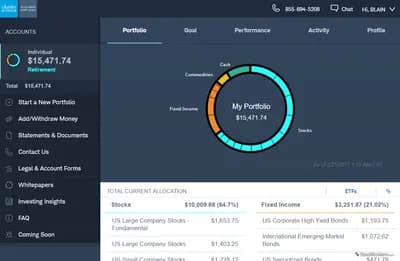
Investing in 2026 no longer means choosing between low-cost automation and personalized advice. Today's top robo-advisors blend AI-powered tax strategies, direct indexing, and human guidance — all for a fraction of traditional management fees. The challenge is picking the one that fits your goals: this list ranks ten platforms on fees, account minimums, portfolio flexibility, tax-loss harvesting, and access to human advisors. Whether you're starting with $500 or managing a six-figure portfolio, here's how the major robo-advisors actually compare.
433 views
Top10Grid rankings are decided by votes, not algorithms — use the buttons below to move this list.
Current Rankings
Vote items up or down — rankings update instantly
Get the weekly finance rundown
Only lists published since the last email. Join the early readers.
- Only Top 10s published in the last 7 days
- One email a week — and none at all in a week with nothing new
- Unsubscribe in one click
No spam. One email per week. Unsubscribe anytime.
<h2>Frequently Asked Questions About Robo-Advisors</h2>
### What is a robo-advisor? A robo-advisor is a digital financial advisor that provides automated, algorithm-driven financial planning services with little to no human supervision. They typically manage portfolios based on your risk tolerance and financial goals.
### How much do robo-advisors cost? Robo-advisor fees vary widely, but they are generally much lower than traditional financial advisors. Many charge an annual management fee as a percentage of assets under management (typically 0.15% to 0.50%), while some offer subscription models or even no management fees.
### Are robo-advisors safe? Yes, robo-advisors are generally safe. They are typically regulated by financial authorities like the SEC, and your investments are held with reputable custodians. Like any investment, there are market risks involved, but the platforms themselves employ strong security measures.
The Fee Number Isn't the Whole Cost
Comparing robo-advisors on their headline annual fee alone misses real cost differences. A platform with a mandatory cash allocation earning a below-market rate, a portfolio line of credit with a high variable APR, or a flat monthly fee that eats a larger share of a small balance can end up costing more than a slightly higher percentage fee would. The fairer comparison weighs the advisory fee against the account minimum, any cash drag, and whether features like tax-loss harvesting are included free or gated behind a higher tier.
Direct Indexing Only Pays Off Above a Certain Balance
Several platforms on this list — Betterment, Wealthfront, Vanguard Digital Advisor — offer direct indexing, which lets an algorithm harvest tax losses at the individual-stock level instead of the fund level. It's a genuine advantage for a large taxable account, but it typically only activates once a balance crosses a threshold (often $100,000), and it does nothing for money sitting in a tax-advantaged retirement account, where there are no capital gains to offset in the first place. For a smaller or entirely tax-sheltered portfolio, the feature is mostly irrelevant, regardless of how heavily a platform markets it.
Readers Also Ranked
More Lists Like This

Top 10 CoinGecko — Top Cryptocurrencies — August 23, 2026
- #1Bitcoin (BTC)
- #2Ethereum (ETH)
- #3Tether (USDT)
Top 10 CoinGecko — Top Cryptocurrencies — August 22, 2026
- #1Bitcoin (BTC)
- #2Ethereum (ETH)
- #3Tether (USDT)
Top 10 Cryptocurrencies by Market Cap — August 12, 2026
- #1Bitcoin (BTC)
- #2Ethereum (ETH)
- #3Tether (USDT)
Top 10 CoinGecko — Top Cryptocurrencies — August 26, 2026
- #1Bitcoin (BTC)
- #2Ethereum (ETH)
- #3Tether (USDT)
Frequently asked questions
What is a robo-advisor and how does it work?
A robo-advisor is an automated investment platform that uses algorithms to build and manage a diversified portfolio based on your risk tolerance and goals, typically requiring minimal human intervention.
What are the typical fees for robo-advisors in 2026?
Most robo-advisors charge an annual management fee between 0.25% and 0.50% of assets under management, with some offering lower fees for larger accounts or premium tiers.
What is the minimum investment required for most robo-advisors?
Minimum investments vary widely, ranging from $0 to $500 for many popular robo-advisors, though some may require $1,000 or more for certain features or accounts.
Which robo-advisor is best for beginners in 2026?
For beginners, Betterment and Wealthfront are often recommended due to their low minimums, user-friendly interfaces, and educational resources, but the best choice depends on your specific financial goals.
Do robo-advisors offer tax-loss harvesting?
Yes, many leading robo-advisors like Wealthfront, Betterment, and Schwab Intelligent Portfolios offer automatic tax-loss harvesting to help reduce your tax liability, often at no extra cost.
Discussion
Have a take on this ranking?
Comments are how the argument actually happens here. Posting one needs a free account — it takes about a minute.
No comments yet.
The first comment sets the terms of the argument.
Would your top 10 look different?
Publish your own ranking of this topic. Your list gets its own page, and readers vote on it the same way you just voted on this one.
Build your own Top 10You might also want to rank…
 Top 10 Best Health Insurance Plans in Hong Kong
 Top 10 European Reinsurers by Net Premium Written
 Top 10 CoinGecko — Top Cryptocurrencies — May 9, 2026
 Top 10 Budgeting Apps That Make Your Money Work Harder
Explore more Finance rankings on Top10Grid
People Also Explore
Because you're viewing Finance
Top 10 Credit Card Networks Dominating Global Payments
231 views · 0 votes
Top 10 European Open Banking Platforms
231 views · 0 votes

Top 10 Digital Banks in Hong Kong (2026 Ranked & Reviewed)
232 views · 0 votes
Top 10 US Mortgage Lenders by Origination Volume
233 views · 0 votes

Top 10 US Buy Now, Pay Later (BNPL) Companies in 2025 — Ranked & Reviewed
234 views · 0 votes

Top 10 Nordic Insurance Companies
239 views · 0 votes
You might also like
FINANCEShared subjects
Top 10 Best Robo-Advisors 2026
10 items

FINANCEShared subjects
Top 10 US Robo-Advisors 2026
10 items
FINANCESame category
Top 10 Best Personal Finance Apps of 2025
10 items

FINANCESame category
Top 10 Fintech Apps in 2026
10 items

FINANCESame category
Top 10 Personal Finance Books That Will Change How You Think About Money
10 items

FINANCESame category
Top 10 YouTube Channels for Personal Finance in 2026
10 items