



Animal
Top 10 Worst Extinction Events in History
From the Permian-Triassic die-off that erased over 90% of life to the Holocene crisis happening right now, these are the 10 worst mass extinction events in Earth's history — including the Big Five and several lesser-known catastrophes. Vote below on the one you think matters most, and see where readers rank it.
2026115 views
Top10Grid rankings are decided by votes, not algorithms — use the buttons below to move this list.
Current Rankings
Vote items up or down — rankings update instantly
Get the weekly nature rundown
Only lists published since the last email. Join the early readers.
- Only Top 10s published in the last 7 days
- One email a week — and none at all in a week with nothing new
- Unsubscribe in one click
No spam. One email per week. Unsubscribe anytime.
Frequently Asked Questions About Earth's Mass Extinctions
### What was the deadliest extinction event in Earth's history? The Permian-Triassic Extinction (~252 million years ago) is widely considered the deadliest, eliminating an estimated 90–96% of marine species and 70% of terrestrial vertebrate species.
### Are we currently in a mass extinction? Yes. The Holocene Extinction is the only ongoing event in this list and is driven primarily by human activity, including habitat loss, climate change, overhunting, and pollution.
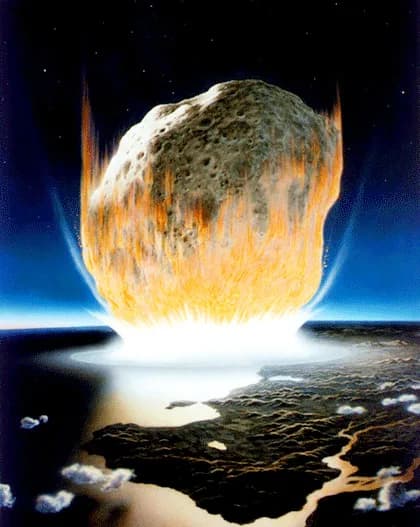
### What caused the dinosaur extinction? The Cretaceous-Paleogene Extinction (~66 million years ago) is most closely linked to the Chicxulub asteroid impact, compounded by volcanic activity and climate disruption.
### How many mass extinction events are there? Traditionally, five major events define the 'Big Five': the Ordovician-Silurian, Late Devonian, Permian-Triassic, Triassic-Jurassic, and Cretaceous-Paleogene. Other significant crises, such as the Capitanian, Eocene-Oligocene, and Great Oxygenation Event, also caused major biodiversity loss.
Frequently Asked Questions About Earth's Mass Extinctions
## Frequently Asked Questions About Earth's Mass Extinctions
What qualifies as a mass extinction? A mass extinction is a short geological interval in which a large percentage of Earth's species die out worldwide. Biologists generally set the threshold at loss of more than 75% of species in a geologically brief period.
What are the Big Five mass extinctions? The Big Five are the Ordovician-Silurian, Late Devonian, Permian-Triassic, Triassic-Jurassic, and Cretaceous-Paleogene events. The Permian-Triassic was by far the worst, eliminating an estimated 90–96% of marine species.
Are we currently in a mass extinction? Many scientists consider the Holocene Extinction an ongoing sixth mass extinction because species are disappearing at rates far above the natural background rate, driven largely by human activity.
What caused the worst extinction event? The Permian-Triassic Extinction is linked to massive volcanic eruptions in what is now Siberia, which triggered runaway greenhouse warming, ocean acidification, and widespread oxygen loss in the seas.
How do scientists date ancient extinctions? Researchers use radiometric dating of volcanic ash beds, carbon isotope excursions, and fossil assemblages in rock layers to pinpoint when species disappeared.
Readers Also Ranked
More Lists Like This

Top 10 Wildlife Encounters in Thailand in 2026
- #1Wild Elephants at Khao Yai
- #2Whale Sharks at Koh Tao
- #3Gibbons at Khao Sok
Top 10 Indonesian National Parks in 2026
- #1Komodo National Park
- #2Gunung Leuser National Park
- #3Tanjung Puting National Park

10 Best Beaches & Islands in Taiwan (2026): Snorkel Turtles, Surf Reef Breaks & Visit Orchid Island
- #1Little Liuqiu Island
- #2Baisha Bay, Kenting
- #3Penghu Archipelago
Top 10 Indonesian Volcanoes in 2026
- #1Mount Bromo
- #2Mount Rinjani
- #3Kelimutu
Frequently asked questions
What is the worst extinction event in history?
The Permian-Triassic extinction event, often called 'The Great Dying,' is the most severe, wiping out about 96% of marine species and 70% of terrestrial vertebrate species around 252 million years ago.
How many major mass extinctions have occurred on Earth?
There are five recognized major mass extinction events: the Ordovician-Silurian, Late Devonian, Permian-Triassic, Triassic-Jurassic, and Cretaceous-Paleogene extinctions.
Which extinction event killed the dinosaurs?
The Cretaceous-Paleogene extinction event, caused by a massive asteroid impact 66 million years ago, led to the extinction of non-avian dinosaurs.
What caused the Permian-Triassic extinction?
The Permian-Triassic extinction was likely triggered by massive volcanic eruptions in Siberia that released enormous amounts of greenhouse gases, causing extreme global warming and ocean acidification.
Are we currently in a sixth mass extinction event?
Many scientists argue that we are in the Holocene or sixth mass extinction, driven by human activities such as habitat destruction, pollution, and climate change, with species extinction rates far exceeding normal background levels.
Discussion
Have a take on this ranking?
Comments are how the argument actually happens here. Posting one needs a free account — it takes about a minute.
No comments yet.
The first comment sets the terms of the argument.
Would your top 10 look different?
Publish your own ranking of this topic. Your list gets its own page, and readers vote on it the same way you just voted on this one.
Build your own Top 10More Animals Rankings
6
Top 10 Most Dangerous Animals in the World — That Kill the Most Humans Each Year
138 views · @admin
Top 10 Epic Hiking Trails Around the World
142 views · @admin
Top 10 Wildlife Encounters in Taiwan in 2026
151 views · @admin

Top 10 Best Botanical Gardens in the World
152 views · @admin
Top 10 Best Whale Watching Spots 2026
155 views · @admin
Top 10 Italian Hiking Trails in 2026
171 views · @admin
You might also want to rank…
 Top 10 Worst Environmental Disasters
 Top 10 Chinese Mountains
 Top 10 Unforgettable Geological Formations: A Global Edition
Explore more Nature rankings on Top10Grid
People Also Explore
Because you're viewing Nature
Top 10 Unforgettable Geological Formations: A Global Edition
116 views · 0 votes

Top 10 Tulip & Flower Experiences in the Netherlands 2026
117 views · 0 votes
Top 10 Worst Invasive Species
117 views · 0 votes
Top 10 Cenotes in Mexico 2026: Best Sacred Swimming Holes & Cave Dives
118 views · 0 votes
Top 10 Wildlife Encounters in Thailand in 2026
118 views · 0 votes
You might also like
NATURESame type
Top 10 Worst Invasive Species
10 items
NATURESame type
Top 10 Most Beautiful Coral Reefs
10 items
NATURESame type
Top 10 Most Endangered Species
10 items
NATURESame type
Top 10 Mexican Biodiversity Hotspots
10 items

NATURESame type
Top 10 Most Controversial Animal Rights Issues
10 items
NATURESame type
Top 10 Cenotes in Mexico 2026: Best Sacred Swimming Holes & Cave Dives
10 items