



Lithium-ion battery / Wikipedia
Compare
Top 10 Sodium-ion Battery Companies to Watch in 2026
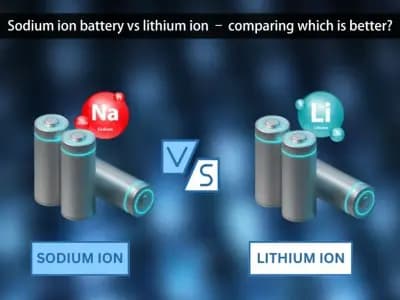
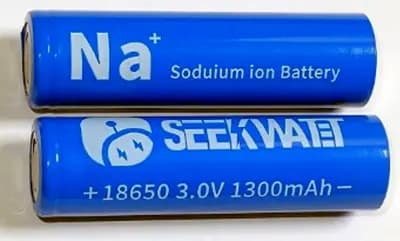
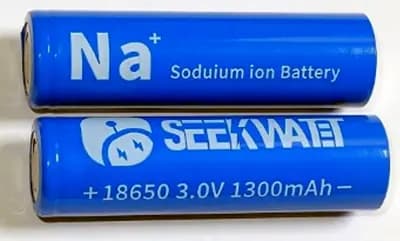
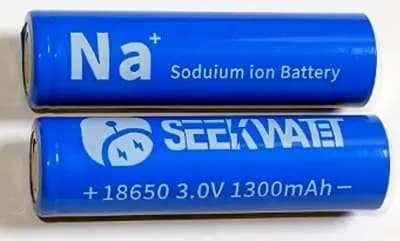
Sodium-ion batteries trade a small energy-density disadvantage against lithium-ion for a real cost advantage, since sodium is far more abundant than lithium and the chemistry needs no cobalt. By 2026 the leading commercial cells — including CATL's Naxtra platform and BYD's blade-format cells — reach roughly 160-175 Wh/kg, within range of mainstream LFP, while several producers are demonstrating cycle lives into the tens of thousands of charges. This list ranks the ten sodium-ion companies with the most credible 2026 production scale, funding, and named commercial partnerships, from Chinese gigafactory leaders to smaller US, UK, French, Swedish, and Indian players building distinct strategic niches.
804 views
Top10Grid rankings are decided by votes, not algorithms — use the buttons below to move this list.
Compare by Dimension
Wh/kg performance of commercial cells relative to peers — higher is better for EV range and volumetric efficiency
| Rank | Item | Score | Notes |
|---|---|---|---|
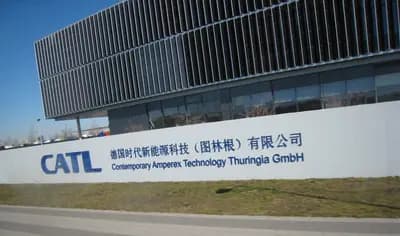
| #1 | CATL | 10.0 | CATL's Naxtra at 175 Wh/kg leads all sodium-ion producers in EV-grade energy density, matching mainstream LFP and enabling 500+ km range. |
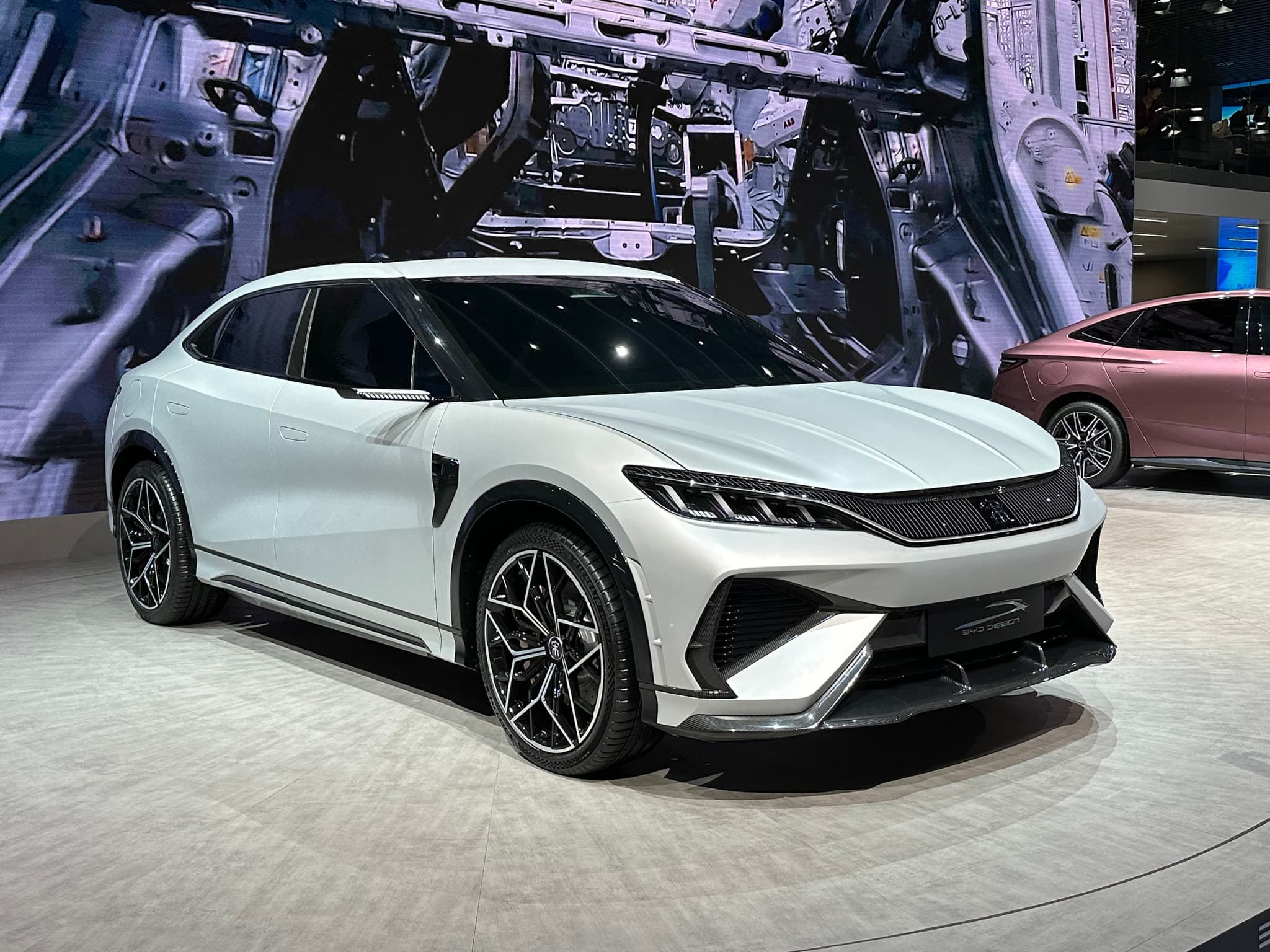
| #2 | BYD | 8.0 | BYD's blade sodium cell at ~160 Wh/kg is competitive for budget EVs and grid storage but trails CATL's Naxtra by 15 Wh/kg. |
| #3 | Faradion (Reliance New Energy) | 8.0 | Faradion's 160 Wh/kg pouch cell is competitive with LFP; next-gen target of 190+ Wh/kg would lead Western producers if achieved. |
| #4 | Altris AB | 8.0 | Altris Prussian White cells achieve 160 Wh/kg matching LFP, delivered without lithium, cobalt, nickel, or manganese. |
| #5 | HiNa Battery Technology | 7.0 | HiNa's HE240 at >150 Wh/kg is production-proven for storage applications; NE170 at >100 Wh/kg is storage-only territory. |
| #6 | Envision Energy | 6.0 | Envision's 180 Ah cell energy density is undisclosed in Wh/kg; 20,000 cycle life suggests a cycle-first design like Hithium's. |
| #7 | Peak Energy | 5.0 | Peak Energy's NFPP chemistry is optimized for cycle stability and safety, not energy density — grid-specific positioning limits score. |
| #8 | Altris AB x Tiamat Comparison: Sodion Energy | 5.0 | Sodion's 120-140 Wh/kg at pack level (not cell level) is the lowest on this list — adequate for urban two-wheelers, not competitive for EVs. |
| #9 | Hithium | 4.0 | Hithium's N162Ah at 95 Wh/kg gravimetric sacrifices weight efficiency for extraordinary cycle life — purpose-built for stationary storage, not vehicles. |
| #10 | Tiamat Energy | 3.0 | Tiamat's Gen1 at 90-110 Wh/kg is the lowest energy density on this list — Gen2's 140-160 Wh/kg target is not yet in production. |
Current Rankings
Get the weekly technology rundown
Only lists published since the last email. Join the early readers.
- Only Top 10s published in the last 7 days
- One email a week — and none at all in a week with nothing new
- Unsubscribe in one click
No spam. One email per week. Unsubscribe anytime.
Sodium-Ion Battery FAQs
### How do sodium-ion batteries compare to lithium-ion?
Sodium-ion batteries offer lower energy density (~160-175 Wh/kg for leading commercial cells in 2026) but avoid reliance on scarce materials like lithium and cobalt. This makes them more cost-effective and geographically accessible.
### When will sodium-ion batteries be widely available?
CATL began mass production in 2023. BYD plans Blade-format sodium-ion cells for 2025–2026. Multiple global automakers are expected to adopt them for entry-level EVs by 2026.
### Which companies lead in sodium-ion innovation?
CATL dominates with its Naxtra platform. BYD focuses on rapid scaling using Blade cell manufacturing. HiNa Battery and Faradion represent mature R&D pipelines outside China.
What actually separates a leader from a promising also-ran
Lab-stage specifications are the easiest thing for a battery company to claim and the hardest thing for a buyer to verify. The more reliable signals are certification (a cell cannot ship to a serious customer without passing safety and performance certification such as UL or UN38.3), named commercial contracts with real delivery dates, and production lines actually running at declared capacity rather than planned for a future year. Natron Energy is the cautionary case: it reached commercial-scale US production and had booked orders, but shut down in September 2025 because it could not get the certification its customers required in time to convert those orders into revenue. Technical achievement did not guarantee commercial survival. When comparing the companies below, weight certification and named customers at least as heavily as the headline Wh/kg number.
Energy density is not the only number that matters
A raw Wh/kg comparison across these companies is misleading without matching it to use case, because grid-storage cells and EV cells are optimized for different things. A stationary storage cell trades energy density for cycle life and wide operating-temperature tolerance, since it sits in a fixed location for a decade and never needs to be light. An EV cell optimizes the opposite way, accepting a shorter cycle life in exchange for maximizing range per kilogram. A company whose cell looks weaker on energy density alone may simply be building for grid storage rather than losing a fair fight on the same spec.
Readers Also Ranked
More Lists Like This

Top 10 Ars Technica — Latest — April 24, 2026
- #1Rocket Report: Artemis III rocket getting ready; SpaceX is now an AI company
- #2Visitors to this private space station won't be wearing shorts and T-shirts
- #3US accuses China of “industrial-scale” AI theft. China says it’s “slander.”
Top 10 Hacker News — Top Stories — August 13, 2026
- #1DeepSeek V4 Pro 0813
- #2Mushroom behind 'tiny people' hallucinations identified
- #3We tracked down the 16-year-old WAL-reset SQLite bug

Top 10 Ars Technica — Latest — May 5, 2026
- #1How do you design a $30,000 electric pickup? Inside Ford's skunkworks.
- #2Charlize Theron is a bewitching Circe in Odyssey trailer
- #3Musk's Europe gamble: Will others follow the Dutch and approve FSD?

Top 10 Ars Technica — Latest — August 15, 2026
- #1Ukraine strikes major Russian rocket factory with cruise missiles
- #2So much solar: Digging into the list of every US power plant that went online this year
- #3Vulnerability giving attackers full control of Macs is under active exploitation
Frequently asked questions
What are sodium-ion batteries and how do they differ from lithium-ion batteries?
Sodium-ion batteries use sodium ions as the charge carrier instead of lithium, making them cheaper and more abundant to source since sodium is far more plentiful than lithium. They currently offer slightly lower energy density than lithium-ion but are considered a strong alternative for stationary storage and entry-level EVs.
Which company is the leading manufacturer of sodium-ion batteries in 2026?
CATL and HiNa Battery (China) are widely regarded as the frontrunners in sodium-ion battery commercialization, with CATL having launched its first-generation sodium-ion cell and integrating it into hybrid battery packs for electric vehicles.
Are sodium-ion batteries ready for electric vehicles in 2026?
Yes, several sodium-ion batteries have reached commercial EV deployment as of 2026, particularly in lower-cost, shorter-range vehicles in China, though they remain less common than lithium-ion in long-range EVs due to their lower energy density.
What are the main advantages of investing in or watching sodium-ion battery companies?
Sodium-ion technology promises lower raw material costs, improved thermal stability, and reduced dependency on lithium, cobalt, and nickel supply chains, making it a strategically important sector for energy storage and EV markets.
What is the biggest challenge sodium-ion battery companies face in 2026?
The primary challenge is improving energy density to be more competitive with lithium-ion batteries, while simultaneously scaling up manufacturing capacity to bring costs down enough for widespread commercial adoption.
Discussion
Have a take on this ranking?
Comments are how the argument actually happens here. Posting one needs a free account — it takes about a minute.
No comments yet.
The first comment sets the terms of the argument.
Would your top 10 look different?
Publish your own ranking of this topic. Your list gets its own page, and readers vote on it the same way you just voted on this one.
Build your own Top 10More Technology Rankings
You might also want to rank…
 Top 10 Tech Companies in Japan 2026
 Top 10 Hacker News — Top Stories — April 2, 2026
 11 Best Dev Tools 2025: IDEs, Git, & VS Code Picks
Explore more Technology rankings on Top10Grid
People Also Explore
Because you're viewing Technology
Top 10 GitHub — Trending Python — Sep 28–Oct 4, 2026
13 views · 0 votes
Top 10 Hacker News — Top Stories — September 6, 2026
13 views · 0 votes
Top 10 Hacker News — Top Stories — September 13, 2026
13 views · 0 votes
Top 10 Hacker News — Top Stories — September 17, 2026
13 views · 0 votes
Top 10 Hacker News — Top Stories — September 18, 2026
13 views · 0 votes

Top 10 Ars Technica — Latest — September 2, 2026
13 views · 0 votes
You might also like

TECHNOLOGYSame category
Top 10 Most Revolutionary Smartphones of All Time
10 items

TECHNOLOGYSame category
Top 10 Most Overhyped Tech Products That Flopped
10 items

TECHNOLOGYSame category
Top 10 Hacker News — Top Stories — April 6, 2026
10 items

TECHNOLOGYSame category
Top 10 US AgriTech Companies
10 items
TECHNOLOGYSame category
Top 10 European Digital Insurance Platforms
10 items
TECHNOLOGYSame category
Top 10 Cybersecurity Threats and Defenses in 2026
10 items